 Two memories from my youth relate to this post. I recall my mother frequently telling me that I was contrary. She would say, “Now Billy, stop being so contrary.” She could have chosen from many words: obstinate, difficult, stubborn, negative, or silly. Actually, that’s not true. She used silly a lot, as in, “Silly-Billy.” I actually liked being called silly and still do. Today, such a fun-loving attitude coupled with silly behavior would prevent a diagnosis of Oppositional Defiance Disorder (ODD).
 As a youngster, I did have more than my share of confrontations with adults, especially those in positions of authority. I admit it. Mom was right (aren’t they all?). I was often contrary and many synonymous terms applied equally well. I confess that I enjoyed being difficult, most of the time. Sometimes, I paid for it. Some say I never outgrew my contrarian attitude.
 The other memory comes from the time of my early to mid-teens. I don’t know where if came from, but we adapted a phrase for a while that was intentionally meaningless, but we said it – a lot. It was kind of an early version of whatever! We would say it to each other and often to adults. We always knew exactly what the adult retort would be. The locution was Yeah, but, or yeahbut. Today, the Urban Dictionary says yeahbut should be followed by f**k, but we seldom used those words in combination.
Most often, but is used as a conjunction to introduce something contrasting with what has already been mentioned. Adults insisted on asking, “But what?” We knew we were pushing buttons when we looked them straight in the eye and answered, “Yeahbut.” Silly kids, right? I confess to deliberately irritating adults given any opportunity.
 However; yet, nevertheless, nonetheless, even so, still, notwithstanding, in spite of that, for all that, and all the same; I do like butts. Some more than others.
But this is about me being a but man. As I said, but is usually used as a conjunction. It is also used as a preposition (anyone but him), an adverb (to name but a few), or a noun (no buts, you’re buying). Add a t and it becomes slang for a body part. But is a useful word.
It is also a word that I overuse. In my writing and speaking, I am rightfully criticized for saying but too often. Twenty-one times out of 350 words so far in this post. But, it is the subject, after all (22). When I edit, I look for the buts and remove or change as many as I can. But not in this post. At the beginning of a sentence, that is most often when it is there, it changes nothing in terms of meaning. My use is not always as a contrasting conjunction. But there’s more.
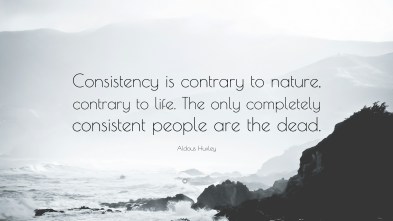
I am a quiet, introverted man by nature. I’m not very shy. The larger and less familiar the group, the quieter I will be. I am happy to let anyone banter endlessly about virtually any topic with no sound from me. I listen closely and analytically (Usually – some might say I don’t listen at all). At some point I might say it. In one-on-one conversations; especially the heated, no attributions kind we have with trusted friends, I will eventually say something. My comments in such environs are often preceded with facial expressions and perhaps a raised eye-brow or two. Then out it comes.
“Yeah, but….” (or just but). Sometimes I fancy it up with things like however, on the other hand, consider this, did you know, or maybe so, but…. I can also be passive aggressive with things I learnt from the younger folk like whatever, ya think?, really?, or my personal favorite: No shit? I like to add Sherlock to that last one, but only when it wouldn’t be offensive (accidentally).
A couple of weeks past, I got to listen to my middle child (now 42) recite a verbal rampage on his view of politics and life, with all the arm waving and facial expressions to have gone viral, had I recorded and posted it.
I really enjoyed listening, even though I couldn’t get a word in until he finished. It was an enjoyable banter, indeed. To be fair, I could see myself. When he finished, I smiled at him and said, “Wow!” and tried not to roll my eyes. I decided that if I said ‘yeahbut’ I would have turned the page to the next chapter of his ranting objections to life in this real world. Sometimes, we just need to sit on our butts and keep our buts to ourselves. Yeahbut moments should be carefully chosen.


 So, I know when I made the change from young to old. It was about 40 years ago.
 Have you resigned yourself to the “it’s just a number that’s too friggin’ big” mentality? I’m not complaining about being old. Old people do not intend to complain about age. It is, after all, a successful result. On the other hand, the various consequences of age can’t be overlooked.
 If we live long enough, we share one important thing with many teenagers – we become bored easily. Old people can be annoying to some young people (15 years, remember). The thought that the feeling may be mutual seems to escape many. Most older folks that I know are working away at life. I know writers in their 80s and 90s who write every day, are working on writing books, and are making plans to publish.
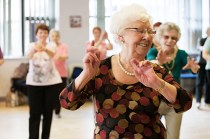 I live in an over-55, “active” community. Some folks here are more active than others, but most are kind of amazing. I took a blogging class where I met a lady of 92. She’s smart, funny, and still learning. She taught art classes and one of her subjects was art by carving vegetables. She made a scrap-book of pictures and writings on veggie art. She is an expert. Based on her experience, maybe the only nonagenarian expert. She wants to publish this in a blog. I can look past the outer physical things that show up when one is 90+. This lady is a master at her craft and learning another so she can share the first. I think that’s cool. In heart and mind, she is young, enthusiastic, and capable.
 I just returned from a “Personal Creative Writing” class. There are 15-to-20 of us taking the class. Most are interested in writing life stories or memoirs. These folks are talented writers; some are published authors; all are able to tell it like it was. They have the ability to make every life story funny, and even sadder memories are delivered with humor. They are good at their craft, but no one can accuse them of taking life too seriously.
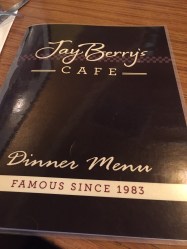 My first restaurant review is of
  The receptionist area is where the cash register probably was back in the day. The two inside seating areas are separated by two steps (ADA?) with no visible ramp. Some tables are a little close for girthy customers, but it’s manageable. Ambiance is comfortable and ok, but should be a ready for a little rehab soon. Most tables seat four, but can be moved to accommodate larger parties. There are no booths. The acoustics are average and loud voices are easily heard.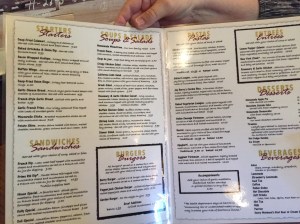

 The server explained some things regarding the pasta and we ordered a Greek salad and Spaghetti Alfredo (they did not have fettuccini). The wait staff was energetic and service was almost too fast. They are a little blunt and straight-up for some customers, but I think it fits the charm and atmosphere of the restaurant. While I’ve had better salads, it was ok. My wife thought the alfredo white sauce was subpar. The waiter boxed up her leftovers. I tried it the next day and found it on par with what comes in a jar from the store.
 Overall
 In my lifetime I’ve been called a wise-guy, wise-ass, and a wise-you-name-it. I don’t recall denying any of it. But until I lost a significant amount of hair, gained a lot of scars (and weight), and dealt with a good bit of life’s experiences, no one has used the words wise or wisdom (without suffix) regarding me. So, as I was running through the w’s (women, walking, wine, wild, Wilde, and why) in search of an ‘a-to-z challenge’ blog topic, my wife says, “How about wisdom? You should know about that.” (Her birthday is tomorrow.)
 To me, the word wisdom has much in common with the word quality. Both are generally positive; we recognize them (or their absence) when we see or encounter either. But, precise definition for both eludes us. We are willing to take on as much quality and wisdom as possible, but with one condition. We want to know the cost. What price must we pay for quality? Can we afford it? What price must we pay for wisdom? Are we willing to pay the price?
 As a college student, I would walk into the Seven-Eleven store and eyeball the beer coolers. I looked only at price per six-pack. Texas Pride was 86-cents for six cans. I still can’t believe I managed to drink that horse piss, but price mattered more on my tight budget. I ignored quality. Little did I know then that years later I would gladly pay eight-to-twelve times as much for top-quality, locally brewed, craft beer. My taste and budget have both matured in quality.
 I had a conversation with a friend who was a wonderful, doting, and loving mother to her children. As I listened to her rant-on one day concerning some problem that her son was having, I asked her this question. “You love your son. Why do insist on preventing him from learning life’s lessons simply because they are painful? Be there for him. Protect him from serious harm. But allow him the dignity of learning his own lessons.” Before she got over her hurt feelings about what I had said, she backed off (he owes me). Hard for her, good for him.
 We are wiser when older because we have been schooled in life longer.
 Yolonda, my wife of 50 years (we married at age 2), is a native Texan and has her ‘druthers.’
 Billy on right, (w/Phish bassist Mike Gordon), our oldest child is in his mid-40s, a very nice, loving, big-man. He’s always been an avid reader, a talented writer, a movie aficionado, and a hard-core Phish-head. Add bicyclist, father, hubby, friend, musician, and deep-thinker.
 Steven is our middle-child, now in his early 40s. He’s another good guy. An avid sports fanatic (Spurs and Cowboys) and mountain biker. Add hubby, step-father extraordinaire, house music DJ (Steve Balance), friend, and all-around cool-dude (maybe pragmatic and analytical). He initially said that he had no fav quotes, but when he and his sista’ got to texting, there they were.
 Our beautiful ‘baby’ is Julie. She can recite every line from the movie Grease (oddly did not quote it), is an artist, a thirty-something, 21st Century hippie, a mom and step-mother. I think she is a wonderful writer and, like her mom, a Grammar-Nazi. She lives in the middle of nowhere with her hubby, son, occasionally a step-son, or two lovely elves, too many cats, horses, and sometimes (because he likes to chase the horses) a dog.
 She had been in the kitchen helping her slightly-older, barely-teenage sister prepare dinner, but she knew it was nearly that time. She moved to the living room where she could take her usual position. Soon enough, she heard his familiar cough and the sound of his voice as he acknowledged neighbors. As he grew near and she could tell it was him, her excitement would grow as it had for years. She felt delight and love for this stoic Welshman. After work, he was usually more outgoing, partly due to the social and medicinal nature of his homeward-trek diversions. The front door was never locked, so when he opened it, his familiar frame was encased by the doorway. Each time this happened it was the same—she would jump up and run toward him and he would immediately stop her. “Now Bernie, you mustn’t get your dress dirty. Where is Dee?” The sight of her father set in the doorway after returning home would be fixed in her mind for the rest of her life.
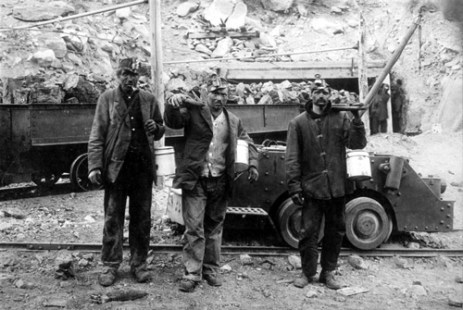 When this man returned home from work, he wore the same drab trappings of men who worked long days underground in a dark, dirty, and dangerous world. He would arrive home from the alley at the back and enter directly into the kitchen. When she looked up, his black silhouette was framed by the kitchen doorway. Her 1920s childhood had been replaced by post-WWII drudgery and insecurity. Their son was born seven months into the marriage. She named him after her father, who died a year earlier. Each day, she was relieved to see her husband return safely home. Funerals and memorial services for coal miners killed in mine disasters were common. Eventually, in the 1950s, the anthracite coal industry would be undermined and replaced by oil.
 She heard footsteps, a familiar cough, and his voice speaking to nurses. She had turned and was looking up just as he stepped on the threshold into her room. She loved the way he looked in his uniform and was delighted to see this man standing there, framed by the hospital-room doorway. She jumped up and ran to him as only a woman in her seventies could. Unlike the days with her stoic father and distant husbands, this man embraced her. They hugged and kissed for a while. She looked up at him and said, “I am so happy to see you.” He smiled and looking down at her asked, “Mom, didn’t you just have surgery?” “I don’t care,” she said. “You are here now.”
 Our Literary Journey