Be a Stranger to Death: Know his Work

A first funeral for me was in our church. I was too young and didn’t know him. But I cried—it was so sad. Others did too. My family all asked me why I cried. A man I didn’t know had died. They took me to his funeral, and I cried because I felt so sad. Why did they ask me why? It was a funeral. I saw others cry. But I felt sad for his friends and family, and for him. My family seemed to be telling me that I should not cry or feel sad. They were telling me how I should feel.

It was my first taste of ultimate reality and sadness at a level I had not yet known. Six decades later I still recall their questions and the implication that I should not be sad because some man had died. And since I did not know him, I should not care about his death.

They knew him. But none of my family cried. I was confused by their lack of sadness. How could they not feel it? I didn’t wonder then why we went to the funeral, but I do now.

I should not feel emotion or act out my feelings if I do. I did not understand why others didn’t feel as I did. Too young, but already being told not to feel too deeply—to not be a sensitive man boy (later a man). Stoicism was and is associated with strength and manliness. Strong silence.

Years later I attended an emotional funeral for two young children of a workmate (auto accident). Later, another workmate criticised the people who cried at that funeral. I wonder more about former than the latter. How could he not cry and why criticize those who did?

Now, I am sometimes spoken of as a sensitive man by some; as one who reflects sensitivity back upon people. They say so because they read my writings. Not because of how I behave.

But not always. I suffer fools poorly and bullies with quite limited tolerance. I am sensitive to violence toward others, but I can do what it takes to be just and fair.

I cannot ask why they tried to teach me not to cry, or not to feel, or to be not sensitive about those who died. And they cannot answer. I doubt any would understand why. I went to their funerals and I cried because they had died and I loved them.

I cried when each of them died. Nobody asked me why. But I still hid my tears. I cried when I was alone. They had taught me well, but they never changed me. Show them only the face they wish to see. Be the strong, stoic, liar.

I remain an emotional little boy society calls sensitive (or weak or worse). They, in their curiously socialized hearts and minds will never understand me—nor will I, them.

Why cry? Must you ask?

Look both ways and deeply into the abyss of human emotions.
Mind the gaps but be consistent. Be yourself.

Poetry: Kitchen Visits

Growing up, it was foreign land—
to me, yet, it was favored by all,
a magic kingdom of food and warmth,
a homework headquarters.

It had a coal stove for heat and
cooking. Mom (sometimes Dad) did laundry
there with a wringer machine filled and emptied by hose,
when new to the tribe, I was bathed in that sink,
perhaps after laundry and dishes were done.

Later in life it was (and still is) wife’s land.
Maybe it’s sexist, but barefoot in
the kitchen was her idea.
Actually, it was all her house
where we all lived. At home,
it was where the core of many lives
transpired—in the kitchen.
Meetings, parties, family dinners,
games and puzzles, some business.
It was our mother-ship’s headquarters.

When between jobs, I was given
the helm of house to navigate;
cooking, cleaning, laundry,
paying bills, and giving some homework
help. Dropping off, picking up,
taking to kid’s thingies. For a dad,
I believe I made a passable mom.

But the jury remains out.
Now those kids are gone
to their own kitchens,
it’s still the same in our lovely
(if mostly empty) nest. It’s her kitchen,
somewhere in the middle of
Texas. I don’t really
cook but would like to. I am the
dish washer, maybe replaced now
by a newer and quieter, a younger one
with fingerprint proof silver skin.

No man has ever been murdered
while doing the dishes.
Perhaps I
should be worried and observant,
or apply for the position of official
dishwasher loader and unloader.

It’s not my kitchen and it never will be.
Perhaps the laundry room?
Household poet laureate is a good job,
I eat well, and the beer is cold.

Look both ways, near and far.
There will always be gaps, in love and lust,
but in the kitchen, it’s Mom we trust.

Poetry: Fixing Things

broken
dirty
people who want to feel better

puzzles and problems

edit to make it better
fix by ignoring edits
aligning painting adjusting
solving brightening or darkening
and resolving

healing and being healed

fixed or broken

repeat

© Bill Reynolds 5/30/2019

Look both ways and mind the gaps.
If it ain’t broke, don’t fix it unless it’s poetry.
Always fix a poem.

********

Poetry: Salty Meditation (NaPoWriMo) Day Twenty-nine

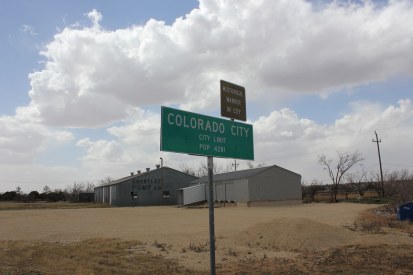
Today I am writing to you from the boonies of Colorado City, Texas. My Monday morning challenge was to produce a meditative poem from a position of tranquility (it is like that here this morning, but I’m snickering), on an emotion I have felt powerfully. I’m not sure what I did, but I felt that.

Salty is a state of mind
on the inside;
on the outside,
Salty is all personality
one must acquire
a taste for the attitude,
with peppery retorts,
for a bit of salt
poured
on the wound,
for the taste of a tear
on my lips,
off your cheek,
on the rim of my Margarita,
or on my hands
with lime juice
for shots of tequila.
Today
my state of mind
is Salty.
© Bill Reynolds, 4/29/2019

Look both ways, attitude follows attitude. Mind the gap in meditative morality.

Poetry: Colorado Sky in Texas (NaPoWriMo) Day Twenty-six

Today, my poem uses repetition. As prompted, I may repeat words or a phrase.

It is a place and people live there.
But I can’t tell you why.
The interstate curves or jogs
as the Colorado River passes,
going somewhere,
But I can’t tell you where.
It’s hot in Colorado City
and it’s dry,
But I can’t tell you why.
In that small west Texas
town lives some of my love
But I can’t say much.
The water is bad, yet some things
grow, but I can’t tell you
how. Not much grows,
but they try—I can’t tell you why.

Confinement and warehousing
of living human flesh is done,
down yonder, in some
depressing hole, but I can’t
tell you much. Jobs, I guess.
The big white metallic groaning
wind monsters are there to send
volts and amps and megawatts
to somewhere, but I can’t tell
you where. Colorado City in Texas
has a past, tough people
in a rough place. It has a
future (maybe) but
I can’t tell you what.
They have a liquor store,
I think I know why.

Look both ways and don’t blink or you’ll miss why, or how, or where, maybe what.
Mind the gap near the dip, misery sleeps there.

Poetry: The Stock of Love (NaPoWriMo) Day Fifteen

Today, I’m challenged to write a dramatic monologue poem. I tried to create specific voices of character that act as both narrators of the poem and participants, which could be acted out by someone reciting it.

****

He is just there, out of reach for now.
Or is it us? So waiting and watching his stare.
Dare we touch such darkness, or look upon him,
in a time to sample solutions?
To this time we have come, as you and I will have done,
to seek his work in our lives.

The darkness that follows, at times closer or farther,
but always, always there.
We look not to see into his darkness
as he looks upon us with calm eyes
for seeking an inevitable time, when we
feel his welcome breath as a wind of the wise.

With a song he beckons us to release
this pain of our suffering into his care.
This love has been our personal world,
but now we may touch an eternal threshold of peace.
Release me not, but allow you go with me
in search of our final love of his prize.

With pain and regret I feel deep in my bones,
to him, I send you in my despair.
Such shaking a coward deep within me,
I step into our eternal new home.
As we lie here in the dark, and together we sleep,
for a time never again to rise.

© Bill Reynolds, 4/15/2019

Look both ways to feel the times of birth, love, life, and death.
Mind the gaps in space and time.

Poetry: Why am I Me? (NaPoWriMo) Day Eleven

My poetry challenge today is to write a poem of origin. Where am I from geographically, emotionally, physically, and spiritually. And having come from there, where am I now?

It’s not really a home, but it’s where I am from,
a place and a people from whom I’ve come,
other places they called home were not theirs.
Were they as proud as I, of who they were?

My look, perhaps a taste or a talent; a religion
or a language, this tribe of people like me.
Am I good enough? Were they? My foibles,
both pride and shame cloud my reality,
I don’t know what to feel about who or what I am,
or that I am at all, or who or what they were.
Why does it matter now? Is it because
knowing you is knowing me?

Why should I care? Am I a conduit of genes, maybe
I pass on life, survival, perhaps some weakness?
Who am I? Why am I? Why now? What do I want?
Taste, beauty, mindful intelligence, with durability
all passed from them to me, then to continuous family.

Why am I and what did you want? Life until death?
What is it that I don’t know? Not just life, but
thoughts. What did you think? What did you cling to?
Did your strength or weakness pass to me?
We’re from there, and there, and other places.

The you I’ve never met, secrets you’ve never told,
burdens never experienced, fears not shared,
friends, enemies, jealousies, hatreds that
may have traveled, but then died with you.
So much of what I am flowed from you to me.
Maybe I simply pass on, or maybe I just do.

©Bill Reynolds, 4/11/2019

Careful as you peer into the gaps of history but look both ways.


Poetry: Boy, Howdy! (NaPoWriMo) Day Ten

My challenge today was to write a poem that starts from a regional phrase, particularly one to describe the weather. I am not a native Texan, but my wife and children are. I couldn’t do just one because the Texas culture is overflowing with verbal and cultural clever terms and phrases. The dialects for these (and there are so many more) shift, depending upon which part of the state you are in, and whether you’re in a city, small town, or rural setting. Disclosure, I can talk like this and at times, I do.

Boy, howdy!!
Looky o’r yonder,
I could sit still for that,
But she’s in a horn tossin’ mood.

Where y’all from?
It’s so dry Ima spittin’ cotton
Here abouts, it’s drier
than a popcorn fart.

Got all gussied up ta
go shoot out the lights,
but just cuz a chicken got wings,
don’t mean it can fly.

It’s hot, y’all!
Hotter ‘n a two-dollar pistol,
Like a billy goat in a pepper patch.
Yes’m, it’s hotter ‘n blue blazes.

Tomorr’a they’ll be frost on the pumpkin,
cold as my ex-wife’s heart,
I mean, cold as hell
with the furnace gone out.

Y’all come,
Ya hear?
Ain’t no butt ugly,
we all just sweetness an light.

Lord willin’ and
the creek don’t rise.
Speakin’ of suckin’ hind tit,
how ‘bout them Cowboys?

Y’all oughta be a-smilin’
like a jack-ass eatin’ briars.

©Bill Reynolds, 4/10/2019

Look both ways and listen close.
Mind the gaps in logic and teeth, they’ll tell you something.

Essay: Shit Happens

  1. My mother said, “What did I ever do to deserve this?”
  2. My wife looked at my adult son and said, “Everything happens for a reason.”
  3. The minister looked into the eyes of the congregation and said, “There is no such thing as a coincidence.”

I forget the exact contexts and situations.

To my mom I would say, “You did nothing to deserve cancer; no one does.” While there may be reasons someone gets cancer, it is not punishment for being not good enough or for being bad. However, it is no joke that a lot of people think like this because of religion.

To my wife I say that most things have a cause and effect. Many things happen due to natural causes, environments, and special situations. Some things are random and have disastrous outcomes. Shit happens.

When someone is fired from (or not selected for) a job, and they later get a much better job, that is good fortune probably assisted by the fact that the person is well qualified for both jobs and it is fortunate that they snagged the better one. The opposite also happens. While such a comforting phrase may bring minor, temporary solace; it is not true that everything happens for a (supernatural) reason. A spiritual being causing a temporary problem to bring about a happier or sadder outcome fails any common-sense test.

To the minister I say that coincidence may not mean exactly what you think it means. According to one (MW) dictionary it relates to coinciding of events that happen at the same time by accident but seem to have a connection. Better words might be random, arbitrary, pointless, haphazard, or desultory.

Whether one believes in a god or not, and regardless of the influence of any god, those words exist because things and happenings can be random, pointless, and desultory.

I recall reading a poem in Stumbling Blocks or Stepping Stones: Spiritual Answers to Psychological Questions by the late Father Benedict Groeschel. The poem of unknown authorship is titled “The Weaving.” The last of three, eight-line stanzas goes,

At last, when life is ended,
With Him I shall abide,
Then I may view the pattern
Upon the upper side;
Then I shall know the reason
Why pain with joy entwined,
Was woven in the fabric
Of life that God designed.

While the poem is beautiful and weaving as a metaphor for a life designed by a god is useful, it also points to the unknown reason for the suffering in life. It implies that we will find no reason until after death, and then only if we are in heaven with the deity who will, presumably, make it all clear. In other words, it makes no sense.

I prefer this outlook from the song “The Sad Café” by the Eagles.

***
Now I look at the years gone by,
And wonder at the powers that be.
I don’t know why fortune smiles on some
And lets the rest go free
***

Shit happens. It’s not our fault. Blame it on whatever imaginary entity you choose. That may be the only reason you ever find.

© Bill Reynolds 1/10/2019

Look both ways for the reasons in life, but don’t accept not knowing—wonder.
Mind the gaps, they are real, but may be overcome with knowledge.

Merrier Christmas to and from those who do not believe in any gods


There are other religions besides Christian. They do not believe Jesus was associated with any god in the same way most Europeans and people of the Americas do.

For most of my long life I have claimed to be a believer in god; specifically, I was Christian. I was a cradle Catholic who went to church, as obligated, every Christmas and Easter regardless of the state of my other church participation. The full story is too long, but I ran the extremes from almost nothing (referred to as ‘practical atheism’) to daily religious immersion and leadership.

From a religious participation point of view, for a time I took Advent and Easter more seriously than I did Christmas. From a cultural Catholic/Christian point of view, Christmas was the biggest deal, followed by Thanksgiving. But now I am an American citizen and atheist.

What does it matter? Well, it should not. My family has celebrated Thanksgiving and Christmas for many years. I’m not sure if any of my relatives or friends identify as atheist. But we are a family and those two holidays are all about family to me. For some reason, Thanksgiving seems to be the bigger deal these days. It’s a tradition.

When we moved back to Texas last year, our daughter-in-law said she was pleased because there would be more family stuff during celebration times. My wife decorates our home for most holidays, but not as much as in the past, and we don’t put out any religious items like a nativity scene or other art objects commemorating the birth or death of Jesus.

Around this time each year, I want to clarify my views about Christmas. I have many good memories of Christmas and the holiday season. I enjoy Christmas music for a while, but eventually I need eleven months to recover. I have some on my play list. In fact, religious music is fine. Some of it is great. I love the calm of Gregorian chant. I have written about music and other similar religious things in the past. Just because I don’t do that any longer does not mean that I want it to stop, that I am repulsed, or object. It is fine.

There is one chance in 365 that a male Jewish baby was born on December 25, roughly 2,000 years ago, who was then crucified and rose from the dead. If there was such a man, his date of birth is unknown. Also, in Christendom, celebrating this day as the birth of Christ is relatively new. Some Christian groups still do not celebrate. So, for most of my life Christmas has been kind of a wink-wink religious holiday. But it is a fun time from a secular point of view.

I wish a Merry Christmas to people on the 25th. If someone wishes me a Merry Christmas on some other day, I return the greeting and good wishes. While I prefer the inclusiveness of Happy Holidays, I don’t care what greeting people choose. I doubt if most atheists care, despite all the BS clamoring about wars on Christmas and some objections to verbal acknowledgements. It is not as big a deal as “In God We Trust” or forced prayer.

So, while I admittedly celebrate a secular holiday at Christmas, I do not object to people of any religion or social group celebrating their holidays, if I am not forced to participate or inconvenienced by them. Many of us, non-believers, believers, and everyone in between can do this and appreciate each other. It is the holiday season. If you think me a hypocrite, that’s your choice

I wish you a Happy Christmas Eve, a festive yuletide season, and a wonderful week highlighted with a Merry Christmas tomorrow.

There may not be any gods, but that should not stop us from enjoying life, friends, and family whenever we can.

Bill

Look both ways to see other points of view.
Mind the gaps. They’re everywhere.