A to Z Challenge — F is for Frankenstein’s Monster

One book published many times.

Two hundred years ago in London, on 1 January 1818, 20-year-old Mary Shelley anonymously published the first edition of her novel, Frankenstein; or, The Modern Prometheus.

Mary was 18 when she wrote the book, the genesis of which goes to the topic of galvanism and other occult ideas that were themes of conversation among Mary and her companions, particularly her lover and future husband, Percy Shelley. Mary, Percy, Lord Byron, and John Polidori competed to see who could write the best horror story. After thinking for days, Mary Shelley dreamt about a scientist who created life and was horrified. Her dream evolved into the novel’s long-famous story.

The problem with this story is that history, Hollywood, and human imagination have been unfair, if not unkind, and inaccurate regarding Victor Frankenstein’s creation. Even Victor was too quick to judge by outside appearance, unpleasant as it undoubtedly was. In Shelley’s book, the outcome of Frankenstein’s experiment is never given a name, although the creature did suggest that he was Victor’s Adam.

At first, the creation is kind and gentle and only wants to be accepted. The creature was eight feet tall and ugly and he knew it. Yet, he sought life and normalcy, but he could not achieve that due to the fearful nature of mankind, and specifically Victor Frankenstein’s fear of what might happen.

I find it interesting that even in the mind of an 18-year-old girl 200 years ago, the innate goodness of a man’s creation can be judged as evil before ever doing anything but kindnesses to others.

One hundred thirty-six years later, the first human body part/organ transplant is completed. Numerous human lives have been extended through science and organ donations and transplants. I would not say we take that for granted, but we’re getting close and for some tissue, there are insufficient donors. One organ not transplanted is the human brain. I have read that it is the one donation where the donor would be the greater beneficiary in the process.

I wonder how Mary, her husband, and their circle of friends would react to the knowledge of today’s reality, scientific knowledge, and literary fantasy if they could suddenly be here and learn about it.

Lord Byron wrote his poem Darkness about the same time as Mary Shelley wrote this book. Given the nature of the book, the poem, and earth during 1816, I do wonder if his poem came to be for similar reasons as her Frankenstein story.

‘tis a dark world after all.
Skeptically, look both ways,
yet apply judgement of others and their creations carefully.
Mind the gaps in your own humanity.

Poetry – NaPoWriMo: The Sad Warrior

Day 1. My first 2018 National Poetry Writing Month Prompt: Write a poem that is based on a secret shame, or a secret pleasure.


The Sad Warrior

Young and strong the warrior stood,
Seeking prey with eyes so sharp
with gleam of heart and prideful soul
The tiger walked and looked and stalked.

The sun was warm that wistful day,
All such power was closed in hand
To fell his victim by trebu-shay
Trophy kill – the warrior’s way.

The test took light within his sight,
on proud knee shot from his right.
Song he heard had a bitter bite,
First quarry down and there it lay.

The warrior now was just a boy
The bird just killed was not a toy,
The ache he felt was not of joy,
Tears of guilt now filled his day.

(Bill Reynolds 4/1/2018)

Poetic license, “trebu-shay” for trebuchet, an up-scale name for a weapon (slingshot).

Look both ways, inside and out.
Mind the gaps or feel the guilt.


Click link to National Poetry Writing Month

Poetry – Eternal Mistress of Darkness

My inspiration.

You were the moon. All this time.
And he was always there for you to make you shine.”

“Was he the sun?”

“No, honey, he was the darkness.”


Darkness was always there
Before firmament formed, she was
Before Earth, Moon, Sun, or Stars.

She was waiting when Chaos came.

Darkness comforts me
My eyes open or closed, her arms around
in sweet and loving tranquil repose.

Touch me softly, my old friend.

More certain she is than the Sun
Who sends burning fire to each day,
With passing twilight she allows
Sun’s return to warm us all.

Before light again warms my soul,
She grants me respite from the day.
She allows my night a chance to rest
In dreams we dance the night away.

As each day ends, she comforts me,
Harbors my soul, balances my heart.

Touch me Darkness when you come,
Grant me peace as you depart.

With resting shadows, I cannot see.
Hold me Darkness, help me mend.

When I’m alone you understand
You are my nature, my old friend.

She gives my spirit a life to spend,
There’s yet Darkness for me to tend.

Grant me courage one more day,
Thank you, Darkness my old friend.

(Bill Reynolds 3/11/2018)


Don’t look both ways, Darkness is everywhere.
In the dark, adjust to see, then mind the gaps.

I like this: “Yet it is far better to light the candle than to curse the darkness.” From a sermon by W. L. Watkinson. I would add, “Better to love the darkness than to light a candle.” It mixes metaphors, but makes a point.


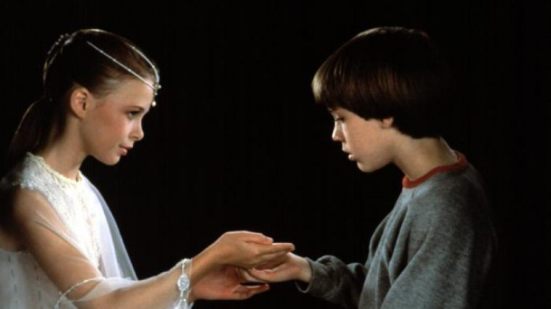
From The NeverEnding Story

A few weeks ago was the 33rd anniversary of the movie, The NeverEnding Story, being released to theaters. I wrote this little ditty to relate to the moral of the story, as I see it today.

Moonchild

The mantle of truth is a heavy coat of many colors,
it gives warmth and freedom, but not love, friends, or quiet.
I can wear it out for all see, or keep it secretly private,
hidden away from the flak and dissent of others.

During this never-ending search for the best,
I face many challenges, and risk the love of others.
Do I seek such love, or a truth not of any lovers?
Must Falkor guide me on my never-ending quest?

When it’s only a story, is it also a myth?
At the Magic Mirror Gate, what truth have I now?
What is it within me, that this story won’t allow?
Are love and truth the same, or is it the Oracle’s kiss?

I find the impossible hard to defend.
The nothing is within me, but I’ll take my stand
for the dream of truth to my last grain of sand.
No seeker would stop with this as the end.

We deny then accept, it’s hard to compile,
the path is a clear one for all who will stay,
it may not be possible, at least not today.
Make Fantasia all truth, son of Moonchild.

*Bill Reynolds 7/31/2017

On your never-ending story, look both ways. Mind the gaps, they’re not myths.

My favorite lines from the movie (and the youtube clip):

G’mork: Foolish boy. Don’t you know anything about Fantasia? It’s the world of human fantasy. Every part, every creature of it, is a piece of the dreams and hopes of mankind. Therefore, it has no boundaries.

Atreyu: But why is Fantasia dying, then?

G’mork: Because people have begun to lose their hopes and forget their dreams. So the Nothing grows stronger.

Atreyu: What is the Nothing?

G’mork: It’s the emptiness that’s left. It’s like a despair, destroying this world. And I have been trying to help it.

A Magical Tempestuous Storm – Poetry

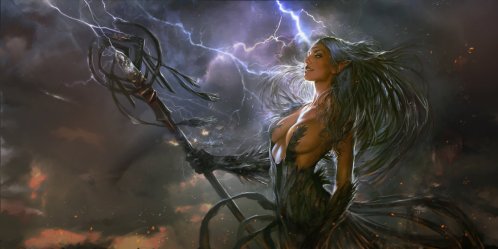
Crazy hair piled up high framing piercing eyes of molten steel,
eyes with a warning smirk of dark trouble and danger
should one touch the shadow of her magic,
thus revealing a turbulent tormented storming soul —
Her wildly pursed red lips inviting living spirits to approach,
still suggesting thoughtful caution of a forbidden mystery,
before approaching near he hears her bittersweet
calling voice echoing deep within his chest,
from the savage throbbing and quivering in delirious frenzy,
he sees dark powers flashing from her black fingertips.

Within her passionate realm a shining moon and stars,
safe from the unrestrained bedlam of magical battles, the sky
enlightens their whirling and spellbound excitement,
dancing into dark night sounds of rapturous laughter;
echoing sighs and resounding venomous frightening cries.
A vehement sorceress casting spells with her thighs,
“Relax, dear man, my sensing pleasure is the rendering
of your haughty spirit into a new submissive being,
tamed forever by your seductive enchantress.”
As she raged, he endured her loving, pounding thunder,
In his toil and trouble, the fire of the witch’s cauldron bubbled,
yet her maddening deadly cries of passion calmed his fears.

Brilliant flashings in darkened skies; fair and foul scents of burning flesh hover;
his body now scorched and red, his mind mixed with passion and mania
as their unrestrained magic erupts into an abyss of souls, nothing but dead.
Yet, willingly he knowingly gives over his being,
his soul, and all he is, was, or ever will be, to her mystical dominance.
Her dark, unconsoled audacious spirit reigns over his battle lost, hers won in the fog of filthy air.
Underground, her biting and pulling him into this night of pain and pleasure,
he is now terminally seduced by this lovingly brash and ruling mistress.
Painfully submitting his pride, his manner, his life and being,
seeking the comfort of her mystical kiss
as he witnesses to her power and takes in his pain,
he kneels before the touch and the torch of his witch, worshipping at her feet.

In his delirium he experiences euphoria –  the ecstasy of pushing aside his anguish and agony,
as she hovers over him and conjures the revoking of his pain at her whim by her will,
she elevates him from the torturous tedium of a miserable existence of sheltered boredom
to a triumphant cloud of comfort and challenge, now subjected to random
spellbinding musings of a mad mistress molding this man into her mate and lover;
expunging his pain with the pleasure and purity of the magical realism produced by fantastic
fantasies as they dance through flames of orgasmic delights devoid of depressing doldrums.

She promised lives of incarnate pleasure and pain;
he as her servient lover, she as his muse and provocateur;
together they sail and they fly through time and space,
he enthralled by her power, she his bellwether to the underworld of a mysterious life,
entrapped by the freedom making two dark souls one bright god and goddess,
master and mistress of all roads and all kingdoms,
their love and mating shall live forever as the forbidden man and his queen of all witches,
never resting or sleeping while forever seeking a peace from their lives of tempest-tossed wonder.
When sounds of the night excite; when the crashing of thunder, lightning, or rain are right;
listen for cries of lovers in pain seeking the pleasures of the witch and her inamorato.

Bill Reynolds 1/24/2017

Night or day, look both ways. The gaps can harm ya, mind them all.

My original idea for this came from the Eagles’ song, ‘Witchy Woman.’ I wanted to “poetic” this idea up further to something about loving witches. Then, ‘Black Magic Woman’ by Santana, while not much for lyrics, bewitched my spirit with his awesome sound. As my imagination drifted, I considered (and used) scenes of the witches from Macbeth. I imagine ‘non-wiccan’ male relationships with a female witch (wicce) to be one of forbidden mystery, good and bad, light and dark, yin and yang. I can’t imagine the witch, no matter how loving, as anything but aggressively dominant, unyielding, yet still caring, nurturing, and protecting. I wanted a struggle. I tried to shed as much of my witch stereotyping as I could, yet keep the drama of the loving, in-control, witch-bitch that captured my thoughts. Is this poetry or prose, fact or fiction, fantasy or reality? Do you want to be either one of the two? Both? Neither?

Some soft witch music would be nice to close.

From Pleasure, Pain

This is the first in a series of blog posts about what I see as the paradox of love. This essay is my answer to the prompt, what has brought you to your knees? I’m not sure where I’ll go with this. Maybe you can help. Ask me questions, or prompt me in some direction. Please keep in mind, this is merely my take. Feel free to provide yours.

Nothing begins, nothing ends,
that is not paid for with moan;
for we are born in other’s pain,
and perish in our own.
~ Francis Thompson

Twenty years ago, I started using the phrase it’s all about how we feel. Normally, I’d caveat such a mantra by claiming it only applied to people without mental health issues. In this case, I think the words apply universally. How do you feel?

Love is the highest standard we have for caring about others. In literature, movies, music, religion, and in our daily lives; our obsession with love is obvious. It’s poorly defined, extensively written about, and grammatically misused; but love is everywhere in the English language. We want to love and to be loved. It’s our ultimate pleasure. How sweet love is.

I embrace love, but I fear pain. Pain can take over my body. Excruciating physical pain has brought me to my knees. It’s absurd that such pain may be helpful as it travels my nervous system from its source to my brain. Pain is abnormal. Even though we all experience pain, it’s not supposed to be there unless something is wrong. Pain is a symptom more useful to doctors than to me.

As bad as physical pain is, emotional pain is more devastating. In extreme cases, mental grief often leads to thoughts of suicide. In physical pain I might say, I want to die; but, I never intended that. I only wanted the pain to stop. On the other hand, people in emotional agony can be dangerous.

Our vulnerability to emotional pain is greatest when we love someone. When we love another person, we grant that person more power over us than any god or demon. Still, we choose to love. Not just willingly, but aggressively with passion and desire. Why? It’s like we can’t live without it. If anyone does live without love, we consider that sad and dysfunctional.

Love has brought me to my knees in two ways. First, the wondrous and joyful pleasure of experiencing love has led me to my knees with happiness. Be it romantic love, love of parents, love of children, grandchildren, or friends; the wonderful state of love takes away the dark and gives light.

Second, love has dropped me in pain, in fear, in a depressingly dark, hateful passion. Love betrayed leaves behind lifelong scars too deep to ever completely heal. The end of a romance, the betrayal of a friendship, the dismissal of a parent we love, the suffering or death of a child; each of these may, and perhaps should, put me on my knees. Such pain and agony from the dark side of love makes me question the value of life.

There may be recovery or even pleasure at the end of the tunnel. Time may mend love betrayed. Still, our human nature forces us to look back into that dark tunnel, into that abyss of pain and suffering. We remember. Do we dare to ever again risk pain by making ourselves vulnerable? Do we face the agony of finding ourselves desperately miserable because we loved?

Why do we do it? Would you, could you, live without love?

That’s a paradox of love. We know the risks, the vulnerability, and the potential to suffer. And yet, we still seek out love and take the risk. How do you feel now?

Even when we look both ways and mind each gap, we will experience pain in life.

“The truth is, everyone is going to hurt you.
You just got to find the ones worth suffering for.”
― Bob Marley (20 years after his death, which means he never said it. True, nonetheless.)

The youtube poem below is worth hearing/reading, and I think the Love Hurts song by Nazareth is worth a listen.


NaPoWriMo #16 (No AtoZ on Sunday)

This poem is about underground coal miners – people who did, or do, very dangerous work. My father and grandfathers were three. This is also about life in our home when Dad still worked in the mines.

During my early teens, the mining business shut down in northeastern Pennsylvania. This was due to the Knox Mine Disaster in the late 1950s and the easy, cheaper, and cleaner use of oil to heat homes. Today, most coal mined in the USA is exported, but the industry continues to decline. Only 30% of electrical power in America is produced by coal.

Old coal mine entrance. A dark abyss.

Nearer My Hell to Thee
By Bill Reynolds

Before leaving the daylight, and going into the pits,
They look deep into the ground, to the soul of the abyss.
The blackest of blacks, the darkest of darks, and danger,
The dank abyss peers back as men descend into nature.

Far below ground, the mine was there lurking, waiting;
That dangerous, disgusting damnation of sound,
For some small wages, they go into that hole far underground.

Deadly it was and deadly it is, they never know when…
Many wives cried at the loss of their men,
Who died in the gut of the deplorable depths.

It was frightening work miners chose, those jobs that killed.
Black hard hats on heads, mining lamps on to cut the dark,
But still never safe. In denial or not, it was dangerous work.

Blackjack and Brass Knuckles same as my father had.

Father was, and so were both grandfathers, miners all.
Walking home through muddy fields and dark alleys,
Dangerous on pay days; all cash in their pockets,
With blackjacks and knuckles, maybe a gun.

He’d push open the gate, then let it slam with a thud.
Dad would stomp up the stairs and in the back door,
It was always the back way after a day’s work.

Covered with coal dust,
The sweat of the labor, and the stink of the mines;
Smoking his Camels, always coughing and coughing.
But he was my Dad, and it was always like this.

I remember Dad much blacker.

Everything filthy, his clothing all rotting,
Black on his skin, and in his gray hair,
He didn’t know about the black in his lungs,
the deadly back dust was glued on hard, but not to his soul.

White at his eyes and over his lips,
he’d set down his lunch pail. No hugs, no kisses,
just “hiya,” and not much of a welcome.

His coat and his cap, and his boots all come off.
Trounced upstairs to the bath, footsteps pounding the way,
Transformation, about to take place.

In cold water each day, he washed coal dirt away,
From his face and his hair, his neck and his chest,
From his waist to his feet, but not from the rest.

Nothing could wash the coal miner away.

Not the water, the union, the beer, or smokes.
Not on the inside, from his throat nor deep in his lungs.
Black dust in his body and in with his blood.

In a coal mine.

It was always the same, until the disaster.
Miners to work, to suffer and die.
Returning to homes, dirty but to homes they came.

Then one day, the depression set in.
The mines all shut down, proud miners, no work.
One day it all ended and everything changed.

Miners laid off, the mines were all closed.
Oil was king, and nobody noticed.
No more abyss, just a new kind of dark.

If you not yet sufficiently depressed, watch this.

Mind the gaps and look both ways.

J – Juxtaposed Minds (NaPoWriMo #12)

Do you ever feel like you’re more than one person? Do we have inner duality — the light and dark? Is there another voice? Juxtaposed minds is as close as I can get. This invokes minor gender differences. My apologies to women if it is seen as stereotyping. It only applies to me. That’s how it seems in my mind(s). It’s how the light gets in.


Juxtaposed Minds
by Bill Reynolds

As always, you’re here with me,
As children, you survived my foolish resistance.
As we pondered our thoughts, I sensed yours in me,
As we bind together, into one two-sided existence.


While passing through this life,
We two spirits were always so real.
Through our eyes and ears, we see and hear;
Yet, with one heart we together feel.


You walk in my footsteps, always with me,
When you talk to me, I hear your voice,
And I feel your presence within my being.
We share one self, as we sense we are two.

Leonard Cohen. We have his music.

I know you, but not so well,
As you know me.
One and the same, we’re forever to be.
Your she melds to one, within my inner he.


You’re a guardian of two spirits, one soul.
One guides the other through all time.
You’re a muse to me, to my sum of being.
Your reality balances our one life,
As we console and debate, together we decide.

You’re the lady in me, who’s never been seen.
Kinder and softer, more willing to hear.
The knower of wisdom, the source of mine.
To the world you are silent, but you talk to me.


Your duality of truth overshadows all lies,
Your love overpowers this emotional being.
With a power and difference,
You have captured our two-sided soul.


 Look both ways and be true to yourself.
When you see gaps, mind them.

Poem: Freedom and Fairness

What do I want? What do you want? How do you want life to be? What will you do? Equality, fairness, and love should guide us. My friend, Karen, asked me to write a poem about freedom. I did. It has a dark shadow, but the shadow has a crack in it, so the light gets in.

We didn’t start the fire refers to the Billy Joel song, Timothy Frances refers to Leary, the beast is the oppressive government, Tom down is to be subservient. In terms of rhythm and rhyme, this thing is all over the place. 

The Freedom Dream is Dead
by Bill Reynolds

What do I want to do?
I wanna be happy.
I want you happy, too.
My dream is a happy world.

Imagine that.

How do we want things to be?
Let’s be fair, and hopefully free.
And just, and true, and honest, and imagine…
For all, equality and rights
With love we can see, for all brothers and sisters.
Life is not fair, but are we?

Imagine!

What is this happiness we pursue?
In all fairness, what can we do?
Freedom? Liberty? Is that all?
Equality? Justice, et al?

Can you imagine?

It’s just a damn dream for too many.
And our dream is dying the fastest of any.
One million paper cuts, delivered with slashes,
All hope is lost, the beast burns us to ashes.

As for my dream? It is dead.
We fought all for naught.
Now I feel a dread.
Selfishness won. It owns us now.

I can’t imagine.

Resistance is failing, the world is darkening.
Evil and greed are the name of the game.
Profit and loss the new moral code.
Money is god, ready for more of the same.
The worst from the beast is yet to be told.

Imagine died too.

We didn’t start the fire, we can’t put it out,
Feel the heat from the rich man’s ire
Burning a hole in my hopes and desire.

Timothy Frances, where are you now?
To destroy this beast, please tell us how.
Or do we Tom down, and let it go on?

My dream may be dead, but I will go on!
Resist, resist, resist, fight for rebirth.
Resist until we have new life on Earth.

Imagine a future, resist to the end.

Look both ways and mind the gaps.
Life has no guarantees, but we can work for fairness.


Poem: Dogs of War

This poem refers to crew members (called crew dogs) of B-52 bombers and to their war-time mission of dropping munitions to destroy things and kill people, thus the dogs of war. This is a dark and threatening piece, set in six stanzas of six lines each, with even and odd lines rhyming. Misery and woe are metaphors for the many types of weapons dropped. The shrill is the eerie sound bombs make as they fall. The dog, or beast, refers to the model D, or variant of B-52, which is painted black on the bottom of the airplane. Please question in comment.

We are coming for you.

Dogs of War
by Bill Reynolds

Let us slip from nature’s gravity hold
We war dogs of old, both willing and bold.
Into skies we shall go with misery and woe.
To maim and to kill, who we don’t even know.
Our airman’s life is to die if we will.
Into Death’s realm, we’ll send you the shrill.

We’re lashed to the beast, the marvelous dog,
Behind us we leave the stink and a fog.
The thunderous sound of flying around
We send you a hell, you on the ground.
Wonders of war are set at our feet
Our old friend death, soon you will meet.

A B-52H dropping high-drag bombs and flairs.

Destruction we’ll rain on your cities and towns,
You won’t know we’re there, we don’t make a sound.
Concussion will break you and all that is near,
Along with destruction, we’ll send you the fear.
The black-bottom dogs will come as you sleep
To rip and to tear, into hearts of your sheep.

The countdown will start, as our hearts will race,
But Death we’ll deliver at one horrible pace.
The flashes we’ll see and the fires will rise,
The dogs of war unleased, to your demise.
The horror will come as sure as the sun,
This nightmare relents when war is won.

The Beast

Safe home again with guilt, we shall not feel,
Because of the blow, we were vowed to deal.
To the bar we’ll retire and review the day’s mess,
In laughter and stories, we consider success.
The beast is now resting and finding a tune,
Ready again, the dogs shall return again soon.

The horrors of war are hidden away,
The death and the misery kept well at bay.
From dogs to humans we slowly turn,
To our homes and lives we always return.
Havoc returns with the dogs of war,
Until we can say, no war! No more.

Look both ways, mind the gaps, and fill the world with love and peace.
Lest we…

“…Cry “Havoc!” and let slip the dogs of war,
That this foul deed shall smell above the earth
With carrion men, groaning for burial.”
~ Marcus Antonius in Julius Caesar,
Act 3, scene 1, 270–275