Poetry: Everybody Has a Mother

52 years ago.

Everybody Has a Mother

I had a mom. And I loved her too.
Then she died, as all mothers do.

Now I have this woman here,
Texas gal and hell-of-a-dear.
Not my mother, no siree,
Nor sister or brother, but oh is she
Mother to the progeny,
who are something
that’s part of me.

She is my lady,
you can see,
love ‘er to bits like a
long-time lover
should.
She’s their mother.
They all love ‘er –
she loves ’em too,
as mothers do.

I love her so,
And likewise them.

Mom o’ my children,
all Texas born.
Now all growed-up
with kin a their own
Tex-bred kids
of one kind or other.

We love ‘em all,
short, fat, skinny and tall.

We love ’em up,
but she Loves them
more than I,
‘cuz that’s what Moms
can do. Love them all
a lot, you see,
more than you and more ‘n me.

Daughter, sis, and cuzin to some,
Wife to me, a very special one
Good sport of a kind and sort,
Mom to three,
Oma to more.

Yolonda,
this poem, my dear lady,
is just for you.

(Bill Reynolds © 12 May 2018)

Y’all be lookin’ both ways cuz Momma be comin’ with a spoon.
Mind the gaps.

Poetry: Sonnet – To Magic

My inspiration was from Edgar Allen Poe’s Sonnet — to Science (click to read it). Reading Poe’s poem gave me chills of guilt. While not anti-magic, I’m pro-science. Knowledge makes the universe more interesting. We will never know or understand everything. Magic and scientific exploration will go on. Yet, I do share Poe’s lament.


Sonnet – To Magic

Magic! True father of science thou art!
…Who brightens all things with thy happy cries.
Why say thou to poetic scientific hearts,
…A scolder, who brightens our dullest eyes?
How should we love thee? Or how deem thee wise,
…Who of magic wouldst leave him to his thing?
To see for answers in the quelled skies,
…Albeit he soared with daunted left wing?
Did thou set Diana into her car,
…And give Hamadryad her tree of wood
And seek shelter on some happier star?
…Hast magic not set the Naiad to flood,
The Elfin to green grass, given to me
…Summer dreams beneath the tamarind tree?

(Bill Reynolds © 9 May 2018)

With magic and science, look both ways and be mindful of many gaps.


Love is the biggest magic of all.

**Note: I am not a fan of analyzing poetry, but my editor questioned some lines. This explanation relates back to Poe’s sonnet. “Line nine, Hast thou not dragged Diana from her car? refers to the Roman goddess of hunting and virginity, who rides the moon across the sky at night. With science, people saw that the moon, instead of being a carriage for a goddess, was actually a lifeless rock, so science metaphorically dragged her off the moon. The next two lines talk about the Hamadryad, which is a nymph from Greek and Roman mythology that lives in a tree and dies when the tree dies. Science, however, believes the tree lives without such creatures, and so the idea of the Hamadryad has been driven away.”


Reflections: My 2018 A to Z Blog Challenge

Hello out there,

I enjoyed the 2018 A to Z Blog Challenge more than 2017. Last year, I just couldn’t break the code. This year, it went well.

I did two challenges during April (as did others like this or this). I wrote poems for the National Poetry Month and mythology for the A to Z Challenge. Unlike last year, I decided not to piggy-back them by using one post for both challenges. Thus, I posted twice on most days and consider my blog stats questionable. Views, likes, and follows were consistent throughout the month.

As with last year, the A to Z reveal in March got a lot of attention. In April I posed to my blog 56 times.

I think my poetry (NaPoWriMo) was favored over the folklore and mythology creatures in A to Z. I got some comments, such as “I did not know that” regarding the myths. I enjoyed most of the research and writing. While I finished both challenges, I was burning out.

On April 1st, I was almost two weeks ahead in writing for A-Z blogs. However, I wrote the NaPoWriMo poems each day based on the midnight prompts 29 out of 30 times. The one day I did not use the prompt, I wrote the poem from a previous idea. As time passed, I lost my advantage on A to Z. By April 29th, I was writing Z for the next day’s final posting. I was ready to stop before the challenges were completed.

While I stopped doing morning pages for April, a good outcome of the April challenges was getting my brain back to daily creative writing and poetry. My writing had slowed to a virtual stop during our move from Washington state to Texas. These challenges helped me to perk-up and I feel more like writing now. I restarted MPs May 2nd.

Since I did two challenges simultaneously and posted twice per day, it makes sense that my 2018 numbers almost doubled what they had been in 2017.

I tried to keep my A-Z posts brief (<600 words) and used at least two graphic images per day. I felt that format might help visitors do a quick reading and move on. When I read other blog posts during April, I did not always finish when they were long reads.

As was the case last year, I was unable to predict the popularity of any post or poem. I am grateful to all who clicked like when they did. And my special thanks to anyone who took the time to comment either in WordPress or on Facebook.

The most interesting thing (it shouldn’t have surprised me) I learned was that people who know me personally prefer when my writing sounds like me (my voice, in their opinion), despite the quality of the writing. It’s as though I’m forgiven when the reader can hear my voice.

I also find that when I can ditch my inner editor for a while, I enjoy writing more. That finding my voice method leads to some “trashy” flapdoodle twaddle, but when I can channel my inner Bukowski, I can feel it (his attitude). I like it. I find pleasure in writing dark, real life, miserable shit, but I avoid it more than I want to. I’m not sure why.

Maybe I am making a mistake allowing my concept of public opinion to dictate my writing style or content. If I was going to publish other than my blog, then that might be wise. But I do this for pleasure.

For now, I need to write from the inner me and stop letting what I think others may think guide me. I’ll work on that. But such letting go isn’t as easy as it sounds. I’m a bit programmed.

Thanks for listening. Look both ways and mind the gaps.

Bill

Poetry — NaPoWriMo: Et nos unum sumus

The 30th (and final) Global Poetry Writing Month prompt challenged me to write a poem that engages with a strange and fascinating fact.

I picked the last two sentences from Chapter 24 of Bill Bryson’s book, A Short History of Nearly everything. At the end of page 415, he wrote, “It cannot be said too often: all life is one. That is, and I suspect will forever prove to be, the most profound true statement there is.”


et nos unum sumus

Life
Life is
All life is
All life is one.

Cells.
Just one. Or many.
DNA and all that
One. All one. All life.

Look and see.
Germs to grass to trees,
Animals, birds, fish, and
We’re all one, all related.

Practical profundity,
Quintessential cousintry,
Uncle monkey’s nephew
The lion with the lamb.

All from the same space dust,
Them, you, me; all of us,
Will wonder never cease?
So little difference, you from me.

(Bill Reynolds, 4/30/2018)

Look both ways — know we are not alone.
Mind the gaps, so you can fill them with love.

Click link to National Poetry Writing Month

A2Z Challenge – Z is for Zeus

Gunna stick with the Greeks, but Romans would be Jupiter.

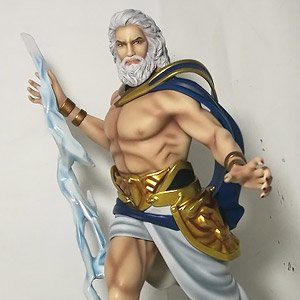
Zeus is the “Father of Gods and men” who rules the Olympians of Mount Olympus and is the god of sky and thunder in Greek mythology. He is youngest child of Cronus and Rhea and he married Hera although, at the oracle of Dodona, his consort is Dione: according to the Iliad, he is the father of Aphrodite by Dione.

He is known for his erotic escapades, but aren’t they all? That horsing around resulted in Athena, Apollo, Artemis, Hermes, Persephone (by Demeter), Dionysus, Perseus, Heracles, Helen of Troy, Minos, and the Muses (by Mnemosyne). With Hera, he is usually said to have fathered Ares, Hebe, and Hephaestus.

His pappy, Cronus was daddy to several children with Rhea. They were Hestia, Demeter, Hera, Hades, and Poseidon. He swallowed them as soon as they were born because Gaia and Uranus said that he was to be overthrown by his son, just as he had previously overthrown Uranus, his own father. That is family drama for Greek gods. There’s more…

When Zeus was about to be born, Rhea and Gaia came up with a plan to save his ass, but in such a way that Cronus would get his retribution for his acts against Uranus. Rhea gave birth to Zeus in Crete, handing Cronus a rock wrapped in swaddling clothes, which Cronus promptly swallowed.

Zeus and his brothers divvied up the world, Poseidon got the sea, Hades the lower world, and Zeus the heavens and the upper regions. The earth was common to all. Zeus was also the source of all prophetic power, signs, and sounds – good as well as bad.

Why was Zeus the most important god? Because he is the presiding deity of the universe, ruler of the skies and the earth, and was regarded by the Greeks as the god of all-natural phenomena on the sky, the personification of the laws of nature, the ruler of the state, and father of gods and men.

Look both ways and don’t mess with Zeus.
Mind the gaps. Challenge met!

Poetry — NaPoWriMo: Cactus Flower of Spring

The 29th (of 30) NaPo prompt challenged me to write a poem based on the Plath Poetry Project’s calendar. I was to pick a poem from the calendar, and then write my own verse that relates to it.

If you don’t know anything about Sylvia Plath, you should. Click on her name to link up. I selected her poem Poppies in July (click for link to analysis) because the city I live in is having a Poppy Festival today. Also, reading the poem and learning about Sylvia’s life was deeply moving.

Poppies In July (by Sylvia Plath)

Little poppies, little hell flames,
Do you do no harm?

You flicker.  I cannot touch you.
I put my hands among the flames.  Nothing burns

And it exhausts me to watch you
Flickering like that, wrinkly and clear red, like the skin of a mouth.

A mouth just bloodied.
Little bloody skirts!

There are fumes I cannot touch.
Where are your opiates, your nauseous capsules?

If I could bleed, or sleep! –
If my mouth could marry a hurt like that!

Or your liquors seep to me, in this glass capsule,
Dulling and stilling.

But colorless.  Colorless.

© by owner. provided at no charge for educational purposes.

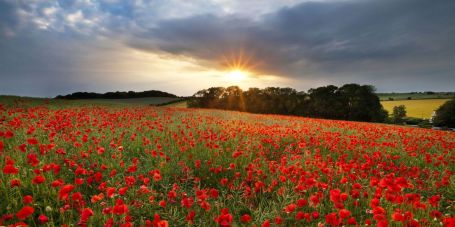
Taken on this morning’s walk as I pondered Sylvia and her poem.

Cactus Flower of Spring

Little Cactus Flower of much despair,
Your short life, a sad bad mad dream.

Your song of pity plays on. Oh lord, I want to touch you.
Deeply reaching your inferior, I want to know your pain.

Misery and pain surround you,
dear yellow flower of agony and sorrow.

Surrounded by cacti, as you are,
I cannot save you in life or death.

I can only see your pain today,
Through words you left of such sorrow.

May your pain be gone, your love remains,
O’ Little Flower of despair.

Yellow, green, red and blue,
I see them now, and I think of you.

(Bill Reynolds, 4/29/2018)


Live and learn and lean both ways, looking for our Cactus Flower.
Mind the thorns and shun the needles, the gaps are there for all to feel.


Click link to National Poetry Writing Month

Poetry (sort of, again) — NaPoWriMo: Fix’n ta Pit Stop

The 28th day of NaPoWriMo prompted me to draft a prose poem in the form/style of a postcard. Ain’t it funny, how time drifts away? I got local with vernacular and dialog and supported it with a short video clip.


Fix’n ta Pit Stop

Ah war-out ‘tween Austin an Waco, west-a the shinry an’ east a’the hill country. Mah butt was plum give-out. Feelin’ a smidgen puny, ah dismounted. Lucky as all-git-out, seen a big’o swait-tay saloon o’er yonder. It’ud be jist the thang, cuz ah was fixin’ to be flat as a cow-patty, ‘n dry as Odessa. Ah jerked up mah britches, an moseyed o’r to Harly’s Truck Stop. Dark as a big thicket, them ‘boys gimme a look’n over. Ah tipped mah sombrero, “Howdy. How y’all doin’?” “Ah’ite, ah’rite,” and “better’n all git out,” an one oh’boy yelled, “How ‘bout them ka‘boys?” Barkeep smiled, “Wha’cha drinkin’?” “I’ll have Shirly Temple.” Bar goes silent. Bar back says, “She jist left.” Ah near got-down with all the hootin’ and a-hall-erin’. “Well then, how ‘bout cold Lone Star? An gimme some’a-dem chips ‘n sausa.” Ah drank-up ‘n warshed-up, “Been good. Nite-cha-all,” and ah headed out fer Willie’s Place up ‘a road prit’-near Carl’s Corner.

(Bill Reynolds, 4/28/2018)

This is where I live folks. Lest you think I make this shit up:

Ride sober, look both ways, take breaks,
drink un-swait-tay, mind the gaps,
and love Willie.

Click link to National Poetry Writing Month

A2Z Challenge: Y is for Yeti

Yeti is a company in Austin that angered the NRA. They make coolers and specialized drink cups. Supporters of the gun lobby are taking their Yeti coolers out to the boonies and literally blowing them up (and recording the deed). Turns out it was a misunderstanding, but this is the NRA. Boom! Oops, too late. See it by clicking here. And I am writing about weird behavior by mythological creatures. Oh, well.

Is blowing this up disrespecting the flag?

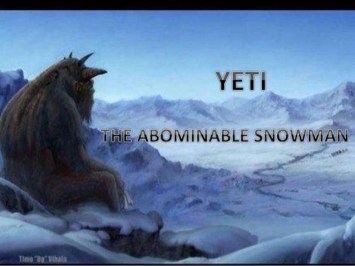
In the folklore of Nepal, the Yeti, AKA the Abominable Snowman, is a tall ape-like creature said to inhabit the Himalayan region of Nepal, Bhutan, and Tibet. This dude could be confused with Big Foot, or Sasquatch, which is a North American (primarily Pacific Northwest, Washington State or BC, Canada). While they’re not the same, there are similarities (big hairy ape-like). In neither case, has anyone ever produced an example or had one over for pizza and some beers.

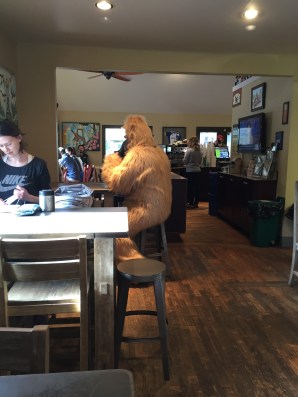
Most folks regard the Yeti as a legend for lack of evidence indicating its existence. As with so many things, existence could be proven, but non-existence cannot. Safe to be Yeti (or Big Foot) agnostic. However, here is proof of Sasquatch: I spotted him at the Issaquah Coffee Shop sipping a latte and meeting his neighbors.

Big Foot having his coffee.

Abominable Snowman was coined as a name in 1921, when Charles Howard-Bury led a British expedition that he chronicled in Mount Everest The Reconnaissance. In the book, Howard-Bury accounts crossing an area at 21,000 feet (6,400 meters) where he found footprints that (according to him) “were probably caused by a large ‘loping’ grey wolf, which in the soft snow formed double tracks rather like a those of a bare-footed man”. He added that Sherpa guides volunteered the tracks must be The Wild Man of the Snows.

Maybe they’re cousins or something.

Look both ways for Yeti or Sasquatch and take a photo so we can prove the affirmative. But mind the gaps, particularly crossing the Himalayas at 21,000 feet without oxygen.


Poetry — NaPoWriMo: Her Three Cups

The day 27 NaPoWriMo prompt encourages me to pick a tarot card and then to write a poem inspired either by the card or by the images or ideas that are associated with it.

I know very little about tarot cards, and I have never had any kind of reading. I selected a card after reviewing what I could, most of which left me worse off than before I started. I selected the three of cups because after this only three more days will be left in the poetry challenge, three is a prime number, and three has significance in many areas such as religion, superstition, art, and even death. I also like cups, and the three woman pictured seem right. I’ve no idea why I have that thought. I am so not a mystic.

The tarot site said of the card, “Maidens in a garden-ground with cups uplifted, as if pledging one another. Divinatory Meanings: The conclusion of any matter in plenty, perfection and merriment; happy issue, victory, fulfilment, solace, healing, Reversed: Expedition, dispatch, achievement, end. It signifies also the side of excess in physical enjoyment, and the pleasures of the senses.”

Her Three Cups

She held out the cards and said to me,
“You must believe for this to work.”
I smiled to her and looked to see,
“This must work, then I’ll believe.”
Quiet and intense – she made us hot tea.

She poured, “Why so much, you refuse to believe?”
“I accept what is true, I trust in the proof.”
Spread out the cards as she said to me,
“I pick. Minds of deep doubt lead rarely to truth.”
She guided my hand, “This card you must see.”

Three maids with three cups meant nothing to me,
“Thrice blessed or so cursed, look close to this card.
For the rest of your life, the number is three.”
“What is this message? Must this be quite so hard?”
“It is what this is, and what you choose to believe.”

(Bill Reynolds, 4/27/2018)

Look both ways to find the truth.
Mind the gaps in the facts.

Click link to National Poetry Writing Month

A2Z Challenge: X is for Xochiquetzal

Before I get into this, I want to thank Chris Caldwell for suggesting so many mythological creatures, several of which I have posted so far. He also suggested that look to Aztec mythology for the letter X.

That led me to Xochiquetzal (pronounced Sho.chi.ket.sal), an Aztec goddess associated with fertility, beauty, and female sexual power. She was the protector of young mothers and a patroness of pregnancy, childbirth, and the crafts practiced by women such as weaving and embroidery.

This goddess of sex, crafts, fertility, dance, music, singing, weaving, magic, and love spells holds marigolds as sacred to her.

Xochiquetzal was also the patroness of many other humans; mainly lovers, prostitutes, weavers, and craftspeople. According to some, this was because they could make pleasure or objects that were beautiful to behold.

Xochiquetzal was the goddess who seduced a priest and then turned him into a scorpion as a mark of her power. If you want to make your mark in this world, screw a priest and then turn him into a nasty bug that stings.

She was depicted as incarnated youth, love, and beauty; and was amorously pursued by several Aztec gods. Presumably, they knew about the priest but were unafraid.

Unlike other fertility goddesses, she encouraged love-making for pure pleasure, not reproduction (thus ignoring the Pope). She had the power to forgive human sins that weren’t necessarily of a sexual nature. I am not sure why that matters, but I read it.

She was the wife of the water god, Tlaloc, and consort (girl friend?) to the god, Tezcatlipoca. She lived in the Aztec paradise of Tamoanchan. This goddess-lady was widely worshipped, and many rituals were in her honor, to include incredible acts of sacrifice (of course) and some somber confessions.

Xochiquetzal was a (not the) creator of humans and functioned as an intermediary between them and the other gods. She is frequently referred to as a facet of the female divine goddess, Tonacacíhuatl, from whose womb the first four Aztec gods were born.

Although she was a mother herself, this goddess never grew old and always appeared in the full bloom of youth. However, when one looks at Aztec art and how she was depicted by them, one can see how cultural differences can affect that.

No matter how you see this, look both ways for Aztec gods.
Just don’t try to spell or pronounce their names.
Mind all gaps.