My music–I like 1970s soft rock and disco, although they’re not exclusive to my play lists. During the 70s, songs didn’t have the same meaning they do now. These days, my current emotions change how I hear that same music. Today, my music taste is deeper and broader.
 I can listen to a song and apply it to any time in my life–past, present, or future. Beautiful songs stir me emotionally. I have thoughts of love and family–those memories we carry with us. As I listen to lyrics, I contrive personal interpretation and meaning.
I’ve selected four songs: one from the late 1960s, two from the 1970’s, and one from the mid 1980s. While song writers couldn’t foresee my thoughts and feelings years later, it often worked out that way.
A Whiter Shade of Pale (by Procol Harum, 1967)
I don’t know the writer’s intent or inspiration. Some have said it has to do with a sexual encounter. It also parallels with the Titanic tragedy.
It’s a wonderful song. Most Brits and I have enjoyed it for years. This was the most-played song in England for the past 75 years. It’s haunting and mysterious. I see it as sad, but in an oddly good way. In the manner that sadness is not always a bad part of life.
I selected the video with Sarah Brightman (circa, 2000) because the older video with Procol Harum, a product of its time, is not my favorite. This one has better imaging and Sarah’s singing of A Whiter Shade of Pale is great. The original, by the original group, is the classic favorite.
https://www.youtube.com/watch?v=8ToU5OshV4g
Hotel California (by The Eagles, 1977)
The intent and inspiration for this Eagles classic is well-documented. But, it depends on when they were asked. There’s a lot written and said about this one. What Don Henley said in a 2002, 60 Minutes interview was, “It’s basically a song about the dark underbelly of the American dream and about excess in America, which is something we knew a lot about.”
I agree that this is about life. I blow off the tie with LA. As my life moves forward I feel emotions and do things to experience life. I think my past, given what life had to work with, combined with my consciousness to make me – me. My two favorite lines in this song, which is also haunting and mysterious are:
“We are all just prisoners here, of our own device” …………….and
“We are programmed to receive. You can check-out any time you like, But you can never leave!”
Click on the link here to listen.
The Sad Café (by The Eagles, 1979)
Even more straightforward, this song is about their (musicians and writers) experience at The Troubadour, a club in LA where musicians met, back in the day. It’s a look back.
I love this song. I’ll say haunting again. This one draws me back to my younger days (my 20s and 30s) when I had more tomorrows than yesterdays. It’s not only about the dreams. It is about the feelings. I can still have those feelings when I listen to songs like this. The video is especially good because of all the pictures of the artists and musicians. I enjoy the photos casting the dark rainy nights.
Dance Me to the End of Love (Leonard Cohen, 1984)
When I first heard this song, it came to me as a beautiful love song that could ride through eternity. Is there an end to love? Later, I learned that Cohen’s inspiration for the song was the Holocaust. He’s spoken of the string groups that played as others were gassed and burned. That changed the song for me. But did not the victims have love? Weren’t their loves in this life being cut short?
While I’ll never forget that Leonard Cohen wrote this song because of one of the most profoundly sad times in history, I cannot let go of the love and how it is a forever thing. Love and its beauty (with Leonard’s haunting voice) is what this song is about.
The video doesn’t betray Cohen’s inspiration, but it clearly implies long time love. Except for flashbacks, the people in the video share more yesterdays than they will tomorrows.
https://www.youtube.com/watch?v=NGorjBVag0I
Music mines deep into the treasures of our minds, hearts, memories, hopes, and dreams. It changes as we change, while it stays the same. May we enjoy music and the love songs that evoke our emotions. Let’s all find ecstasy in the music that makes us who we are; be we happy or sad, in or out of love, young or old. Let’s all dance to the end of love. And may that end be an eternity away.



 While I may not believe that supernatural beings exist (okay, maybe some duende), I still like to refer to unexplainable, cool happenings as magic. I try not to use the words miracle or miraculous in a serious sense. But magical works for me. If others want to use words like miracle to describe things, I have no issue with that. If the Pope wants to use it’s magic to explain anything, who am I to object?
 The origin of the word, or the concept of magic, seems to be rooted in the religions of ancient times.



 Personally, I don’t see why people shouldn’t discuss religion and atheism (or agnosticism or humanism, or any such subject), if they want. I realize two problems come into play. Human emotion and the need to defend turf, opinions, friends, or in some cases, a god.
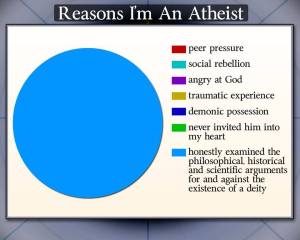
 You have to pass a test to be an Atheist. Did you know that? And the damn test never ends – you take it repeatedly. The questions may be the same, or they may keep changing. Every answer you give will be wrong. You’ll be forced to keep explaining and justifying your wrong answers. You may be criticized by your family and friends for not choosing the correct answers. Knowledge will not help. If you try to use science, you will be told that you know nothing of science. You’ll be given a grade of F for trying to use it to explain your position. If you dare to use logic or philosophy: F. History? F! God forbid that you use religion/scripture/dogma: F-minus.

 What It Was Like
 I’ll spare you details. But during the 1990s all hell broke loose in my life and I thought it had gone into the proverbial toilet.
 I like to joke that I’m recovering from middle age. But, I am simply living my life. My life is good now, but recovery is an ongoing process. While many of my decisions may have been random, they seemed logical at the time. I was desperate, but knowing that I was not alone mattered.
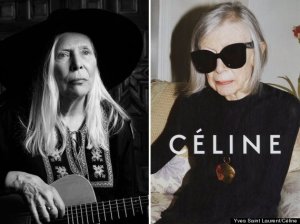
 There are too many blocks to mention each one. We all sometimes have blocks.
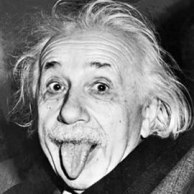 Einstein was interested in both creativity and music. He tied the two, even suggesting he would be a musician, were he not a physicist.
 er source your creative ideas flow, may they flow to you in abundance. May you be orgasmic, chilled and thrilled with ideas, concepts, and plans. May you make the best of all your days being creative and doing your thing (art, writing, music, etc.) and enjoying the universal gifts shared by others. May the spirit of duende haunt your heart and mind, thus bringing you to a spiritual bliss as only we humans can experience.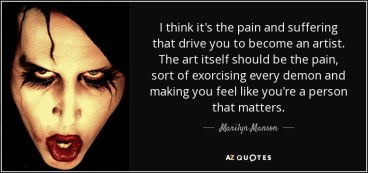
 I do believe that to a degree, suffering is optional. I’ve seen people suffer unnecessarily, and I’ve seen those same people get over it.
 I think that what Liz bemoans is using suffering as justification to be creative, talented, or gifted, thus making an excuse for hanging on to the bottom. We shouldn’t suffer just because we think it improves our work. I’m concerned because I know people die on the bottom. I’ve experienced great things from living artists, suffering or not – nothing from the dead ones.
 To love what you do, and the love of doing it, even when it is gruelingly difficult (and maybe more so when it is) may be the answer. What I’ve read seems to recommend this. Love your art! Do it for the love of the work, the art, the creativity, the experience. As Stephen King says, do it for the “buzz.”



 Is it all that important to be a thin, white, dark-haired, strong, male member of this country? We seem to think so. I hope that continues to change.
 I am retired. All the shit/crap that I put up with for all those years of school (nuns-groan), yes, sir and no, sir; kissing up to very few idiot bosses (most were great), scrimping and saving and working – it was all worth it. As my wife would say, “Rave on, dog shit!” And so I do. Every day is a weekend and I can do what I want (with her permission—I’m old, not stupid) whenever.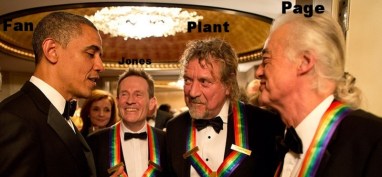





 Our Literary Journey