Poetry – NaPoWriMo: The Wake of Heirs

The second day prompt of the 2018 National Poetry Writing Month: Write a poem that plays with voice.

The Wake of Heirs

They sat in chatter and discussed
Their fortune left in will or trust
Set aside lest others see
What vultures now they come to be.

At the door I quietly knocked
Into the room I slowly walked
Eyes on me no longer talked
By death we are most surely stalked.

Tense is the room you just walked in
You know their hearts are showing thin
You’re welcome not just to be there
Last of the clowns, you – the final heir.

(Bill Reynolds 4/2/2018)

Look both ways as you enter a room.
Find the gaps and use them well.


Click link to National Poetry Writing Month

A to Z Challenge — B for Basilisk

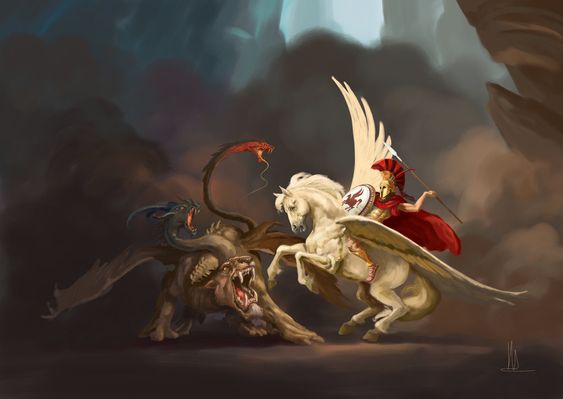
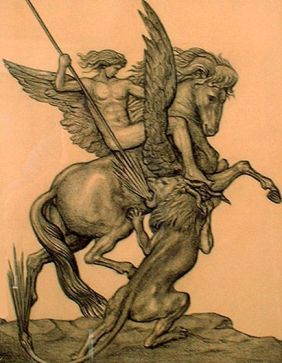
A basilisk is a creature presented as a snake-type or other reptile. Some renditions look related to a rooster, but that would be a cockatrice. You’ve heard, if looks could kill? Well, if it’s basilisk, they do. A direct look from a basilisk and yer a goner.

It’s interesting how the fantasies go on with how dangerous this creepy-crawler is with venom and whatnot, but with looks that kill, who cares? Think Medusa. Ok, so you use a reflection for an indirect look, but unlike Medusa, you’re petrified anyway, meaning you are turned to stone. Think Lott’s wife. I can’t buy the petrified option as being any better than a direct death look. Look away if you see a basilisk coming. Oops, too late.

Basilisk Paining

Some sources (Britannica) list the basilisk as the same creature as the cockatrice, but one is a snake the other a pissed-off rooster that looks related to the village dragon. In mythology there is an odd biological, half-sibling, relationship between the two. This basilisk creature comes into being because a cockerel (rooster) sits on and incubates the egg of a snake or toad. For the cockatrice, the rooster lays the egg (see the problem?) and either the snake or a toad pulls off the incubation challenge.

If a sex is assigned to a basilisk it is often female, yet, due its appearance with a mitre on its head, it is referred to as king of the serpents. The Pope wears a mitre as a kind of crown. It must have been safer to piss off a king, since there were many, than the Pope, of which there were few, if only one legitimate. Since these folks have roosters laying eggs, I suppose that is all fair enough. It’s fantasy, right?

The first writing about a basilisk dates to around 79 AD, about the same time New Testament Gospels were allegedly first written. And if you worried about one of these suckers turning up at the front door, you could simply do pop goes the weasel. Apparently, taking a cue from Asia and the King Cobra’s nemesis, the mongoose, the Europeans made the odor (effluvium) of the weasel be a deadly weakness for the basilisk. That makes sense. With more quafting weasel stink everywhere, there’ll be fewer basilisk, which explains why Europe has such a small problem with basilisks roaming the countryside. Of course, if you did see one, you’d die and be unable to tell us about it.

Cockatrice

Literature is replete with references to the basilisk. In Shakespeare’s Richard III, Anne Neville wishes her eyes (like a basilisk) would kill her husband’s murderer, and in Cymbeline a character refers to a ring as a basilisk.

Samuel Richardson in Clarissa; or the History of a Young Lady, and John Gay in The Beggar’s Opera, have characters who refer to the basilisk in dialogue. Others include Jonathan Swift in a poem, Robert Browning in A Light Woman, and some writings of Alexander Pope.

Shelly refers to “the imperial basilisk” in Ode to Naples; and again in Queen Mab like this:

Those deserts of immeasurable sand,
Whose age-collected fervors scarce allowed
Where the shrill chirp of the green lizard’s love
Broke on the sultry silentness alone,
Now teem with countless rills and shady woods,
Cornfields and pastures and white cottages;
And where the startled wilderness beheld
A savage conqueror stained in kindred blood,
A tigress sating with the flesh of lambs
The unnatural famine of her toothless cubs,
Whilst shouts and howlings through the desert rang,—
Sloping and smooth the daisy-spangled lawn,
Offering sweet incense to the sunrise, smiles
To see a babe before his mother’s door,
Sharing his morning’s meal
with the green and golden basilisk
That comes to lick his feet.
— Part VIII

The basilisk also appears in Harry Potter and the Chamber of Secrets by J. K. Rowling.

Be careful looking both ways.
You want to miss seeing the basilisk, but mind the gaps.


Poetry – NaPoWriMo: The Sad Warrior

Day 1. My first 2018 National Poetry Writing Month Prompt: Write a poem that is based on a secret shame, or a secret pleasure.


The Sad Warrior

Young and strong the warrior stood,
Seeking prey with eyes so sharp
with gleam of heart and prideful soul
The tiger walked and looked and stalked.

The sun was warm that wistful day,
All such power was closed in hand
To fell his victim by trebu-shay
Trophy kill – the warrior’s way.

The test took light within his sight,
on proud knee shot from his right.
Song he heard had a bitter bite,
First quarry down and there it lay.

The warrior now was just a boy
The bird just killed was not a toy,
The ache he felt was not of joy,
Tears of guilt now filled his day.

(Bill Reynolds 4/1/2018)

Poetic license, “trebu-shay” for trebuchet, an up-scale name for a weapon (slingshot).

Look both ways, inside and out.
Mind the gaps or feel the guilt.


Click link to National Poetry Writing Month

A to Z Challenge — A is for Alecto

One of my grandchildren is named Furie. I was told that her name was based upon Furies of Greek Mythology. That was my inspiration of this blog.

While there were three Furies, I am focusing on one: Alecto (unceasing in anger), mostly because it fits the challenge.

The three furies

In Greek mythology the Furies, were female deities sometimes referred to as “infernal goddesses.” In Roman mythology, they are the Dirae. One Roman writer said they’re called Eumenides in hell, Furiae on earth, and Dirae in heaven. Indeed, these goddesses have significance in the underworld.

In addition to Alecto, her sisters are Tisiphone (avenger of murder), and Megaera (the Jealous one). Each had a role in dealing with the dark side of human nature and behavior.


I am not messing with her.

Alecto dealt with people who had problems with others (anger). She was like the goddess, Nemesis, who enacted retribution against those who succumb to arrogance before the gods. However, Alecto was concerned with human to human interpersonal issues, rather than human to god.

The Furies came into being when Cronus, technically their brother and leader of the first generation of Titans, castrated his (and their) father, Uranus. Uranus’ testicles were to be cast into the sea, but blood from them was spilled on Gaia (the Earth) and produced the Gigantes, Meliae, and Erinyes. The Erinyes, or Furies, pursue heinous criminals, punishing them according to their crimes. The imagination of ancient people must have phenomenal regarding their myths.

Furies revenged homicide, unfilial conduct, offenses against the gods, and perjury. A victim seeking justice could call on them for criminal retribution. The most powerful of the curses was of the parent upon the child – for the Furies were born of just such a crime, when the blood of Uranus (or the sky) impregnated Gaia, following Cronos chopping off dad’s nuts, thus Alecto’s unceasing anger.

Their wrath manifested itself in several ways. The most severe was the tormenting madness inflicted upon a patricide or matricide. Murderers might suffer illness or disease; and a nation harboring such a criminal, could suffer dearth, hunger, and disease.

Alecto and Tisiphone

The wrath of the Furies could be placated with purification and some assigned task for atonement. However, Alecto had no sympathy for the wicked.

The goddesses were also servants of Haidas and Persephone in the underworld where they oversaw the torture of criminals consigned to the Dungeons of the Damned. A goddess from Hell who is always angry with everyone and everything should make us behave. As with all such things regarding ancient mythology, the dealings were direct and fierce.

Look both ways for Alecto.
Mind yourself, the gaps go clear to Hell.

Link to A to Z blog Challenge

A to Z Blog Challenge Theme Reveal (2018)

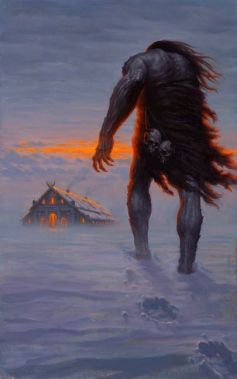
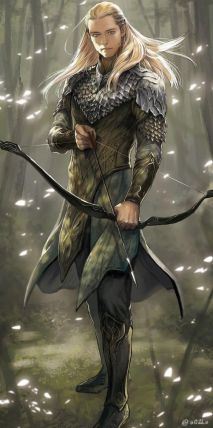
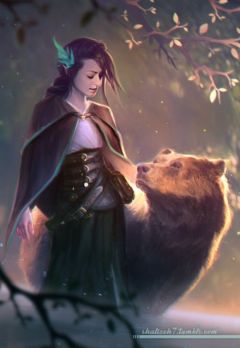
Let’s roll out monsters, goblins, ghouls, and all the fantastic creatures that existed in the minds of men and women from before anyone could write until the present day. Fantasy is not fake when we believe it; and we have for over 100,000 years of human imagination from which to draw. Unfortunately, writing is only about five or six thousand years old. But going way back in time, our innate human ability to imagine is phenomenal. That is my reveal: fantasy creatures displayed front and center.

From angels to zombies, I will select fantastic creatures from legend, fairy tales, fables, and myth. From poems, books, and stories, and from cultures around the world; I will package up those delectably stunning and enchanting fantasy life forms and bring them to you in words and forms.

During April we all do a lot of reading and writing. If you count taxes, arithmetic too. It is a busy, but fun-filled month. I shall attempt brevity and will only present one or two creatures per day beginning with “A” on Sunday, the first day of April, for the 2018 A to Z Blog Challenge.

As my trailer here, I present two Celtic kings: The Forest King, better known as the Oak King or sometimes as Green Man, along with his nemesis, The Holly King, often depicted as a woodsy version of Santa Clause.

The Forest or Oak King
The Holly King

Semiannually, these two battle and fight to the death for supremacy. One time per year, each defeats the other. Depending on the culture and beliefs, a final battle is on summer and winter solstices, or, and more logically, at the time of the Fall or Spring equinoxes. During summer, the Oak King reigns. The Holly King kills the Oak King and reigns in the winter. It is the classic holly vs. ivy symbolic battle called out in King Henry VIII’s, Green Groweth The Holly.

The Oak and Holly Kings Battle

The battle is also echoed many times in other myth and folklore such as the fights between Sir Gawain and the Green Knight, or Lugh and Balor in Celtic legend. In all cases, one must die for the other to triumph.

Regarding such battles and the killing of one king, god, or man, George Frazer wrote,”But we have seen that the very value attached to the life of the man-god necessitates his violent death as the only means of preserving it from the inevitable decay of age.” They are two essential parts of the whole (seasonal reality) that battle all year long. Despite being enemies, without one, the other would no longer exist. Sort of reminds one of yin and yang, doesn’t it?

Look both ways in all seasons of life. Mind well the gaps.

Note: I will be participating in the National Poetry Writing Month challenge separately. Those poems will be identified as NaPoWriMo. This means that during April “Our Literary Journey” will have two posts each day, and one on Sundays after the first.

Poetry – Eternal Mistress of Darkness

My inspiration.

You were the moon. All this time.
And he was always there for you to make you shine.”

“Was he the sun?”

“No, honey, he was the darkness.”


Darkness was always there
Before firmament formed, she was
Before Earth, Moon, Sun, or Stars.

She was waiting when Chaos came.

Darkness comforts me
My eyes open or closed, her arms around
in sweet and loving tranquil repose.

Touch me softly, my old friend.

More certain she is than the Sun
Who sends burning fire to each day,
With passing twilight she allows
Sun’s return to warm us all.

Before light again warms my soul,
She grants me respite from the day.
She allows my night a chance to rest
In dreams we dance the night away.

As each day ends, she comforts me,
Harbors my soul, balances my heart.

Touch me Darkness when you come,
Grant me peace as you depart.

With resting shadows, I cannot see.
Hold me Darkness, help me mend.

When I’m alone you understand
You are my nature, my old friend.

She gives my spirit a life to spend,
There’s yet Darkness for me to tend.

Grant me courage one more day,
Thank you, Darkness my old friend.

(Bill Reynolds 3/11/2018)


Don’t look both ways, Darkness is everywhere.
In the dark, adjust to see, then mind the gaps.

I like this: “Yet it is far better to light the candle than to curse the darkness.” From a sermon by W. L. Watkinson. I would add, “Better to love the darkness than to light a candle.” It mixes metaphors, but makes a point.


A War of Two Lives

Battle on, both day and night.

Do I sleep a better day, when
Fitful dreams fill my nights?
With me losing to all the fights,
Why so many battles then?

Waken me now from this pit.
Within this darkness is my dream
Inside I scream for fear and fit
Of all my horrors not yet seen.

Sleep brings me help, a welcome rest.
Dream from this life of daily test.
Rest I shall, to pass two trials,
One for day, the other at night.

Wake or sleep, I live to fight.

(Bill Reynolds, 2/25/2018)

Dream On (– Aerosmith — )

Look two ways, both day and night.
Mind the gaps, cuz there’s the fright.

Aspects of My Dream

There was a time in my life when I thought I didn’t dream. Since I recalled none, there were no dreams. Discussion over, right?

Wrong, Billy Boy! Since childhood, I have always dreamed, probably every night, and have had more than my share of nightmares. Even as an adult, I’ve physically acted out dream events in voice or movement, concerning and confusing my wife. If I have had one dream every night since birth, that’s over 26,000 dreams. Many nights there were more than one or two.


At the end of this post I’ll drop a link to a down-to-earth piece about dream interpretation, if you want some P-h-and-D ideas.

There are a lot of things written about dreams. I find most of it to be irrational BS and schemes for cash. But, I do think there is physiological meaning in dreams, and I find dream analysis to be a fun and healthy experience. Extensive metaphor and symbolism seem to be what dreams are made of, although I have had some dreams closely parallel real-life events, and were likely triggered by past or pending events.

My dreams are virtually always dreams about challenge, during which I’m motivated to overcome difficulty or an obstacle. I have faced danger, been stuck, or wanted to move away from a situation in which I found myself. Most of my dreams involve other people, but not always those I know. I have had a few pleasant dreams and my awakening to reality was disappointing. But mostly, I’m ready for the dreams to end.

Usually, I enter my dream by finding myself in an ongoing situation. There’s no introduction or preface. It’s like I’m teleported into a situation that “I” was already in, but have just became aware or conscious of.

Last night I arrived into my dream feeling a little cold. I found a discarded jacket and decided to wear it. But I was self-conscious that it was not “my” jacket, and that someone may claim it. As I walked past people, I felt their judging stares. They seemed to know it was not my jacket and that I ought not to be wearing it.

I was walking with a crowd. Along with many others, I walked into a building that looked much like the inside of church. We sat on long benches like pews. The walls were bare, there were no church-like activities such as singing, praying, or preaching. A man sitting near me was constantly watching me. I saw him and spoke to him, but he never talked. He just stared at me. And he looked pissed off – grumpy for sure. In real life, he’d be a weirdo stalker for which I’d summon the law. But in this dream, I simply moved on.

Deciding to leave the building, I stood and walked to the exit doors. A group of people surrounded the doors and were making half-hearted efforts to leave the building. None seemed to be leaving. I noticed a door with nobody near it. I grabbed the handle and opened the big heavy wooden door. That is when I discovered my exit blocked by a wall. I could see over the shoulder-high obstruction. So, I grasped the top with both hands, pulled myself up, and swung one leg over. I noticed others doing the same, then jumping and walking away. As I swung the other leg over, I jumped from the wall and joined others walking.

I was out of the building, away from the weird guy, and happy about it. I felt relieved. Then, I stopped and turned to look back. I could see the others standing behind the wall looking at me. They didn’t speak, but I was sure they wanted out – to be free. I told them how easy it was to climb over the wall. I offered to help, and I told them that fear was holding them back. With that, some climbed the wall and jumped out. Others just stood there. They didn’t try. It was not the wall that kept them trapped, it was that they didn’t try to leave. I walked away a second time.

I began to feel guilty about the people who were not motivated enough to try. Again, I went back. I considered jumping the wall back into the building, but I suspected I would not be able to leave if I tried to help others. They were afraid to come out. I was afraid to go back in. For the third time I walked away. As I looked around I noticed a pretty lady also walking away. She nodded knowingly and smiled.

Awake, I looked at the clock: 5:30 AM. I decided to sleep more, pondering where I would go, where anyone would go after leaving that building. As I was dozing back into dreamland, I analyzed my dream. I wanted to know where I was going. What would come next?

Are dreams stories with built-in conflicts? Was my dream just one more? Was it simply a story I dreamed up in my sleep? Or did it have deeper psychological meaning? Is there something in my real life that precipitated the dream?

Does everything in a dream represent something real in my world or in my mind?
Why am I always younger in my dreams?

To read one of several interesting articles about dream analysis in Psychology Today, click here.

One of my favorite dream poems:

Also this: click here to read a Mary Oliver poem about dreams.

When you dream,
look both ways for what the dream tells you about the past,
and what you may be thinking about for the future.
Dreams are not logical, so mind the gaps.

Cotton Pickin’ Cotton

We were driving thru New Mexico to the Texas border. There’s no wall in that area, so we were free to pass where towns have names like Clovis, Muleshoe, Whiteface, Sundown, or Cotton Center. (Wall comment is humor.) Yolonda was driving when I first noticed sheets of white ice, which had formed on the north side of plants, tree limbs, and anything sticking up out of the ground.


Note wind turbine base in background.

While the scene was pretty, it looked like an ice storm had passed by. But the look wasn’t quite correct. As we continued, we drove into a thick fog, or some sort of cloud.

That part of America is a windy, unpleasant, high-n-dry desert. Why anything, much less cotton, grows there is a mystery to me. Cotton may have a history of controversy in America, but we all have items produced from cotton in our homes, and yer probably wearing some now. We were driving through the midst of cotton country, which extends from California thru the southern USA up to Virginia — once called “King Cotton” for a good economic reasons.


Cannot see the tops of the huge wind turbine electricity generators.

When I saw my first cotton field, I asked my friend to pull over. I jumped out of the car, crawled through the fence, and picked some raw cotton. I was 19 and a damn-yankee (Yolonda insists that’s one word) who’d never seen it growing. I knew little about cotton. Just that is was a textile and that it had a lot to do with The Civil War, The South, a guy named Eli Whitney, and his invention called a gin.

I understood that gin was an alcoholic drink, a card game, and was a word for to come up with, as in gin up. Later I learned what it had everything to do with cotton. A cotton gin is a machine that removes seeds, husks, and foreign material from cotton. Big machines are used to harvest it. Then, it’s taken to the nearest gin where all the seed stuff is removed. The seeds are used for cotton seed oil, but I don’t know if any other part of the plant is used for anything but compost.


Cotton fiber frozen to a bush.

As it turns out, the ginning of cotton is a messy process as it draws cotton fibers through a screen thingy to sift out the seeds and husks. A lot of stuff, especially cotton fiber, ends up floating in the air. It looks like clouds or fog. When I say a lot, I am talking majorly huge acres of cotton fiber floating all over the place. If you’re down wind of one of these gin things (as my daughter is), and allergic to atmospheric dust (as she seems to be), good luck.

After pulling off onto the wide shoulder of a Texas road, I walked about 30 yards to a brushy area for a closer look. I had no worries about critters like snakes, it was too brutally cold, as it often is in the unfriendly climate of the Texas Panhandle. I saw the white ice on branches, limbs, tree trunks, and  rocks. Closer examination revealed clear ice covering something white. I broke off a small thin branch and split it open.

I looked around when I realized that I had solved the mystery. What appeared to be fog, was not. It was cold and humid with moisture in the air, but the “fog” was actually teeny bits of cotton fiber and seed husk floating in the air. Agricultural and mechanical air pollution was being generated by the harvesting and cleaning of cotton with gins. It’s all done right there before the product is sent off to further processing and turned into consumer products.

The combination of a north wind with the right atmospheric conditions of moisture and freezing temperatures combined with the white cotton fibers floating in the air. As this combination moved south, it hit upon north-facing vegetation and virtually anything sticking up into the air. As this mini ice storm passed over, it placed a layer of white cotton fiber on the limbs and branches, then covered it with water which froze to form a thin layer of ice. The result was a glistening combination that looked like frozen snow on one side of trees, even down the trunks. It was frozen air pollution.


Ice on cotton on wood.

Joanna Gains of the HGTV show Fixer Upper uses cotton plants for decoration. Here is a link if you want to see, or even buy some (Click here for link). I don’t cotton to the décor, myself.

And then there is the story of the lady who was upset with Hobby Lobby (or some such place) cuz she felt cotton for décor is racially offensive. Cotton did not cause slavery, but the invention of Whitney’s cotton gin did contribute to the significant expansion of the cotton industry and slavery during the first half of the 19th Century.

A little cotton pickin’ music for your listening pleasure (CCR doing a Leadbelly tune).

Be curious as you look both ways.
Mind the gaps and watch for snakes when you stop to smell the roses
or admire nature’s work in concert with local farmers.

A Memory: The Silence of Darkness

It was a cold northeastern Pennsylvania night. I don’t recall the day of the week, or even the year, but the season was tucked into that idiom wrongly called, the dead of winter. There’s nothing dead about it.

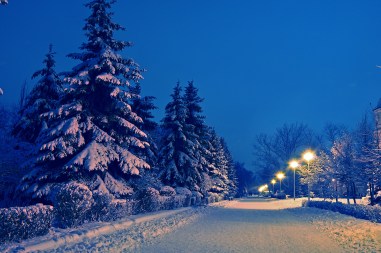
I was in my teens and still living with my parents. It was late night and snow had covered the ground one day in the early nineteen-sixties. While night, the reflections from the snow allowed me to see everything, although it looked like a blue-tinted black and white photograph.

While all years of my life were important, those teen years are prominent memories. I still recall how I felt then, but now it’s hard to describe. I’ll never feel like that again. The wonderful adjectives of youth applied to me: vital, vigorous, and energetic; yet so did lazy, horny, rebellious, and impulsive. I would not say pensive or thoughtful. Yet, there was that one night.


As I walked through deep snow above my ankles, a powdery white mattress was laid out around me in all directions. The white snow was tinted cobalt blue by the moon-lit night sky. None of the snow was marked by footsteps or car tires. The blanket was pristine. The cemetery across the street was a charming and peaceful sight. I loved the sight of the snow, the reflection of street lights with a wintery halo, the contrast of red brick buildings with lines of white where snow landed. Even boarded-up windows seemed fitting to this natural artistic sight. What I saw made me feel good. I was happy, but thoughtful about what I saw.

If anyone saw me, they might assume I was lonely. I was not. Never. While my teen years presented me with daily challenges, feeling lonely wasn’t one of them. Even back then, I treasured my alone time. I have searched for more nights like that one, but I will never discover such a night again. Nature’s art is often so fleeting.

I may have been troubled by any one of the issues I thought life changing. Today, I recall few of those traumatic teeny-bopper problems. But, I can still visualize the night. While I have long since been free of my adolescent burdens, I remember. I didn’t feel cold. I felt both my pending freedom and a connectedness to my surrounding, to the night, and to the silence. And to the darkness, the light, the snow, and a sweet silence only night offers.

I was wearing plain old brown leather oxford shoes and white socks. My pants were a bit too short and much too snug: a style of the times. Adults thought my hair too long. It was a little greasy, and it hung down to cover part of my face. I didn’t wear a hat. My outer layer was a hand-me-down, black, Navy-surplus pea coat – unbuttoned and hanging open. The collar was up.

As I picture that night, I feel my experience. That not-to-be-forgotten night was like a photograph taken with my eyes and ears, sensed with my tongue’s taste buds. I could smell the clean crisp aroma of the night air. It is imprinted in my memory: a serene moment, fifty-some years ago. A semi-normal teenager, I realized that something remarkable was happening around me. I liked it and I wanted to share it with you.

The day’s white powder parted like a soft curtain as my feet gently led me forward. Sidewalks, streets, and any surfaces open to the sky were topped with the blueish flakes. No cars passed. The plows would not be out until early next morning.

Months before this night, trees had lost their leaves. Now, white fluff-covered bare branches stretched skyward like arms reaching to catch descending flakes. Evergreens bore much thicker and fuller sparkling white coats over their needles, a weight they endured with their strong, flexible, down-sloping boughs. I sensed a soft chill as a gentle breeze brushed the powder from trees onto me.

As snow clouds passed, I saw the clear night sky of spiritual proportions. A nearly-full moon illuminated the earth with light reflected upward by snow. Even with the light in the sky, billions of stars floated above me, while below them the sheen of fresh powder glistened. I was so young, yet I intuited the unimaginable enormity of what was around me. I could sense the sheer winter-night beauty of it all. I felt comfort in that notable moment. The night and the silence were etching a memory no artist or photographer could duplicate.

The silence was purposeful and reasoned. A quiet so intense the night air was a sharp penetrating stillness that muted other sounds. All was perfectly still. No movement, not even a hush. It was an absolute quiet: a silence so powerful I imagined intense peacefulness within me.

I stopped. Didn’t move for a long time. I listened for sounds of anything, silent sounds. I heard nothing but silence itself. Very still, breathing shallow, listening intently to what was the most peaceful moment of my life as my personal Sounds of Silence came from nature. I was with my friend Darkness, where I felt destined to be. I experienced sensual pleasure in the absolute beauty of that cold winter night.

I saw silence in the stillness as nothing moved. The world had stopped. I tasted tranquility as the clear, dry night-air slid over my tongue. As the still coolness flowed into my nose with its chilled crisp fragrance, I smelled a fresh aroma only nature could provide to a young mind open to such images. I have aged. But, this memory remains set in the mind of a teenage boy.

Slowly, I started to walk a bit farther. Then stopped again. I knew this was exceptional. Then I walked more, and I stopped again. I do not recall walking away or going home. The memory leaves me standing there, taking it in.

I didn’t know that this memory would be discovered and retrieved by my muse over half a century later. Said she, “Up now, Lad. And write in yer book, before ‘tis lost again in the disorganized gaps of your mind.”

If you have no time for the video now, please come back to watch it. It’s worth it.

Live in the present, but look both ways,
to the past for who you were, and to the future for who you’ll be.
Mind the gaps, but fill in where you can.