Cowboy UP – NaPo 2025 Day Twelve

Today I was to try writing a poem inspired by Wallace Stevens’ verse, “Peter Quince at the Clavier.”  My poem was to reference myth, legend, and/or other well-known stories. Not to get too complex, this poem was also to feature wordplay (including rhyme), mix formal and informal language, and contain multiple sections that “play with” the theme. I was also to incorporate at least one abstract concept such as desire, sorrow, pride, or whimsy. Whew. Happy Saturday, y’all.


Pardon Me, Messers. Dobie and Grey

  I 

Please, do not get me started
debunking the hard drinking, sharp shooting, dude
with a solid heart. A good, God-fearing man of independence and
self-reliance (but they could live in conditions most of us couldn’t).

Today, cowboy is a status symbol
consisting of some form of horseless truck
bigger than a dad-blamed Greyhound bus.
While real, the Buffalo Bill we knew was bullshit.

Cattle drives were real and so were the cowboys.
Black ones, Mexican ones, and po’ white ones.
But this is the age of fiction where facts and history
may just get you arrested by modern day SS of 1939.

C&W music aside, the only cowboys known for singing
came later when actors sang about those real boys,
home on the range and yodeling and all that.
I don’t know how they felt about the brand.

           II

But cowboy songs, then and now, are all about
desires for things like water, food, and a decent scout.
And some boom-boom along the way at the cat house,
maybe a sarsaparilla with a dash of cherry while out and about.

Who today can afford the wrong cow in the wrong place?
Lawyers and doctors and candlestick makers.
Real cowpokes made for silly jokes, but those are
the myths and legends, like Pecos Bill and Judge Roy Bean (also real),

were much more fun and interesting
than the boring factual truth, that
your ropin’ and cookin’ skills meant more
than shooting or the Marlboro Man himself.

Justice? If he stole your hoss, ya hung ‘im.
We learnt that watchin’ Lonesome Dove on TV.
And the Hat Creek Cattle Company, heroes of days past,
who stole most of the cattle they pushed to Montana.

But if you want them ol’ boys to look at you funny,
talk to them about ideas like love, justice
(it was legal to shoot Apache, Cheyenne, or Sioux),
freedom, and what happiness meant to them.

    III

But still, we love the stories, the art,
the concepts of the rugged pioneer who
tipped his hat and killed all the bad guys
for, and to protect, our wives and our daughters.

Men who made the world a better place
by stealing, lying, cheating, and murdering.
For better or worse, our past is what it is.
However we may feel about it.

It’s fun to ride alone. To be glorified.
To be the story told to children
to make them better people. But
only cows and chickens love vegetarians.


Look both ways and enjoy the stories.
But mind the gap between reality and fantasy.
While a man hears what he wants to hear and a woman believes
what she wants to believe,
many of both live to seek the truth.

Dishonest Poetry

Tell Me Lies

Who tells lies?
According to
fictional Gregory House, M.D.,
“Everybody lies.”

Certainly,
some among us lie
more than others. Perhaps called
pathological as in diseased,
uncontrollable, or obsessive
(no names please).
Sometimes it’s necessary.

But we are not born fibbers.
Lying is learned behavior
to equivocate or prevaricate,
but why? When and how
does the lying begin?
Intent matters. It’s a crime
when you swear you won’t
and then you do.

I still recall what I believe
was my first lie, but probably was not.
Self-protection
was why. I lied (long story) to my mother.
She often accused me of telling
a fib, or a “story;” inferring
dishonesty of the whiter degree.
Usually, I was telling the truth
(yet another story).

Almost expected in politicians,
I’ve seen it everyday, lying everywhere
by everybody: parents to children,
Supreme Cout Jurists (under oath),
police officers, teachers, married couples,
religious leaders and disciples to those leaders.
Pick a government agency
or automobile manufacturer—used car guys?
I even suspect that George Washington
engaged in the occasional untruth.

I am no wiser than the fictional Doctor House,
but I am older. I have more experience living.
I must agree—everybody lies. Deception
is not a skill unique to magicians. Liar!


Look both ways with discerning eyes at everything.
Mind the gaps and realize that a smile is a thin disguise—
“There ain’t no way to hide [those]… lyin’ eyes.”

***

The title is from lines in the Fleetwood Mac song, “Little Lies.” Gaps quote is from “Lyin’ Eyes,” a song by Eagles. How many songs (poems?) are about lies and deception? Hundreds?

Sammi’s Weekender #232 (question)

Click graphic for new tab link to Sammi’s blog.

The Weight of Truth

Your question cuts to my core.
You long for unnuanced truth bathed in heavenly light.

Who am I, naked, closeted?
Yet, you ask for the dark light, to know my vulnerable,
captive, and bound heart.

Will my truth set you free?
Shall my vulnerability be set back upon me?
My silent deception belies both truth and trust.

Long sleepless nights.
Regret, haunting wonders of who I am.

If I answer your question the world will hate me.
My truth is heaviness mankind cannot hold.


Look both ways before you answer.
Value truth but weigh the gaps and consequences.

When It’s a Mere Story (fake, fake, true)

It is a story, a fib, a lie (if you like). I prefer reading and writing nonfiction (reality), but like any writer, I sometimes make things up and present them as literature. They also surface as fiction or reflections of imagination in my poems.

In my writer’s tool box are words, ideas, experience, knowledge, limited imagination, and scant creativity (I know where to get it), technology (a long list of software and hardware goes here), language, and some ability to read and write. Admitting my shortcomings as a journeyman of letters, I consider every editor I know to be a (god or goddess) helpful resource along with a multitude of other writers, authors, and critics.

I like to work with parable, symbolism, simile, metaphor, allegory and allusion, analogy, and soliloquy in poems and essays. I am talking about verisimilitude (all 14 letters and six syllables), or the appearance of reality or truth. I found that word on a list as I researched this piece.

When it’s not biographical and is just a story, it gets tricky. It’s not the writing. It’s what (WTF) am I talking about? Fiction resides in reality and truth. Fact can likewise be disguised in fiction. Names, dates, situations, and persons are often fictionalized in truth.

I know twins (grandparents) who, as children, were both present at a memorable and emotional family event. They both remember it well. However, when they discuss it, each has a different version of the same event, even though they stood side-by-side as eyewitnesses. Each is telling the truth, but how each one saw it and remembers it is different.

One of my favorite authors is Pat Conroy. Pat wrote autobiographical fiction. His stories were based on his real life: his family, people he knew and loved, his schools, his job as a teacher, and other real events. Indeed, his fiction was based (often heavily) on real life.

Conroy paid a high price in several ways. A lot of people got mad at him. Some fellow writers looked down on his creativity (or lack of) in using real world events and people to write fiction. I like the ties to the real. But that does not mean there was always such an entwinement. Other autobiographical fiction writers include Tim O’Brien, Sylvia Plath, Sandra Cisneros, and many others.

Sometimes I make up a story from a thought or memory, but the reality is only a setting or a trigger. It is not necessarily autobiographical or about current real-life circumstances. It is not a message to someone, not a plot applicable to my personal life, not real at all. Many people assume it is. However, sometimes (often?) it is all of that.

I like the ‘how-to’ memoir book by Tristine Rainer, “Your Life as Story: Discovering the ‘New Autobiography’ and Writing Memoir as Literature.” While one should never intentionally lie (fib?), it may be necessary to fill gaps in events with things that may not be exactly precise, true, and factual.

I have been told that every writer (artist or person) puts part of him- or herself into everything he or she writes. I agree. Still, not everything I write is real, or happened, or is about any real person. It may be about how I feel or what I experience emotionally.

Indeed, it was or is true or partly true, or the true facts as I recall them. Often, for me, my writing is a search for myself – for my truth, my honesty, my story, my interpretation of actual events. Maybe it’s just psycho-babble, but writing seems to be part of me trying to say something about me. I’ve written a memoir. It is unfinished, but I will get back to it.

I wrote a poem about a door. A suggested title was ‘An Ode to Agoraphobia.’ While the poem was not intended to be about any mental condition, after I wrote it, I realized it was clearly about fear of going out into the world. I’ve never had such a fear. When I researched possible submissions, I discovered that some publications only wanted it if I suffered from the malady. I ain’t sayin’ I do when I don’t.

The mag’s policy made sense technically, but it was a true poem about a real emotional or mental state that I can only imagine. I’ve written stories about men committing suicide and people doing all sorts of things I never have or will do. Human behavior, bizarre or normal, is interesting. Fiction and nonfiction rely on interest.

The catch is that when people assume what I write is directly associated with my life, they’re usually correct. People who know me personally would certainly assume autobiographical or nonfictional writing, especially other writers. They know how I work. However, sometimes it is just my overactive Irish blarney oozing onto the page with a bit of imagination peppered with fib to improve the taste.

And that, my dear friends, is the absolute truth.

Look both ways in fact and fiction.
Let reality peek into the gaps of light in everything.

Poetry (or is it?)

Is This the Real Thing?

It’s everything what’s bad
You want me to believe
that man is god? Seriously?
Reality is human nature. Dark.
The only safe way to be is against,
against everybody and everything.

‘tis neither fit nor rot.

Is this the reality of real life?
Or is it all just a dream of
A dream within a fantasy?
Open your eyes.
Look to the skies.
Look around and see reality.

Truth is for all to see.

Every form of refuge has its price
Reality is our god. The only god,
The god of universe, birth, death
no tribute or prayer brings change.
We all have dues to pay, the rich,
the poor, the good, the bad.

We deem it reality.

Save the worthless praise. Just be.
Find the truth in this reality
without offer or any sacrifice.
See the light but thank the darkness.
Be the proof of true existence.
Seek out verity in what is.

Truth is Reality!

Bill Reynolds © 7/2/2018

Look both ways to see the light. Mind the darkness of the gaps.

Truthful End

In the end, my truth will bind me,
at that end, is when I’ll see
my unmasked face torn to tatters,
ain’t my truth what really matters?

For now, the lie is here with me,
he dwells within, filled with glee.
In symbiosis, we have confirmed,
I love the lie, he’s unconcerned.

Then he waits. The lie is clever.
He tells me that I’ll live forever,
a power he grants me over Truth.
Can’t you see? The lie is smooth.

For now, I provide the lie a home.
I hide the lie in every poem.
I wonder why. Is this the Truth?
I ponder lies, my poor excuse?

Then, one day I must cross over,
that is when I will discover
the lie has been a deceitful lover,
posing as my different drummer.

Death is light on another shore,
Truth has always loved me more.
The lie be gone, but he’s no ghost,
he’ll always find another host.

In the end, and since my youth
I’ve lived the lie but known the Truth –
at this parting there’s no dispute,
the lie has been, my personal truth.

My mask removed,
my face exposed,
my inner Truth has been disclosed:
both truth and lie were parts of me, but only one could set me free.

Bill Reynolds, 8/20/2017

Look both ways, to the lies and to the truth.
Mind the gaps, but there are many of both.

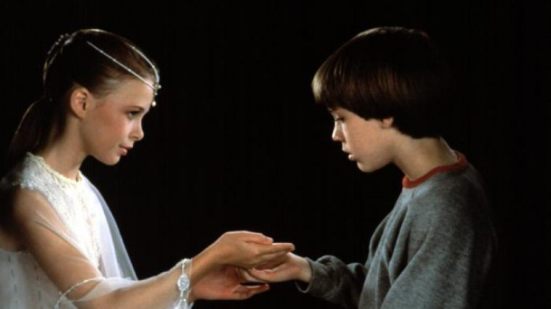
From The NeverEnding Story

A few weeks ago was the 33rd anniversary of the movie, The NeverEnding Story, being released to theaters. I wrote this little ditty to relate to the moral of the story, as I see it today.

Moonchild

The mantle of truth is a heavy coat of many colors,
it gives warmth and freedom, but not love, friends, or quiet.
I can wear it out for all see, or keep it secretly private,
hidden away from the flak and dissent of others.

During this never-ending search for the best,
I face many challenges, and risk the love of others.
Do I seek such love, or a truth not of any lovers?
Must Falkor guide me on my never-ending quest?

When it’s only a story, is it also a myth?
At the Magic Mirror Gate, what truth have I now?
What is it within me, that this story won’t allow?
Are love and truth the same, or is it the Oracle’s kiss?

I find the impossible hard to defend.
The nothing is within me, but I’ll take my stand
for the dream of truth to my last grain of sand.
No seeker would stop with this as the end.

We deny then accept, it’s hard to compile,
the path is a clear one for all who will stay,
it may not be possible, at least not today.
Make Fantasia all truth, son of Moonchild.

*Bill Reynolds 7/31/2017

On your never-ending story, look both ways. Mind the gaps, they’re not myths.

My favorite lines from the movie (and the youtube clip):

G’mork: Foolish boy. Don’t you know anything about Fantasia? It’s the world of human fantasy. Every part, every creature of it, is a piece of the dreams and hopes of mankind. Therefore, it has no boundaries.

Atreyu: But why is Fantasia dying, then?

G’mork: Because people have begun to lose their hopes and forget their dreams. So the Nothing grows stronger.

Atreyu: What is the Nothing?

G’mork: It’s the emptiness that’s left. It’s like a despair, destroying this world. And I have been trying to help it.