Today, my poem uses repetition. As prompted, I may repeat words or a phrase.
It is a place and people live there.
But I can’t tell you why.
The interstate curves or jogs
as the Colorado River passes,
going somewhere,
But I can’t tell you where.
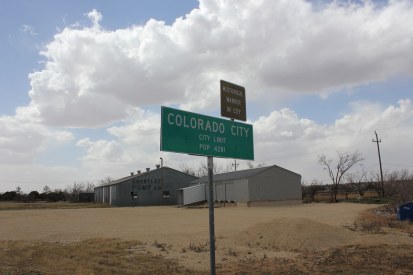
It’s hot in Colorado City
and it’s dry,
But I can’t tell you why.
In that small west Texas
town lives some of my love
But I can’t say much.
The water is bad, yet some things
grow, but I can’t tell you
how. Not much grows,
but they try—I can’t tell you why.
Confinement and warehousing
of living human flesh is done,
down yonder, in some
depressing hole, but I can’t
tell you much. Jobs, I guess.
The big white metallic groaning
wind monsters are there to send
volts and amps and megawatts
to somewhere, but I can’t tell
you where. Colorado City in Texas
has a past, tough people
in a rough place. It has a
future (maybe) but
I can’t tell you what.
They have a liquor store,
I think I know why.
Look both ways and don’t blink or you’ll miss why, or how, or where, maybe what.
Mind the gap near the dip, misery sleeps there.
Taking a cue from the John Keats poem, To Autumn, I must write a poem that is specific to a season, uses imagery related to five senses (I used more than five), and includes a rhetorical question, such as where are the songs of spring from the Keats poem.
Wasted days and wasted nights
for the sheer pleasure of guiltless
unproductive quietude of awareness,
as days are for summer, so are
nights fit for winter.
Loving both, I favor the transitions
of dusk and dawn, different but equal.
Each year, I am not the same person
I was. Nor am I the same each season.
I am at least four, maybe more
as I sense the changes each year
with each season, each day
brings new perceptions.
I belong within reality and metaphorically,
spiritually, and practically
somewhere within a transition
from summer to winter. An
autumnist is what I am,
but different of type with the
arrival of my knowing about cold
temperatures before I walk
and see changing leaves, I miss the
now gone migrating birds.
I do not hear them now.
Gradually, it seems, everyone thinks pumpkin
is my choice of taste, and the
traditional spice. Smell that
pumpkin pie or is that your latte?
The brisk autumn air is more
noticeable than in spring. It feels
different, more promising.
Pain seems less in Fall than
in Summer. I dance more at
Octoberfest, my balance is stable
and my sense of thirst has proven
stronger. I know my place
during those months with Halloween
and Thanksgiving.
Even my sense of passing time,
it’s more acute when the dog days
have come and gone. It is Spring
now—who will I be this year?
And next? What then? And
what about you?
Today I was prompted to write a poem about an animal.
Note: Prometheus (forethought) and Epimetheus (afterthought) were spared imprisonment in Tatarus. Zeus gave them the task of creating man. Prometheus shaped man out of mud, and Athena breathed life into his clay figure.
Thus Zeus,
before humans roamed Earth,
set Forethought and Afterthought
to task. Animals lived and roamed
without reincarnation or karma
fish swam, birds flew, and each
creature of day or night,
did the natural things, no karma required.
Dinosaurs upset a jealous god—gone!
With Athena, Prometheus made man.
But then monkeys mated with people
and Afterthought declared, “now
we need second chances”—
reincarnation, and karma came to be.
Humans did not know
what they were nor what to do.
so they caused trouble for goddess Gaia,
fought, became reincarnated afterthoughts
in lower and lower life forms to learn,
but each time, the lower form of
human was worse than the last.
Afterthought said to Forethought,
“look now, lower forms we need
for karma, these are slow learners.”
They created Lumbricus terrestris.
Earthworms that eat dirt and crawl
into the ground and are slimy and ugly
and are both male and female,
thus confused and lost bird food.
But to no avail as human nature
continued to confuse the gods.
Nirvana was vast and empty
when Afterthought reminded
Forethought, “Have you noticed,
we create humans, they fuck with monkeys,
die into lower karma never moving up,
and Zeus is pleased, laughing at us?”
Forethought said, “Indeed. We need a cover story.
I have one about a talking snake, two naked
humans too dumb to know it, some other god,
a garden, a tree, and an apple or some variety of fruit.”
Afterthought said,
“Without reincarnation and karma, no one
will ever believe that story. You need
worms, snakes are too hissy.”
Look both ways in forethought and afterthought but live in this now.
Mind the gaps and respect the worms,
you too have a next life and karma keeps adding up.
Today, I’m challenged to write a poem that uses the form of a list to defamiliarize the mundane.
The path, or trail if you like,
is a story. I know it’s a story,
because
it has a beginning, a middle
and an end. The path has composition
or a tale about the trail, it tails off,
or degenerates its form with
decomposed granite. The path
is decomposing hard stone
of different size rocks
down to powder, dust – granite.
The trail speaks with a crunching
voice, almost a groan I hear
with each step. The deer leave prints
when its wet after rain. Ants build their trail
on the path to cross perpendicular. I see it.
The sand of their trail is like a vein
across the path I walk, sometimes a snake
will try the trail, but not for long.
A variety of insects share their path.
Grasses and bushes, acorns for trees
find the trail worth a try. Bluebonnets
are undeterred by the inhospitable
and decomposing hard crushed pebbles,
and they grow through it to prove it.
There are sticks
and some leaves on the path,
on the sides, grasses push in
to reclaim what was
once not even a dirt path,
an unmarked open flowering field.
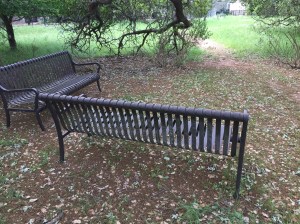
A bench sits
beside the trail and invites me
to stop, to rest, and to ponder
the stories of the trail, and the deer,
the birds, busy squirrels, sniffing dogs,
maybe a mysterious cat or two.
I accept the invitation before
I finish walking through
the story
told by the path that talks to me
(with a very special gravelly voice)
beginning, middle, and the end.
Today, I’m challenged to write a dramatic monologue poem. I tried to create specific voices of character that act as both narrators of the poem and participants, which could be acted out by someone reciting it.
****
He is just there, out of reach for now.
Or is it us? So waiting and watching his stare.
Dare we touch such darkness, or look upon him,
in a time to sample solutions?
To this time we have come, as you and I will have done,
to seek his work in our lives.
The darkness that follows, at times closer or farther,
but always, always there.
We look not to see into his darkness
as he looks upon us with calm eyes
for seeking an inevitable time, when we
feel his welcome breath as a wind of the wise.
With a song he beckons us to release
this pain of our suffering into his care.
This love has been our personal world,
but now we may touch an eternal threshold of peace.
Release me not, but allow you go with me
in search of our final love of his prize.
With pain and regret I feel deep in my bones,
to him, I send you in my despair.
Such shaking a coward deep within me,
I step into our eternal new home.
As we lie here in the dark, and together we sleep,
for a time never again to rise.
My challenging prompt for today was to write a poem that incorporates homophones, homographs, and homonyms, or to otherwise make productive use of my native (and only) language and its ridiculous complexity of spelling and grammar rules, and the unlimited opportunities for mis-hearings and mis-readings.
The good which hailed me
into the knight
on the ruff waives of see
razing my hares of frite
to witch she would flea
aweigh off to the wright
and leaf me only to pea.
My poetry challenge on this Friday is to write a poem about two things of mine. One was to be a dull thing that I own, why and how I love it. The other was a significant thing I own and what it would mean for me to give away, or to destroy the object?
*** A Prose Poem
Technology is significant. Toenails are dull. We upgrade computers, cell phones, and tablets. We cut toenails and toss them. Sometimes we wonder why we have nails (sometimes I wonder about computers too). Computers get viruses, toenails get fungi. One seems to make my life easier, the other we may paint and glitz up for fashion. One costs hard-earned cash, while the other may be pedi-’d when we mani-, but they were originally free. Toenails are expendable. They can turn black, fall off, and then grow back – sometimes.
While tech stuff may be frustrating, annoying, and expensive, we keep it close. Attached nails I never forget. But I would not go back home to retrieve a nail. Computers never caused me physical pain. I caused my feet anguish which they returned in misery.
Drop my phone in a toilet – get a new one. Drop this toenail in a toilet, I’d get it out, rinse and dry it off and I’d keep it. People joke about me and my toenail in a bottle. But while a painful memory, it’s a life treasure.
No longer a runner, my marathon streak ended at number 15, the Steamtown Marathon. This one was in the New Mexico portion of the Chihuahuan Desert for nine painful, grueling hours. Blisters as big as my feet, pain from self-abuse, all my toenails turned black. Some fell off.
I made stops at medical tents for foot care and to dump all that sand and desert scree from inside my shoes. During the short refreshing rests and pee breaks, I observed more serious casualties. Some turned back and limped or rode a golf cart home, others took the more serious ambulance rides. It was freezing at the start of the race one mile up and a hot high-desert afternoon when I finished. The blessed mountain top view from another thousand feet up brought a slight smile that said now we’re going down there.
I did the same event over the next three years as a wiser, more experienced participant. Finished all four New Mexico marathons (and the other 11) walking catawampus supported by ego and a feeling of achievement that defies words. It was more than a high. It hurt so good! That toenail is my reminder. I’m keeping it. You can have this other stuff.
Look both ways. Our greatest achievements will always be
the most difficult and painful.
Mind the gaps, wear good shoes, and take care of your feet.
Your nails look great!
My challenge today was to write a poem that starts from a regional phrase, particularly one to describe the weather. I am not a native Texan, but my wife and children are. I couldn’t do just one because the Texas culture is overflowing with verbal and cultural clever terms and phrases. The dialects for these (and there are so many more) shift, depending upon which part of the state you are in, and whether you’re in a city, small town, or rural setting. Disclosure, I can talk like this and at times, I do.
Boy, howdy!!
Looky o’r yonder,
I could sit still for that,
But she’s in a horn tossin’ mood.
Where y’all from?
It’s so dry Ima spittin’ cotton
Here abouts, it’s drier
than a popcorn fart.
Got all gussied up ta
go shoot out the lights,
but just cuz a chicken got wings,
don’t mean it can fly.
It’s hot, y’all!
Hotter ‘n a two-dollar pistol,
Like a billy goat in a pepper patch.
Yes’m, it’s hotter ‘n blue blazes.
Tomorr’a they’ll be frost on the pumpkin,
cold as my ex-wife’s heart,
I mean, cold as hell
with the furnace gone out.
Y’all come,
Ya hear?
Ain’t no butt ugly,
we all just sweetness an light.
Lord willin’ and
the creek don’t rise.
Speakin’ of suckin’ hind tit,
how ‘bout them Cowboys?
Y’all oughta be a-smilin’
like a jack-ass eatin’ briars.
Today, I’ve been challenged to write a poem emphasizing the power of if. I wrote a poem so-titled last September (read it here). This is different. It’s less personal – more philosophical and asks a lot of questions.
The Possibles (of Impossible Ifs)
If lives were perfect, would they be?
If not for night, would we know day?
Does pain delight then go away?
To live forever, would be okay?
Abraham would be a joke, see
Joan of Arc would be alive.
If life was perfect, would I survive?
What if I were you, and you were me?
What if we felt neither sad nor woe?
Where the hell would happy go?
If this might be, could you vote yes or no?
Or do banal waters float your boat?
Everything is possible. If that, why so?
Would perfect make me want to go?
In a perfect world show, what is not?
If the answer’s here. I want to know.
Leave the gaps. Let’s not be saps,
When we die, they’ll still play Taps.
There’s something here, I clearly see,
This imperfect world is alright with me.
The first prompt was to write a poem that provides the reader with instructions on how to do something. I am sick and recovering from a cold, so that’s my poem: how to recover from a cold.
Recovery
Illnesses, colds and flu and some others,
oddly part of a healthy life. It’s normal
for us to suffer. I never get sick.
Until I do, because some germ has taken
to my body as a nice B&B place for a week
or so, and my body begins evicting the visitors
causing displays and loss of sleep and feelings
for which miserable is the visible coughing,
sneezing, and blowing snot. Need more tissue.
Head and body aches and pains and all form
of physical and mental malady, but the torment
and discomforts are symptoms of recovery.
Wash hands often, save others from you, take
meds to dry, less coffee and no beer or wine,
this medication and that – take them all
as directed by a bottle or doctor, but mostly
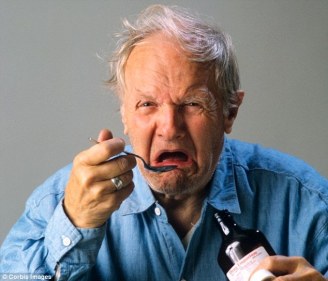
drink water, juice, tea, and ask doctor Google,
the answer is always the same. Wait.
Like most problems in life, illness will pass,
but another will replace it someday, a cold
or allergy from pollen, or some flu. Make feelings less bad,
medicate and wait, be miserable for days or weeks,
but recover you will. And the tiny viruses in you
will leave you only to return one day to the B&B.





 *** A Prose Poem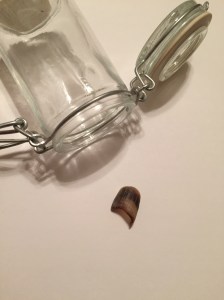


 Our Literary Journey