Essay: I was thinking (some say I oughtn’t)

This past ten days was essentially a good week, plus three days. I am healed from the previous week when I had to deal with some of Texas’ smaller critters. I’ve written about them before, but I know more now.

Picture an orchestra or big band about to play. The conductor taps a stand a few times to get everyone’s attention and raises her or his arms and the musicians get ready. The audience quiets (or should) and everyone prepares for the first blast of music when virtually every musician simultaneously begins to play. Got it? I love it when they do it like that.

Tap, tap, tap…and

Now picture me stepping into my back yard to move some things out of the way. I knew there was a fire ant den over yonder. So, I didn’t go there. I did this, that, and the other thing. I then walked up the stairs to my porch and over to the door into the house. I did not hear the conductor do the tap, tap, tap with the baton.

When fire ants sting (and they do, like fire, thus the name) they play you like an orchestra. These little beasts run out of the den/nest/hiding place and climb onto your body, shoes, up your legs and arrange themselves just lickety-split. Tap, tap, tap, arms raised, then BLAM! Everyone of those little mother-fuckers stings in unison. That’s how it works. It hurts. I had reminders on my legs and ankles for days. Apparently, they release some sort of hormone, so they all get the ‘ready-aim-fire’ call in unison.
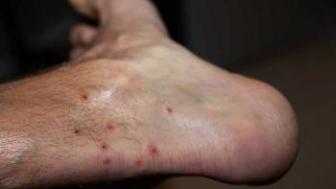
Fire ant stings about same as mine.

Last night I lay in bed thinking. Have you ever been to a place where some ass-hole or group of pains-in-the-ass people annoyed the hell out of you? The theater, a restaurant, some sporting event? There are lots of fire ants. Could we harvest a few hundred and put them in a little squeeze bottle thingy? Then, when we no longer can tolerate those people, spray about 20 of our little pissed-off fire ants into some strategic area of the offender’s person: hair, neck, feet, crotch…ideas? We’d get to play conductor. Stand, tap, tap, tap, raise our arms in the air. Let the music and dancing begin.

We’ve had a lot of rain for weeks in this part of (drought or flood) Texas. But it did not rain Thursday of that week. That was when I decided it was time to get back on the rough trails for my walk. I knew the grass was about knee-high tall everywhere they don’t mow. I did not realize how much grass grows on the trails! Since it has been so wet, fewer people have been walking the grass down and they have not mowed out there. I wore long pants tight at the ankle, socks, and a long sleeved shirt.

Chigger bites. I didn’t have so many.

I showered afterwards, but I woke up Friday morning with a dozen chigger bites. I used to think chiggers burrowed into your skin and stayed there. They bite, move, and bite again. Literally they eat skin (me). But they soften you up for dinner with a chemical that causes irritation and itching and lasts about a week.

I have DEET bug spray, and I know how to keep them off, but I didn’t use it. It was a cold, wet morning. I was fresh raw meat strolling through high grass looking for snakes or whatever critters might be hiding in there (ya can’t see chiggers). The hungry bugs were glad to see me. I transported chiggers on my person to my home on my body. For a week the bites mixed well with the fire ant stings for leg and ankle decorations.

The nest is still there in my yard, even though it was recently treated specifically for fire ants. I’ve ordered another kind of treatment for my clothing (permethrin) to deter the chiggers and other bugs, like ticks. I will treat clothing for trails and will apply DEET to my legs, ankles, and exposed skin. Oh, they found a mosquito with West Nile Virus on the south side. I live on the northside, but this should help with that.

I still like the idea of spraying fire ants on annoying people. Just don’t get caught.

Look both ways. Watch out for snakes, scorpions, and tarantulas.
Mind the gaps where hide the chiggers and fire ants.


Poetry — Octo-eventide

This October photo was taken by Dale Rogerson more than four years after I posted this poem. I replaced the one that was here with hers.

I hear the soft sounds of eventide’s song,
as it sings the transition of day into night –
of colorful gloamings where wonders belong,
while whispering air adds drama to sight.

Night birds respond by taking to flight
before today wrings darkness from light
The darts and the dives of the soaring black kite,
mixing their trills, flying into the night.

The sky-blue sunset is dotted with cloud,
as the stars drag the moon into the shroud,
where red and orange, and some yellow are glowing.

Adieu to the light as darkness keeps growing.

As the swift and the nightjar sing
songs that awaken
the owl tonight, a night yet to come.

From this part of life is another day taken,
and as humans will be,
by this darkness we’re shaken.

I feel the call of a long restful sleep
as evening pleasures promise to keep.
Remember this day as something we’ll miss.
Lie with me Love and share this sweet bliss.

©Bill Reynolds 10/12/2018

Look both ways into the night and the day,
mind all these gaps in a special way.

Essay: Ya’ Know What?

My morning means coffee. As I listen to the Keurig groan to push water through that little plastic cup, I ponder the cosmos. Then, I’m off to my room where, with the help of Lappy the laptop, I investigate the inworld of cyberspace and contemplate the secrets of the vast physical universe. I wouldn’t want to have some cosmic detail wrong.

I sit at my desk and prowl through blogs and respond to comments before flipping to Facebook. After typing a few comments, and some likes or loves, I click to email. And behold: there is the prompt for this week’s essay.

Galileo was put on trial and spent the last years of his life in prison for suggesting that the earth revolved around the sun. We think we have a pretty good idea of how the universe works now, but what if we don’t? What if we’re wrong? What if…??

(Good grief!)

Galileo was on house arrest and ordered to deny the heliocentric heresy, which he did before recanting his denial. The sun-center working of the solar system had been around, but the question for him was whether he agreed with it. This was during the reign of Pope Urban the 8th and when the phrase, don’t piss off the pope became popular. It was bad for Galileo. It was worse for others. In the 400 years since, there has been no Urban the 9th.

The rest of the prompt is figuring out the universe and what if we are (or I am) wrong. The universe is one of my favorite topics and being wrong is something with which I am quite familiar. Just ask my wife or kids. The last part asks, what if?

I like to quote phrases that make me feel smart when they affirm what I have supposed. This phrase is credited to Zen:

‘If you understand, things are just as they are; if you do not understand, things are just as they are.’

Galileo and Pope Urban lived under the same sun and stars within the same solar system. One was right, and one was powerful. But another phrase is might makes right. It did in this case, but not in the long run.

The universe did whatever it did without the help or knowledge of either man. To navigate by celestial means, one assumes that the sun, moon, stars, and planets move across the sky. To the observer, that is what appears to happen, but things are not as they appear.

If we’re wrong, nothing changes. For now, we know what we know, and we look for more answers or corrections.

In time, we’ll correct our errors. Learning is endless, and science has gaps everywhere. Even if we had the cosmos accurately mapped out and understood all the chaos, the potential for more knowledge exceeds the spatial vastness of the universe itself.

And as for the we part; some of ‘we’ think the earth is flat, some of ‘we’ believe some of us are alien creatures; some of ‘we’ deny lunar landings. Too many ‘we’ think Hubble telescope scenes and Voyager photos are fake. Far too many of ‘we’ think science is nonsense, and that it was all created by one supreme deity. Regardless of the signs and clear evidence, some of us will always go the wrong way.

What if is the wrong question. Let’s try what if not? Consider some possibilities.

First, try to imagine this world without science. It is easier to envision a world without humans or any intelligent life. Now, with a twist of the cranium, imagine what John Lennon suggested.

Imagine a world without religion. It’s easier than it was to extract science and learning from history. We’ll always have both, but now we can ask the what if question.

For over 65 years, no one asked me to explain the universe or how it came to be. People were willing to explain it to me in terms of what they thought. Then, a few years ago, about the time I started mumbling the word atheist with personal pronouns, I was suddenly cast into the academic role of Carl Sagan, Bill Nye, and Neil deGrasse Tyson all rolled into one. I was charged with explaining not only how the universe works, but how it came to be. I was also challenged to explain the source of all life on earth, the details of evolution, and to fill-in any scientific gaps. Perhaps the inquisitors thought I would be enlightened.

I not only don’t have all the answers to such questions, I don’t need to have them. Nor do you. None of the seven billion people alive today, nor any of the 100-billion who have ever lived had all the answers or needed to know them.

If the question is what if we are wrong; the answer is of course we are. We do not have all the right answers and that is exactly what all the excitement should be about. Are we willing to learn? It’s why we are here: to always wonder. As Galileo said,

I do not feel obliged to believe that the same God who has endowed us with sense, reason, and intellect has intended us to forgo their use.

***Bill Reynolds***

As you wander, look both ways.
Remember to look up.
Mind the gaps. As you learn, fill in where you can.

Thursday’s Poem

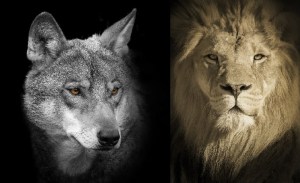
The Pack and the Pride

To the pack and the pride, to my deadly tribe
To run with wolves just one more time,
To chase our prey for one more day,
To catch the scent, to run the night away.

To howl at the moon, to make love
and to swoon. To drink to our health,
and to things greater than self.
To hear all the cries, from above and below.

To charge and to hunt, to fight with the best.
To give all that I have, and to hold nothing back.
To be true to my nature, to no longer resist.
To the pack and the pride, to give you my life.

© Bill Reynolds 7/26/2018

Look both ways to the peers and the cheers.
Know where you stand, with the gaps in the band.

Poetry: Sonnet – To Magic

My inspiration was from Edgar Allen Poe’s Sonnet — to Science (click to read it). Reading Poe’s poem gave me chills of guilt. While not anti-magic, I’m pro-science. Knowledge makes the universe more interesting. We will never know or understand everything. Magic and scientific exploration will go on. Yet, I do share Poe’s lament.


Sonnet – To Magic

Magic! True father of science thou art!
…Who brightens all things with thy happy cries.
Why say thou to poetic scientific hearts,
…A scolder, who brightens our dullest eyes?
How should we love thee? Or how deem thee wise,
…Who of magic wouldst leave him to his thing?
To see for answers in the quelled skies,
…Albeit he soared with daunted left wing?
Did thou set Diana into her car,
…And give Hamadryad her tree of wood
And seek shelter on some happier star?
…Hast magic not set the Naiad to flood,
The Elfin to green grass, given to me
…Summer dreams beneath the tamarind tree?

(Bill Reynolds © 9 May 2018)

With magic and science, look both ways and be mindful of many gaps.


Love is the biggest magic of all.

**Note: I am not a fan of analyzing poetry, but my editor questioned some lines. This explanation relates back to Poe’s sonnet. “Line nine, Hast thou not dragged Diana from her car? refers to the Roman goddess of hunting and virginity, who rides the moon across the sky at night. With science, people saw that the moon, instead of being a carriage for a goddess, was actually a lifeless rock, so science metaphorically dragged her off the moon. The next two lines talk about the Hamadryad, which is a nymph from Greek and Roman mythology that lives in a tree and dies when the tree dies. Science, however, believes the tree lives without such creatures, and so the idea of the Hamadryad has been driven away.”


Poetry — NaPoWriMo: Cactus Flower of Spring

The 29th (of 30) NaPo prompt challenged me to write a poem based on the Plath Poetry Project’s calendar. I was to pick a poem from the calendar, and then write my own verse that relates to it.

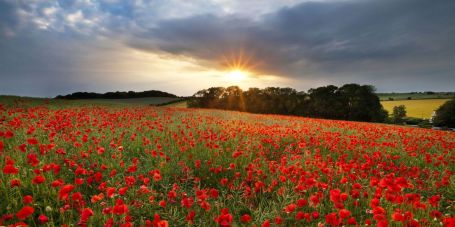
If you don’t know anything about Sylvia Plath, you should. Click on her name to link up. I selected her poem Poppies in July (click for link to analysis) because the city I live in is having a Poppy Festival today. Also, reading the poem and learning about Sylvia’s life was deeply moving.

Poppies In July (by Sylvia Plath)

Little poppies, little hell flames,
Do you do no harm?

You flicker.  I cannot touch you.
I put my hands among the flames.  Nothing burns

And it exhausts me to watch you
Flickering like that, wrinkly and clear red, like the skin of a mouth.

A mouth just bloodied.
Little bloody skirts!

There are fumes I cannot touch.
Where are your opiates, your nauseous capsules?

If I could bleed, or sleep! –
If my mouth could marry a hurt like that!

Or your liquors seep to me, in this glass capsule,
Dulling and stilling.

But colorless.  Colorless.

© by owner. provided at no charge for educational purposes.

Taken on this morning’s walk as I pondered Sylvia and her poem.

Cactus Flower of Spring

Little Cactus Flower of much despair,
Your short life, a sad bad mad dream.

Your song of pity plays on. Oh lord, I want to touch you.
Deeply reaching your inferior, I want to know your pain.

Misery and pain surround you,
dear yellow flower of agony and sorrow.

Surrounded by cacti, as you are,
I cannot save you in life or death.

I can only see your pain today,
Through words you left of such sorrow.

May your pain be gone, your love remains,
O’ Little Flower of despair.

Yellow, green, red and blue,
I see them now, and I think of you.

(Bill Reynolds, 4/29/2018)


Live and learn and lean both ways, looking for our Cactus Flower.
Mind the thorns and shun the needles, the gaps are there for all to feel.


Click link to National Poetry Writing Month

Poetry – NaPoWriMo: Euphonious Rain

The day 23 NaPoWriMo prompt encourages me to write a poem based in sound. The poem could incorporate a song lyric in some way. Euphonious means pleasing to the ear.


Euphonious Rain

Listen…I Listen with my whole body.
I feel the sounds before I hear them.
They enter my complete being,
I’m mesmerized, tranquilized by sound.
Sounds go deep into my muscles and bones, I feel
enticing beats dive into my groin and pound my chest,
I inhale the rhythm, the beats and the measures.

I feel the music deep within me. As I hear it – I become it.
Listen to the rhythm of the falling rain
as it taps above me. Hear the distant drum of thunder.
I am the rain, the tin roof, I release all thought.
My mindless feeling becomes alluring calm.
Feel the rumble and hear the night dance,
calling me into a sound-filled trance.

Into such a compelling sedative of sound
I let it enter, to hear the rain kiss me and touch me
deep within my being, it becomes my feeling,
my loving soul hears sounds of being alive.
To feel. To love. To be soothed. To hear and
Feel the rhythm of the falling rain calling to me.
Who’ll never stop the wondrous falling rain?

(Bill Reynolds 4/23/2018)

Look both ways on rainy days and mind the gaps and puddles.

Click link to National Poetry Writing Month

Poetry — NaPoWriMo: What is Love?

The day 21 poem prompt of the 2018 NaPoWriMo challenges me to write a poem based on the myth of Narcissus. After reading it, I was to write a poem that plays with the myth in some way.

My poem looks at love from Narcissus’ point of view. Was his beauty a curse? Was his rejection of the love of suitors, male and female, a problem? Should he have loved them all? One of them killed himself and asked the goddess Nemesis to punish or curse the object of his affection. That curse caused Narcissus to love his reflection. That’s what happened, and it is not vanity. How many spurned lovers have placed curses like that?


What is Love?

Bukowski was right
Love is a dog from hell
The passion
The pain
The inevitable pain
Did Shelly love?
Did Browning love?
Who did Dickenson love?
Did Poe, Wilde, Lord B?

Love is a dog from hell
Look at me
Look at you
We echo no love
For the other
cursed self-love
the prayer of A him
the curse of a Nem.
Bukowski was right.

No god can make me
Love you any less
I must die into hell
To love as I must
Be cursed forever
To be loved
By so many
No love to give
In return, forever
To be known as
The beautiful fool
who loved himself.

(Bill Reynolds, 4/21/2018)

Look both way to see love as it is.
Mind relationship gaps.

Click link to National Poetry Writing Month

A2Z Challanege: P is for Pooka

Pooka (or púca, phouka, phooka, phooca, puca, púka, or some other variant), while mostly a creation of Celtic folklore, is a ubiquitous goblin around the world. These little dudes are bringers both of good and bad fortune.

Pooka have dark or white fur that is more like hair. They are not very large. One can take on a variety of different looks, therefore, each may look different that others.

Pooka have similar equivalents throughout Europe. For instance, in Welsh mythology it is named the pwca and in Cornish the Bucca. In the Channel Islands, the pouque were said to be fairies who lived near ancient stones; in Channel Island French the pouquelée, pouquelay, poulpiquet, or polpegan may be them.

The pooka can be either menacing or beneficial. There are plenty of stories where they are wicked assholes, and others where pooka save the day and are heroic. Some stories have them as blood-thirsty, vampire-like creatures who are man-eating beings that hunt down, kill, and eat their victims.

According to legend, a pooka can assume a variety of terrifying or pleasing forms. This can be confusing, but they may be human, animal, or some hybrid creature. As an animal, they’re usually a horse, cat, rabbit, raven, fox, wolf, goat, goblin, or dog. So, we have lots of bases to cover since almost anything can be a pooka.

In most cases, if we humans are enticed onto a pooka’s back, it will be a wild ride. However, unlike a kelpie, which will take its rider and dive into the nearest stream or lake to drown them, the pooka does the rider no permanent harm. I know, “but you just said.” For a second there, I was pooka-possessed and wrote conflicting the things. It’s fantasy, but I suggest passing on the pooka ride.

Although pooka enjoy confusing or terrifying humans, they are generally benevolent.

If you carefully look both ways, you may see a pooka.
Keep away, be nice, and mind the gaps.

Click the P for link to A2Z site


A2Z Challenge: O is for Orcs and Ogres

The traditional mythological creature is the ogre. Orcs are more contemporary and were used by Tolkien in literature (Lord of the Rings), and have since found their way into RP games such as D&D. But ogres and orcs have much in common.

Ogre

Both are brutish, aggressive, repulsive, malevolent, and nasty creatures. Both characterize evil and represent deadly harm to humans in some way. Both are generally presented as creatures that eat people. Orcs are cannibalistic. In most cases, both are presented as somewhat stupid creatures. There is one clever orc in Tolkien’s stories, but he was still evil.

In the case of Orcs, they often end up as fodder or pawns in battles or doing the bidding of another more intelligent character. They can also be cowardly.

Orc
Orc

Generally, Ogres, while rightly and properly representing evil, are used or fooled by others and are often tricked into things leading to their own demise, precipitated by their own greed and nastiness. But these creatures are more classic and date back farther in history than orcs.

Scary cartoon character?

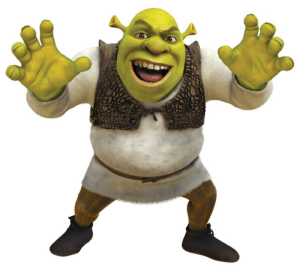
A note about cartoons and nice little very un-Brothers-Grimmly characters such as Shrek. When these characters are depicted as sweet and not-so-ugly, misunderstood, and mistreated heroes; it is playing with folklore and a silly cartoon. Ogres are bad news, period. No exceptions. A character is an ogre based on behavior and outlook, not skin color, size, or birthright. I like Shrek, but he is no ogre, regardless of what the Hollywood script says.


You say I’m not an ogre?

To further jump the fence to human mischaracterization, peeps are often metaphorically referred to as ogres. This is not because they look like ogres (some may). It’s because they are considered by someone as bad people based upon their behavior. There are no good orcs or ogres. If they are good, behave well, and hold some moral high ground, then they are something other then an orc or ogre. Evil is what they do, and that defines what they are.

Remember: Scorpions sting frogs. Frogs that can be persuaded otherwise drown. If you don’t know that story, click here.


Look both ways for any harm coming your way.
Avoid doers of evil and mind your own gaps.