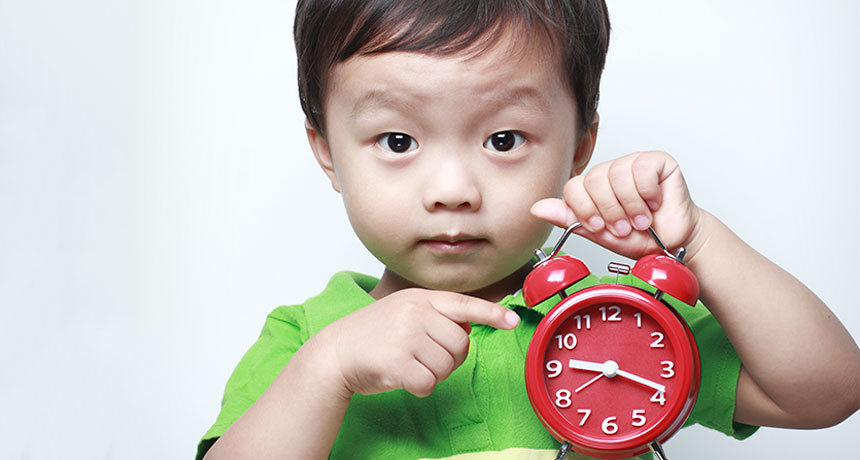
 The other night, as we sat discussing writing projects and their duration, the subject of time came up. There were three of us, representing roughly three generations. The more we talked about time and how each of us currently sees it in terms of the future, the more I realized how differently each one of us viewed it. Time does not change. We do, and thus our view of time changes with age.
 I claim to be a right here, right now kinda guy. I live in the present moment. As I contemplate writing a memoir, this seems to cause me an ‘angst’ problem in that I wanna, and I don’t wanna. (I also struggle with writing about myself, but that’s not the issue.) I like History. It could’ve been considered my second minor at A&M. My manuscript is historical-fiction with too much history and not enough fiction. This morning I was asked if I would write a time-travel book (I’m noticing that Vickie has a knack for asking me thought-provoking questions). I didn’t have a ready answer, but after a lot of discussion and thought, my answer is ‘nope.’
 After doing a bit of reading, I’m no longer positive that I know what ‘this moment’ in time is, or if it exists. My metaphysical (woo-woo) friends get excited about this fascinating subject. When they do, I look at my watch and note, “It is one-forty, PM.” But they’re right. It’s really an interesting topic. Physicists and philosophers are all over it. Check out all the wiki and academic research (here and here), it goes on-and-on. But, I want to address time in terms of normal people; ya-know, like a truck-driver, retired cop, and Sociology grad-student walked into a bar to discuss it.
The grad student is a young female (they live longer) and has tons of time and a bright future. She is planning her entire future. The truck driver is a middle-age, overweight, heavy smoker and drinker. He doesn’t think about it much, but needs to change his life style in order to have more time. The retired cop has been there and done that. He feels like he’s been lucky and may be on “borrowed time.” Each can see past and future time differently, but they are now in the same place doing the same thing. The biggest difference is age.
It’s not so much that all of us can’t plan to write our novel with five sequels. It’s how we see the time that it will take to do that, not to mention the patience and persistence that will be required.
Two of my favorite songs about time are below. The first is Jim Croce’s Time in a Bottle. The video is with his wife, Ingrid, and their son, A.J. This song was recorded just before Jim’s untimely death and later released posthumously.
The second is a rendition of the Byrds’ Turn, Turn, Turn, which has a biblical, Ecclesiastes basis.
Finally, the last video is a George Carlin skit on time. It is about 11 minutes long, so if you’re not a Carlin fan, skip it. If you are, enjoy.
Oh my! Look at the time.
 Yolonda, my wife of 50 years (we married at age 2), is a native Texan and has her ‘druthers.’
 Billy on right, (w/Phish bassist Mike Gordon), our oldest child is in his mid-40s, a very nice, loving, big-man. He’s always been an avid reader, a talented writer, a movie aficionado, and a hard-core Phish-head. Add bicyclist, father, hubby, friend, musician, and deep-thinker.
 Steven is our middle-child, now in his early 40s. He’s another good guy. An avid sports fanatic (Spurs and Cowboys) and mountain biker. Add hubby, step-father extraordinaire, house music DJ (Steve Balance), friend, and all-around cool-dude (maybe pragmatic and analytical). He initially said that he had no fav quotes, but when he and his sista’ got to texting, there they were.
 Our beautiful ‘baby’ is Julie. She can recite every line from the movie Grease (oddly did not quote it), is an artist, a thirty-something, 21st Century hippie, a mom and step-mother. I think she is a wonderful writer and, like her mom, a Grammar-Nazi. She lives in the middle of nowhere with her hubby, son, occasionally a step-son, or two lovely elves, too many cats, horses, and sometimes (because he likes to chase the horses) a dog.
 I claim a few basic beliefs. I believe in love, perseverance, and personal strength through relationships. I believe in memories and in karma. I believe in music, compassion, and empathy. But mostly I believe in the power and value of laughter; the more painful and debilitating the laugh, the better. Striking sadness, awe, loss, illness, and awareness of world misery affect me too. Sign me up for the clichés of humor: to die laughing, having the last laugh, laughter is the best medicine, and a side-splitting belly laugh. If you are infected with the acute illness of laughing for no apparent reason, I want to be infected too. I love to laugh. When I hear a good joke, it’s hard for me to retell it because I laugh so hard in the process. I want to be embarrassed and need to leave because I’m overcome by laughter. I want to laugh at everything. When seeing and hearing the laughter of others, especially children, I want to laugh without knowing why.
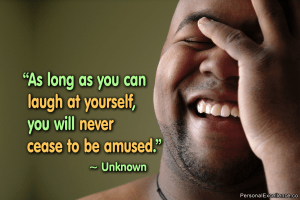 A question I like to ask is, “What do you want?” Answers vary, but mine is, “I want happiness.” Looking back on life, it is difficult to recall happy times with no laughter. It makes me feel good. Laughter is a natural high like no other. It’s free. We can’t over-dose. I thank all kinds of humor for making me laugh. Many things are funny, some are not. But I laugh anyway.
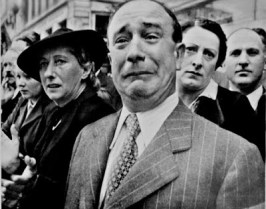 When I ponder c’est la guerre, my thinking goes more toward the conditions or philosophy of war, or the way of life during times of war. As an American, the concept is a little foreign to me (like our wars), since the only ground war we experienced was our war with ourselves: The Civil War. Ironically, it may have been the most destructive of our history in terms of loss of life and property. For at least the past 100 years, we have considered war as something that happens over there. Lucky us.
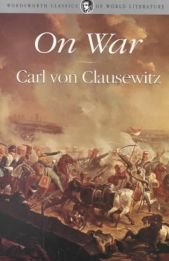 While there are many good books regarding the philosophy of war, the classic gold standard is On War by Carl Von Clausewitz – required reading for virtually every military officer. War and Peace by Leo Tolstoy may be the preeminent novel on the subject. And the classic for weaponry and strategy is The Art of War by Sun Tzu; more required reading, if not necessarily the best reading entertainment.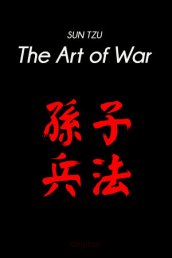
 More than a year later, I learned a new word that explains my reaction to the painting. It had never happened to me before, and has not since. The word is duende. It is a noun meaning the mysterious power of art to deeply move a person. There is a lot more to and behind this word. You can check it out for yourself by reading the wiki, if you’re curious. Apparently, artists sometimes experience this with their own work. However, if you’re familiar with this, or had a similar event happen, I would love to hear from you.
 Our Literary Journey