Blog News for Poets and Skeptics

Hey out there,

Was the salutation Pat Conroy used when he finally blogged (he disliked that word) what he referred to as his letters. On March 26, 2014, he wrote, “I’ve come to that point in my life when my memories seem as important as the life I’m now leading.” I understand that. Conroy fought blogging, but eventually took to it, resulting in the book A Lowcountry Heart: Reflections on a Writing Life, which is an anthology of his postings.

Pat Conroy’s Outlook

Pat touted the fact that he gave up writing poetry at a relatively young age and thus did much for the world of prose, by writing it; and for poetry, by not writing it. Pat also made a wonderful life for himself and his family by writing several best sellers. Had he been exclusively a poet, the odds would have been against equal financial success.

My Writing Memoir

I have been writing poetry (or creative prose) for a short part of my long life. In a way, I gave poetry up at young age too, by not beginning writing until much later. That was a mistake I’ll always regret. All I can do now is write as much as possible.

I smile when other writers talk about how they began writing in grade or high school, some as late as college. Well, me too, but my goal was to complete assignments for grades and promotions, no more. Bukowski began his poetry career at 35, half the age at which I began my own personal tryst with verse.

Like many others, I began writing earnestly after I fully retired. My previous careers involved extensive writing, mostly of a technical, business, or academic nature. It was not what one studies in Creative Writing or Memoir classes. It paid well enough. During my years of employment, I learned much about the craft of writing, if less about the creative and artistic aspects. I am working my recovery.

On Memories and Life

So, getting back to Conway’s quote on memories and their importance. I now lead the life of a writer and blogger. When people ask me what I do: I write. My memories, like Pat’s, provide seasoning, if not substance, to everything I write. Sometimes I think that since I started so late, I need to catch up. Now, I write all I want and about whatever I desire. I feel like I am making up for lost or wasted time.

New Blog Site Announcement

This blog site will continue as a literary blog for my poetry, essays, and anything related to writing that I want to share, but I have created another blog site. It is called Dispassionate Doubt: Broodings and Ponderings of a Pensive Skeptic.

I don’t like to post things unrelated to literature on Our Literary Journey, even though I wrote them. Furthermore, during the month of April I will post a poem each day on this site, related to the challenge of National Poetry Writing Month (NaPoWriMo). Additionally, I will post every weekday for the A to Z blog challenge on the Dispassionate Doubt site. In subject and substance, one will have nothing to do with the other. So, I will have two blogs. I think many of you do also.

Poems of February 2019

This completes my second month writing a poem each day of 2019, as a self-challenge. The topics, subjects, or titles of the 28 poems were:

  1. Placid Place (finding peace after fighting)
  2. Morning
  3. Why? (do we do things we do?)
  4. The Stone (also working an essay on this)
  5. How to Die
  6. Paths
  7. Tranquility Shit
  8. E-Day (Emily Day)
  9. The Call (a life-changing phone call)
  10. Changes (in life)
  11. Basic Good (me, maybe)
  12. Master (becoming one)
  13. Miracles
  14. Weeds (literally)
  15. What It’s Like – Old (on aging)
  16. An ekphrastic poem: An Old Boat (also one about painting my portrait)
  17. Dancing Trees (In the wind)
  18. Death by War
  19. Play (literally about playing)
  20. Midnight Writer
  21. Streets
  22. The Florence Diner (the place and people)
  23. Perception (differences in how we see)
  24. I’m Alive (celebrating life)
  25. Coal Miner’s Son
  26. There Be Dragons
  27. That Old Time Rock and Role
  28. FUBAR

To view the new WordPress blog site, click on the title in the announcement paragraph or here.

Look both ways, but remember it rises in the east and sets in the west.
Learn how to find Polaris, the north star.
Mind the gaps, the wonder, and the mystery of life;
of being, and of the universe.
Poetry: Peace Be With You


Dark Night Warrior

I love the common, the warm blanket of peace,
the soft whispers of a perfect and quiet day,
the calm of nature, birds, and other people
smiling and loving and happy.

But the Dark Night of thunder and storm,
of lightning and wind and rain excites me.
I feel more alive in a storm than safe
in the banal aspects of a sheltered existence.

My every dream is a warlike challenge
of attacks and kills and fights to a death.
Even mine.
What warrior is content to watch the battle?
Half of me belongs to the night, the dark.

I believe in war, combat, risk, and battle.
Bore me not with stories of contentment.
Challenge me with fear and excitement
before I die from fucking fattened monotony.


Look both ways and ask what kind of existence you want.
The gaps?
Oh yes, there are always the gaps to mind.

Poetry: Unbelief

The greatest sin of unbelief

They tried my soul –
and found it guilty
of the greatest sin,
its unbelief.

There it is
for all to see, the bad is there
all about me, can’t you see?
not rape nor torture or the harm
of murder
none of that is my sin.

I killed no gods or goats
all souls still running free
to come and go,
but my only sin – no god
shall I ever know.

How do I dare
to declare
my mind be free,
and so bare. is it not right there?
show me any god,
then might shall I to care.

Condemn my soul,
if you must. but look at me
and you will I trust
see all I can be,
is humanly free.

The day I die and somewhere lie,
you’ll accuse me as others cry,
not of being bad nor good,
but unlike you,
I just did not believe to be true,
my unbelief in god now flows
through as all my being goes.

©Bill Reynolds   1/28/2019

Look both ways. Mind the gaps.

Essay: Romantic or Realist?

Disclosure on me:

I’ve been told that I’m a sensitive man. Given the smiles and nods around the room, it was intended as a compliment. The unstated enigma was that men normally are not.

I was recently told that I am a romantic (noun) because I’ve written romantic (adjective) poetry. The person who said that was laughing at the time because in her view, that is ironic. She claimed the higher ground of a realist (noun) partly because she was on her third (two bad experiences) marriage. This time to a man who was quite ill, adding to the reality of life.

The poem was about the dreamy desire of a (real) woman who was not in a happy, romantic relationship. It was my interpretation of her romantic dream – how she wanted things to be.

I responded that I accept who and what I am, that one can be both romantic and realist (definitions-dependent), and that a romantic realist is a thing in art, if not in people. Realistic art does not necessarily point to a realist artist. A writer of romance literature or romantic poetry need not hold personal romantic views. But, she was partly correct about me (does not know me well).

Most of this is because people attach my writing to my persona (or vice versa), which is okay, but what I write is not always me and certainly not about me. Often, I write about the world and people or things I see. In this case, my poem was about someone I knew who is struggling with life and her circumstance – her dreams and desires, perhaps pushed beyond the limits of practical reality.

Once bitten, twice shy

I believe that we learn best from the most painful lessons of life. We recall shocking or painful times well, if not always accurately. For my age group, it might be when JFK, RFK, or MLK were shot, among others. I suspect that the lady judging me formed her view because of her personal life experiences. That’s fair enough. But given the number of times I have found myself speaking in defense of reality and things as they truly are, a true romantic I am not.

The paradox

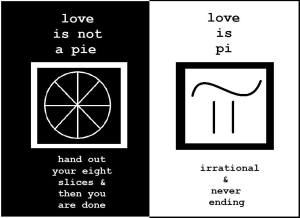
I haven’t posted about the paradox of love in a long time. I’m uncertain and struggle with what to say and how to say it. What will people say or think? I worry less about my writing and more about the subject or content. I sometimes wonder if I wrote about crime (I haven’t) if the FBI would show up at my door with a search warrant. But let’s give this a go even if I admit to the romantic leanings of a realist with both feet planted in the real world.

How long is long enough to love someone? In both quantity and time, “I love you now and I will forever (time), to the moon and back (quantity).” Is one day or night all there is? Is 20, 30, or 50 years enough? My mother died about 30 years ago, but I still love her. I’ve been married over 50 years, and my wife and I love each other.

I write about the Paradox of Love, loosely basing some of what I say on a book of the same title by Pascal Bruckner. I add my observations and limited experiences (in the worldly sense mostly, but I love many people, most seem to love me back). There is no shortage of material on this topic, many experts, and hundreds of ways to look at it.

The paradox to me is when love is added to the learning mix of life, painful lessons do not seem to stick. For some, the devastation from damage where love is involved is virtually unrecoverable. Yet, I have seen many times when the paradox of love allows us to move on with life and with love. Once again, “I love you forever…we love each other….” For me, that is the paradox. The human relationship quandary. However, as with the lady who labelled me a romantic, we may move on with less romantic naivety.

The human condition

Yet, love is forever until one of us blinks, looks away, wants more, samples greener pastures, or simply decides it’s over. Then all bets are off. Forever isn’t quite so long as we thought, right? None of that for better or worse shit, it must always be better and continually improving. Bore me and you’re gone. Then there is the ubiquitous found someone else. I admit to being dramatic here, but I’ve seen ugly romantic breakups and divorces. I could add friendships, but I am focusing on romantic love. What makes it work so well for many, yet repeatedly fails for others? Why?

I get it. The human condition is imperfect, and these things happen. People in love can, and do, fall in love with others. How many times do we love before we spend a lifetime with someone? Some people are polyamorous (one is not enough – a blog for next time).

Rarely is it okay with the other person to act on this. And if we do act on it, often all the shit in hell piles into the manure spreader and is sent flying (shit storm). On the bright side, without all the misery involved with love, over half of country music’s best crying in yer beer tunes would have never been sung. That’s also true for much R&R, R&B, and opera. I enjoy romantic comedy, but there’s room for tragedy in my mind. And is pain not the best teacher?

Free love – by the book

In his book, Bruckner describes the 1960s liberation movement (mostly civil rights, anti-war, and feminism) as a time of “free love” (especially within hippy groups but certainly not for all). No commitments, openness and a willingness to share even the most intimate and sexual experiences with others. That still goes on, I suppose, but without all the publicity of post-1950s drama.

Many good things came from the movements of the 60s: improved equality (woman, people of color, others), better human rights, music, long hair, care for the environment, and others. But the oxymoron idea of free love was not one of them – fortunately, according to Bruckner and me.

Free and open sex is just that. And love is also just that, meaning it is neither open nor free (e.g., she/he is mine). While I can’t speak for anyone else, and certain groups (religious, LGBTQ, cultural) may see or experience this differently, the romantic love two people may share could be about the most powerful emotional human force we possess. But, (and my idea of the paradox is) it is also among the most destructive.

All my exes live in Texas

A friend of mine who had been married several times, looked at me one day and informed me that her latest husband told her that he no longer wished to be married. Obviously shaken, she further confided that she had never loved him. I didn’t ask her (or him) if he felt the same way.

After the divorce ball was rolling along, he asked to reconcile (meaning he’d been dumped). She declined, which pissed him off, and it was not a nice, amicable divorce after that. The third thing she told me was that she was sure that she was not good at marriage. A difficult time followed for her, but that was mostly recovering from financial and ego damage. In time, she survived both and eventually remarried a guy after a long partnership (News update. I recently learned they divorced, and she is engaged to a new man).

Which are you?

To love and to be loved are wonderful things. Romantic me. To love often may also be wonderful. To be the couple in my poem is indeed romantic, but is also realistically feasible. Yet, to love comes with great risk and personal vulnerability. Remember, even the realist was on her third marriage. What is this human condition I call the paradox of love?

My original post on the paradox of love was over a year ago. It is more about the book than my thoughts. Read it by clicking here. You can read the poem that started this by clicking here.

Look both ways in romance and reality.
Be especially mindful of gaps in romance and real world relationships.
Live and learn, love and learn. Risk love, always.


Note: paradox synonyms; contradiction, contradiction in terms, self-contradiction, inconsistency, incongruity; oxymoron; conflict, anomaly; enigma, puzzle, mystery, conundrum, dichotomy, and incongruity.

Song Lyric Sunday – Laughing


Jim selected the Song Lyric Sunday theme of laugh.

I almost took a pass today because it’s that kind of day for me. But, I browsed my iPhone playlist and selected Losing My Religion by R.E.M. Fucking perfect!

This is a song about a pissy (as in arrogantly argumentative) mood, which is where I am this Sunday morning. The mood will pass, but this song is a classic rock-whiner. I love it! I might not normally pick alternative rock, but this tune means a lot to me.

I prefer the official (old MTV) video best. Since it has no lyrics displayed, I’ve pasted them below. The hook is in the refrain lyrics:

“I thought that I heard you laughing//I thought that I heard you sing//I think I thought I saw you try”

Losing My Religion
R.E.M.

Oh, life is bigger
It’s bigger
Than you and you are not me
The lengths that I will go to
The distance in your eyes
Oh no, I’ve said too much
I set it up

That’s me in the corner
That’s me in the spotlight
Losing my religion
Trying to keep up with you
And I don’t know if I can do it
Oh no, I’ve said too much
I haven’t said enough

I thought that I heard you laughing
I thought that I heard you sing
I think I thought I saw you try

Every whisper
Of every waking hour
I’m choosing my confessions
Trying to keep an eye on you
Like a hurt lost and blinded fool, fool
Oh no, I’ve said too much
I set it up

Consider this
Consider this
The hint of the century
Consider this
The slip that brought me
To my knees failed
What if all these fantasies
Come flailing around
Now I’ve said too much

I thought that I heard you laughing
I thought that I heard you sing
I think I thought I saw you try

But that was just a dream
That was just a dream

That’s me in the corner
That’s me in the spotlight
Losing my religion
Trying to keep up with you
And I don’t know if I can do it
Oh no, I’ve said too much
I haven’t said enough

I thought that I heard you laughing
I thought that I heard you sing
I think I thought I saw you try

But that was just a dream
Try, cry
Why try?
That was just a dream, just a dream, just a dream
Dream

Songwriters: Bill Berry / Michael Stipe / Mike Mills / Peter Buck
Losing My Religion lyrics © Warner/Chappell Music, Inc, Universal Music Publishing Group

Look both ways and be still my heart at the sound of mandolin and flute.
Mind the gaps, or ‘but that was just a dream, try, cry, why try?
That was just a dream, just a dream’ or maybe
a dream within a dream.

Note: I get it, but it would be cool if there was a flute.

Essay: Shit Happens

  1. My mother said, “What did I ever do to deserve this?”
  2. My wife looked at my adult son and said, “Everything happens for a reason.”
  3. The minister looked into the eyes of the congregation and said, “There is no such thing as a coincidence.”

I forget the exact contexts and situations.

To my mom I would say, “You did nothing to deserve cancer; no one does.” While there may be reasons someone gets cancer, it is not punishment for being not good enough or for being bad. However, it is no joke that a lot of people think like this because of religion.

To my wife I say that most things have a cause and effect. Many things happen due to natural causes, environments, and special situations. Some things are random and have disastrous outcomes. Shit happens.

When someone is fired from (or not selected for) a job, and they later get a much better job, that is good fortune probably assisted by the fact that the person is well qualified for both jobs and it is fortunate that they snagged the better one. The opposite also happens. While such a comforting phrase may bring minor, temporary solace; it is not true that everything happens for a (supernatural) reason. A spiritual being causing a temporary problem to bring about a happier or sadder outcome fails any common-sense test.

To the minister I say that coincidence may not mean exactly what you think it means. According to one (MW) dictionary it relates to coinciding of events that happen at the same time by accident but seem to have a connection. Better words might be random, arbitrary, pointless, haphazard, or desultory.

Whether one believes in a god or not, and regardless of the influence of any god, those words exist because things and happenings can be random, pointless, and desultory.

I recall reading a poem in Stumbling Blocks or Stepping Stones: Spiritual Answers to Psychological Questions by the late Father Benedict Groeschel. The poem of unknown authorship is titled “The Weaving.” The last of three, eight-line stanzas goes,

At last, when life is ended,
With Him I shall abide,
Then I may view the pattern
Upon the upper side;
Then I shall know the reason
Why pain with joy entwined,
Was woven in the fabric
Of life that God designed.

While the poem is beautiful and weaving as a metaphor for a life designed by a god is useful, it also points to the unknown reason for the suffering in life. It implies that we will find no reason until after death, and then only if we are in heaven with the deity who will, presumably, make it all clear. In other words, it makes no sense.

I prefer this outlook from the song “The Sad Café” by the Eagles.

***
Now I look at the years gone by,
And wonder at the powers that be.
I don’t know why fortune smiles on some
And lets the rest go free
***

Shit happens. It’s not our fault. Blame it on whatever imaginary entity you choose. That may be the only reason you ever find.

© Bill Reynolds 1/10/2019

Look both ways for the reasons in life, but don’t accept not knowing—wonder.
Mind the gaps, they are real, but may be overcome with knowledge.

Song Lyric Sunday – Boys

Helen’s theme for today is boys. I prowled through many songs about boys and by The Beach Boys and other groups with boys in the name. But I kept coming back to a song with boy in the lyrics; a song I really like: The Boxer, sung by Simon & Garfunkel, written by Paul Simon. I love the music, the story, and the lyrics. This song makes me yearn for something, but I don’t know what.

The hook lines for the prompt are in the first (‘I am just a poor boy though my story’s seldom told...’) and second (‘...I’m no more than a boy in the company of strangers…’) stanzas.

I selected the video because the lyrics are there and images get you through a lot of La la li, and Li la li, in the refrains. Great, great song.


Look both ways when runnin’ scared and laying low. Mind the gaps on 7th Avenue.


Click graphic for link to SLS page.

Paradoxical Love Poem

Disclosure: all is well with me. My life is fine. This is not about me, at least not now. I did not write the poem. Its attraction for me is that it abuts the paradoxical nature of love, as I see it. This post is not about anyone I know but relates to the yin and yang of human romance. I don’t know if the poem is intended to be about anyone. Although, it’s inevitable that some of us will see our own shadow somewhere in the poem. And this: I have experienced shingles even after having been inoculated against the infection, and I plan to take the new shots soon. A poem that compares love to that has my attention.

I’ve been working on two other somewhat unrelated essays on the paradox of love for a long time. For months, it has been slow going for several reasons. It’s not the writing. Getting a handle on some aspects of human nature has been a high bar for me. I may be a little reluctant to publish — not totally sure why. Furthermore, I am multi-interested, but when I try to multi-task, as we call it, I FUBAR, as we also call it.

Romance novels are big sellers, and maybe I’ll write one some day. For now, I want to write about the reality of why we are as we seem to be. Romance novels are works of fiction, but there is some reality-based reason we read them.

Why do we love when we know we shouldn’t? How can we love people who do not love back? Why does our greatest pleasure, love, hurt? Why continue loving when it hurts?

And what does sex have to do with it? Obviously, with some love it’s ruled out. In other cases, it is expected.

Then I saw this poem in The Sun magazine. Part of the paradox of love for me is the pain. The pleasure of romantic love defies description (doesn’t keep me from trying). But is it enough to endure the “love hurts” painful kind of situation? Do we love people and wish we didn’t? Conversely, are there people we don’t love, but wish we did?

I would say no, but I would be wrong. Love overpowers all forms of wisdom, logic, caution, safety, and potential for pain. We’d lie for love, we’d die for love. So many of us go into relationships having experienced the pain and suffering, and knowing what another relationship might bring. Some of us are in those painful relationships. That is what is so great about it.

When I read this poem, I thought she had nailed it. That poem reflects exactly what I am talking about when I try to put the paradox of love into an understandable and logical framework of words.

Due to copyright law, I cannot publish the poem here, but the magazine allows me to post a link to their web page.

Please click this link to the poem Loving You Burns Like the Shingles by Terri Kirby Erickson and read it for yourself at The Sun’s magazine website.

Note: The Sun allows you to view two articles per month without subscription. So, if you have already viewed two on their site, you may not be able to read the poem.

I’ve added a little youtube of the song, Love Hurts, by Nazareth. Sorry for the downer. We love to love, and love is not a downer.


Look both ways, to the past and toward the future.
But focus on the here and now. Mind gaps in everything.

Essay: Thanklessness

Gratitude

Some say it’s the least felt of human emotions. That may be. It seems to be the feeling least written about from a mental health professional perspective. And yet, I’ve read that grateful people are happy people. Are they happy because they’re grateful, or vice versa? I should know because I consider myself one of them.

I am uneasy when people thank me for my military service. While there were days I would not want to repeat; some of those memories are among my best. It was my career – my profession. If people were silently grateful, I’d manage. I used to humbly balk at such comments, but I soon learned to say thank you and move on.

I was walking down a street in Crystal City, VA (just outside of Washington, D.C) with a US Marine Corps colonel. We were headed for a meeting. He was in his uniform, but I wore civilian clothes. As we were waiting to cross the street, an attractive young lady walked up and shook his hand as she thanked him for his service.

After she left, he said, “Since being married, I no longer know how to handle situations like that.”

I replied, “Next time, introduce your Air Force friend and I will take it from there.”

The value of gratitude to our overall mental health is well known. I know of no self-help book that suggests being thankless. Everything from gratitude lists to National Holidays inspire us to be reflective of those things and people we feel have improved our lives.

A Memory

My favorite gratitude story involves the son of my wife’s sister. She had six boys, of which Scott was the youngest. Whenever we visited his family, I would find time to play with Scott. Be it baseball, football, basketball, or some other similar endeavor, Scott and I interacted and played – just the two of us. It never occurred to me, as the youngest boy, Scott’s five older brothers had better things to do. And his father, a borderline workaholic, had been worn down by the first five boys.

Eventually, Scott grew up, got married, and graduated from Texas University. He and Sarah had two lovely daughters. I enjoyed my time with him and never gave it another thought after we had both moved on with life.

Scott matured into a handsome, well-liked, and friendly man. Everyone liked him, despite his reputation as a clever prankster.

On a visit with Scott and his family, he asked to speak with me alone. After we retreated to a private area, he said, “I want to thank you for all those times you played ball with me when I was a kid. No one else did that and I have never forgotten. It meant a lot to me. Thank you.”

By being me and playing with some kid, I created memories for him. Now, my memory is of his expression of gratitude. Within a year, Scott had died of a congenital heart problem. When I learned of that, my first thought was of our chat.

‘Thankless’ Employment

I’ve had some experiences with work-type situations some people call “thankless jobs.” While I understand what they mean, I can never get my brain around what a ‘thankless’ job is.

As an additional part of my real job, I once volunteered to be a Facility Manager for a large building where several hundred people worked. I was paid nothing extra.

A few months into the building job (which my wife titled Permanent Latrine Orderly [PLO], from the movie No Time for Sergeants), I realized that all my voice mail messages were either new problems, or comments about on-going issues related to the building, not my real job. I liked the challenges and the idea that my efforts made a better place for people to work for nine hours or more each day.

I also enjoyed the times people expressed their gratitude to me for doing such a ‘thankless’ job. Even with that irony, I also liked when people sent emails to my boss telling him how much they appreciated what I did. He let me know. One day he introduced me to some visiting VIP as his Facility Manager rather than my real job title. Was that a slip-up, or was it because he most appreciated my building caretaker duties? Thankless? I think not!

Thankfully Happy Few

I admit, as Harvey McKay titled a chapter in How to Swim with the Sharks Without Being Eaten Alive, gratitude is (or may be) ‘the least felt of all human emotions.’ But I also know when we think about it, we are usually grateful.

It’s not a perfect world. We have a fair share of ingrates and thankless souls wandering around. But thankless is the other side of what we ought to be, and most of us seem to know it.

I further admit knowing some who fear happiness. They are normal when complaining or worrying. In those cases, we either simply wait for it, or we speed things up by asking, “How are you doing?”

Their answer is, “Well, let me tell you about it….”

There’s nothing wrong with having an attitude of gratitude and it may even lead to a healthier and happier life. Yet, I’ve known some very happy, but cantankerous old farts who relish the chip on their shoulder. Good for them.

The only thankless jobs are the ones we don’t want. People have been treated for long term depression, only to find relief with a job change. It happens.

And the only thankless people are the poor souls who may be struggling with their own sorrows, problems, or demons.

And isn’t happiness what we ultimately want? I think so.

©Bill Reynolds 11/26/2018

Look both ways for health and happiness. Mind the gaps. They may harbor traps.

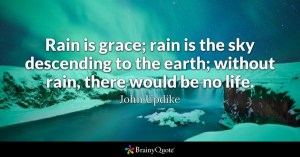
Poetry: The Whole(y) Trinity (Earth+Rain+Sun) +Air

Our Earth is breathtaking, awe-inspiring, magnificent, wonderful, amazing, stunning, staggering, imposing, stirring, and impressive. It’s also formidable, fearsome, mind-blowing, jaw-dropping, marvelous, and wondrous.

I

It is pure coincidence when the sun and I rise together.
Some mornings, I get to see him peeking through smoky cloud,
other times he is in full blast before I notice the lightness
of another day, I might say, he’s looking kind of gray.
We need the sun. Without sun, we are none, no life begun.
But too much sun is less than fun for those of us
who’d a fair-skin mum, with sun’s-red or blonde hair.
Here come the sun, with promises of things not done.

II

‘tis all the same with the rain, hello, this is nature’s sweetest gift.
The water of life, with two hydros and one oh, of it we drink
vapes up to the sky, but not to the sun, to meet
with clouds of wonder before coming to cleanse
and to make things grow, sometimes as ice, or maybe as snow.
To make us a soup the plants may drink and we of the flesh,
must readily use to be mostly moving bags of water —
no rain, no water; no water – no life, but we have for us
the rain and rain and water and life that needs rain.

III

The earth, the dirt and the dullest dust of all things come and gone —
the coat of soil, six inches deep, worn by the planet is key to it all.
Type of soil names go with what it does and may sound human,
like Clay, Loam, Sandy, Peat, Rocky, and Chalky all improved
with organic things of life gone past, soil is often used for art,
but add the seed then wait to see the growth of life and us to be
mixed and matched and combined with time, then add and mix
the sun and rain and plant life comes, and air is there, and life
of animals and we are they. Care for it all if you plan to stay.

IV

Deep sigh for air and sky. Ya know, lads and lasses, it seems
brother air was not always there, but he’s a changeling contrivance
subject to manipulation with a chemical touch and that is, you see,
what all the fuss truly is and what it’s all about. The magic of
the other three working together (with the sea) brought to be
what we now suck into our lungs and over our tongues the air
the plants brought forth by a wonderful trinity of symbiotic
relationships giving life (recently to us) — for a time. How long?

©Bill Reynolds 11/19/2018

Look both ways in matters of life and nature. They’ve been here longer than us.
Mind the gaps with open-minded caution, discovery may one day fill them with knowledge.
All life, all earth is one. Let’s not fuck this up.