She was born about a century ago into a society where racism, sexism, and white male superiority were status quo. She and her sister were daughters of a Welsh immigrant coal miner and his Irish-Catholic wife. It was 1920, and she was an eight-year-old little girl with curly red hair. Her early twentieth-century life was made more difficult in that her mother had died two years earlier. Prohibition and Woman’s Suffrage were the topics being discussed in government and social gatherings. Inside the many, soon to be illegal, drinking establishments, these legal or social-issues were bantered about as either evil or redemptive. Few streets were paved, coal was king, and indoor plumbing was a luxury. Their widowed father had enrolled them in a full-time, strict, residential Catholic boarding school. That would happen soon, but not today.
The First Man
Since father usually made a stop or two on his way home, it was hard to judge his arrival time. When the men who worked twelve or more hours in the underground coal mines finished their work-day, they walked home. Their visible skin was black, covered in coal dust. Because eye sockets and the area of their lips were usually wiped clean, they looked like men in the black-face makeup of the vaudeville and minstrel shows of the day. Coal miner cloths were always filthy. Their appearance was distinct.
 She had been in the kitchen helping her slightly-older, barely-teenage sister prepare dinner, but she knew it was nearly that time. She moved to the living room where she could take her usual position. Soon enough, she heard his familiar cough and the sound of his voice as he acknowledged neighbors. As he grew near and she could tell it was him, her excitement would grow as it had for years. She felt delight and love for this stoic Welshman. After work, he was usually more outgoing, partly due to the social and medicinal nature of his homeward-trek diversions. The front door was never locked, so when he opened it, his familiar frame was encased by the doorway. Each time this happened it was the same—she would jump up and run toward him and he would immediately stop her. “Now Bernie, you mustn’t get your dress dirty. Where is Dee?” The sight of her father set in the doorway after returning home would be fixed in her mind for the rest of her life.
The Second Man
Her first marriage ended in the disaster of desertion. With her baby daughter in tow and no financial help, but technically still married, she moved back in with her family. Her father had long since remarried to a widow with three children. They had two more daughters together. It was a full and busy home. She struggled emotionally and financially, taking whatever work she could find. Her income was from seasonal stints making candy at local candy stores. Back then, most candy stores made what they sold in the store. Now in her thirties, she was seeing a man whose wife had died a year or so earlier. At some point, she became aware of another major life-changing event. During what must have been a traumatic and embarrassing time, she finally divorced her first husband and persuaded the Catholic Church to annul that marriage. After the wedding, she and her teenage daughter moved into his house with him and his two children. She was now stepmother, stepsister, half-sister, remarried, and pregnant. She had married a coal miner, like her father.
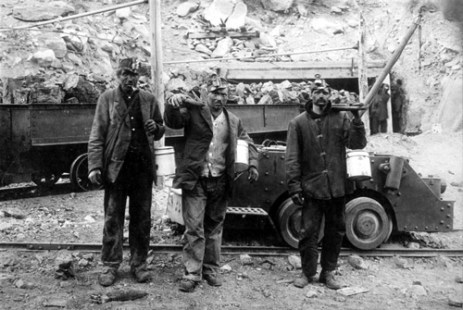 When this man returned home from work, he wore the same drab trappings of men who worked long days underground in a dark, dirty, and dangerous world. He would arrive home from the alley at the back and enter directly into the kitchen. When she looked up, his black silhouette was framed by the kitchen doorway. Her 1920s childhood had been replaced by post-WWII drudgery and insecurity. Their son was born seven months into the marriage. She named him after her father, who died a year earlier. Each day, she was relieved to see her husband return safely home. Funerals and memorial services for coal miners killed in mine disasters were common. Eventually, in the 1950s, the anthracite coal industry would be undermined and replaced by oil.
Coal was not only king, it was the only real industry in the region and the workers knew nothing else. Her husband, and eventually all other coal miners would lose their jobs. The region became disastrously economically depressed. She would end up working in a shoe factory because her husband was unable to find a job; and when he did, it paid little. To support the family, she would spend years working in the shoe factory. The family struggled, but managed. And eventually, by the 1970s, each of the four children moved on to marriages and families of their own. But, when her husband became ill, she neglected her health for his. Following his death, she finally got the lump in her breast seen about—more bad news.
The Third Man
The cancer had taken its toll, but she’d survived almost ten years. Mastectomy and radiation treatments where long past, but a spot on her lung was determined to be metastasized breast cancer. It was back. While in the hospital following surgery, she was sitting on a window sill looking outside at what she thought was a beautiful day. She had a positive attitude and was looking forward to better times. It was a nice day and soon he would be with her.
 She heard footsteps, a familiar cough, and his voice speaking to nurses. She had turned and was looking up just as he stepped on the threshold into her room. She loved the way he looked in his uniform and was delighted to see this man standing there, framed by the hospital-room doorway. She jumped up and ran to him as only a woman in her seventies could. Unlike the days with her stoic father and distant husbands, this man embraced her. They hugged and kissed for a while. She looked up at him and said, “I am so happy to see you.” He smiled and looking down at her asked, “Mom, didn’t you just have surgery?” “I don’t care,” she said. “You are here now.”
 I consider myself a realist. Don’t we all? I recall a comment someone made to me a number of years ago. She considered herself to be a spiritually positive person. She read and followed all the right spiritual gurus, in her option. As we were talking, I used the word reality. She told me that was negative. Really? I haven’t quite figured out why I saw conflict between her negative view of reality; and her positive, optimistic thinking, but she didn’t see an inconsistency at all. I didn’t understand then and don’t now. In fact, if she considers herself to be a positive person, but sees reality as negative, I must conclude that she’s not only a pessimist, but she is in denial about it. She may have been Pollyannaish. Believing in a positive outcome and things will work out for the best in the end is fine. But even being absurdly optimistic is not the same as seeing reality as negative.
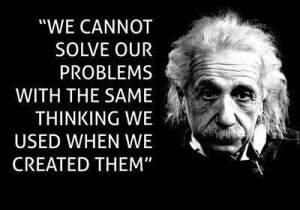 I like to think of myself as a realistic-optimist. (If a presidential candidate can be a democratic-socialist, then there is precedent for my claim.) But I have interesting discussions with people who would say that I am negative or pessimistic because I foresee less than desirable outcomes if reality is not respected. Most of us seem to have good days and bad. Assuming that they will all be good henceforth is denial of reality. We will continue to have natural and man-made disasters. That is reality. Making preparations for emergencies so that we can have the best possible outcome is optimism. Doing nothing is denial that often leads to further disaster.
 I believe that a balanced outlook is the key to a healthy life and a healthy world. We need not assume the worst, but blocking out, or ignoring, the inevitable is not being optimistic. It is being foolish.
 My wife doesn’t like one (or more) of my favorite songs: Night Moves by Bob Seger and the Silver Bullet Band. I thought it was our differing tastes in music (she’s country, I’m rock and roll), but one day our son pointed out why. It’s a ‘guy’ song. I also realized that we each look back in time with different memories. Never mind that she really does not enjoy the raspy-voiced shouting of old Bob. The song, written and recorded by Seger in 1976, is a coming of age tale about adolescent love and an adult memory of it. It strikes memories of my times in the early sixties.
 During the 1970s I graduated from college (many thought impossible), I re-entered the Air Force as an officer, I completed flight training, all my children were born, and I turned thirty (I thought that impossible and I sadly became untrustworthy— relates to the famous “don’t trust anyone over 30” adage of Jack Weinberg, activist of the 1960s, now 76). I usually listen to the music of the 70s. While I enjoy those songs for their own value, the music also often brings with it memories and feelings that can only be called nostalgia. Sometimes, it makes me feel profoundly sad. I’m not sure why, but I suppose it has to do with something that will never be again.
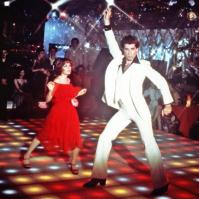 It was the decade of great music, great movies, and great TV. The politics were interesting. How often do we get to see a president resign? I am working on a historical-fiction novel, set in the 1970s. We had Star Wars, ABBA, and the Beatles break-up. Elvis died. Everything was either brown or orange including the shag pile carpeting (ok, add yucky gold). We had platform shoes, Charlies Angels, Mork and Mindy, metal drinking cups, portable hair dryers, Holly Hobbie, Lava Lamps, and the most outlandish fashions ever for America and England. Who could ask for more? We typed on typewriters, went to Tupperware parties, and air conditioning was a welcome luxury. And who did not have an 8-track?
 I claim a few basic beliefs. I believe in love, perseverance, and personal strength through relationships. I believe in memories and in karma. I believe in music, compassion, and empathy. But mostly I believe in the power and value of laughter; the more painful and debilitating the laugh, the better. Striking sadness, awe, loss, illness, and awareness of world misery affect me too. Sign me up for the clichés of humor: to die laughing, having the last laugh, laughter is the best medicine, and a side-splitting belly laugh. If you are infected with the acute illness of laughing for no apparent reason, I want to be infected too. I love to laugh. When I hear a good joke, it’s hard for me to retell it because I laugh so hard in the process. I want to be embarrassed and need to leave because I’m overcome by laughter. I want to laugh at everything. When seeing and hearing the laughter of others, especially children, I want to laugh without knowing why.
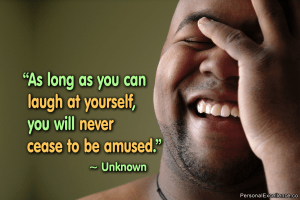 A question I like to ask is, “What do you want?” Answers vary, but mine is, “I want happiness.” Looking back on life, it is difficult to recall happy times with no laughter. It makes me feel good. Laughter is a natural high like no other. It’s free. We can’t over-dose. I thank all kinds of humor for making me laugh. Many things are funny, some are not. But I laugh anyway.
 Long before I ever entertained the idea that I might want to write
  things that people don’t pay me for (as in my old day job), I read a biography about J.R.R. Tolkien. It impressed me that he and his writer group (the Inklings), which included C.S. Lewis, would gather at a pub (The Eagle and Child) to discuss writing and literature. They would read what they had written to each other and critique each other’s work. I want to be there to watch, to listen, to learn, and to discover. Can you imagine? This happened in the 1930s, 40s and 50s. Lewis and Tolkien were alive and writing during my lifetime.
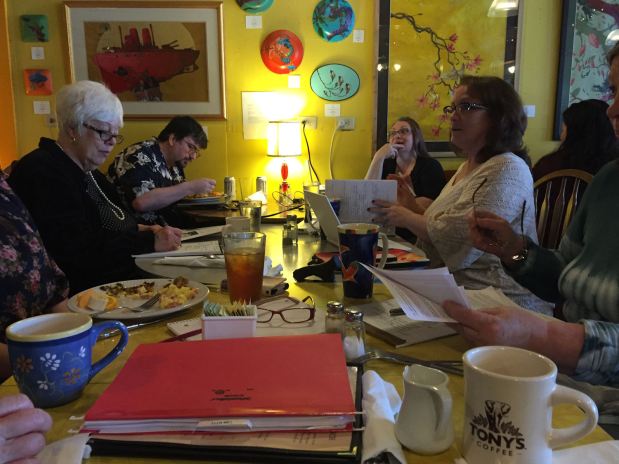 Ironically, unlike the Inklings who were exclusively male, most ‘members’ of the kaffeeklatch group are women. The group was started by one of them (Hi Caz). We drink coffee (or your choice of morning beverage), eat, and talk. Some in attendance have even confessed to getting some writing done. I wouldn’t miss it. If you’re looking for me between nine and noon on Friday mornings, check the Black Dog in Snoqualmie. I am the one with short gray hair, wearing a cap, mostly listening, frequently laughing, and totally confused. Who is to say that the next Tolkien or Lewis is not sitting there, telling me how I need to work on my plot?
 Do you think you are an impostor? Are you what you claim to be? Or do you think that you just have the rest of us fooled? There have been many real impostors throughout history, and many are still running around today. The whole identity theft problem has people pretending to be who they are not at its core. But my topic isn’t about them. Those people forge credentials and know exactly what they are doing. The impostor syndrome, ironically, uses their hoax to identify a problem many successful people deal with. It is also something I think I see in a lot people who do things such as art and writing. I may suffer a bit from it.
 I have been certified to teach high school social studies since I graduated from college back in the dark ages. I have never taught as faculty for even one day. Am I a teacher? I am certified, but to me, unless I actually teach, I am not a teacher. So why is it that the people who do the art, take the classes, make things that are art, will not want to say, “I am an artist.”? I also know people who have not produced a piece of art in years, but will not hesitate to call themselves artists. I have no issue with that. If I can, but chose not to, should I call myself? I think the answer is yes, but it’s up to you.
 Unless there is an identifiable standard or required credential, we should feel free to identify ourselves by what we do, if we so desire. If we are novices or students, we are not disqualified. We’re learning. I understand being humble. But there is a difference in doing art and saying you are not an artist, and doing art and saying it the best art there ever was (but why not?). And certainly, if you are naturally good at something, and you do it, then we do not consider you an imposter.
 Many people have found that journaling and being grateful are useful methods to feel better and to enjoy life more. Grateful people seem to be happier. I prefer to be happy, so it follows that I want to be grateful. I will not discuss journaling since I don’t, but I admit that I should. Maybe this blog is kind of like that. I don’t make gratitude lists, but I could easily. I know many happy souls that do.
 In less than two minutes I had filled the plastic jug to the brim without moving an inch. I handed to the nurse with a smile and asked her to keep that catheter thingy away from me. She smiled, let out a mildly sinister chuckle. Then she said, “See what positive thoughts can do.”
 We all have them, to one degree or another. We are born with them and they change over time. They seem to always be there. Admittedly, health issues have a profound effect on our feelings, but that does not diminish the importance of feelings. And feeling can have an equally profound effect on our behavior, and can conversely effect our overall health. I like to say, “It is all about how you feel.” I mean that in life how we feel is critical. People may advise us to cheer up, but how?
 I am not talking about clinical depression, chronic sadness for no reason, or any form of diagnosable mental health problem. I am talking about the normal things in life that may affect us because the emotional weight is so great. Things that make us sad are part of life, but they can, and often do, emotionally stop us right in our tracks. We feel bad. And depending on the degree and how it is handled, it has everything to do with eventually feeling good enough again to get on with it. I will not say get over it, or that we even have to.
 We have heard, “How do you feel about it?” and “How does that make you feel?” We may ask ourselves that question every day. While this is normal, living with a daily problem that makes us feel bad can often be improved. But we have to want to improve and we need to be willing and motivated to do what it takes to feel better.
 I am an Epicurean. I see nothing wrong with that and even see it as positive. In my house I have food and drink, some of which has minimal or no nutritional value. But I like them and they bring me a certain amount of pleasure. I also have substances that have value in the reduction of pain. Chances are that you do too.
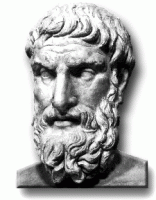 derived from fine food and drink both in a person’s taste and, as it often relates to delight-providing establishments, restaurants. Synonyms for epicureans could include hedonist, sensualist, pleasure-seeker, sybarite, voluptuary, bon vivant, and bon viveur. More related words are epicure, gourmet, gastronome, connoisseur, and gourmand; a generous, life-loving epicurean. Much of how we use the term invites thoughts of fine food and drink. I personally favor the adjective Epicurean to mean leaning more toward an understanding of Epicurus and his ideas.
 This may be the most difficult topic for me, but it’s early in the A-to-Z Challenge. I may find subjects that are greater challenges. Regarding the dark side of human nature, I would simply prefer to accept it and move on. My research of our dark nature has revealed that we humans actually want to deal with it in reality, art, life, drama, poetry, fiction, behavior, and nature. Many of us admit to a duality of human nature, but even more of us reject the dark truths.
 My dark side calls to me. I ask, “What do you want?”
 In addition to Oscar Wilde (The Picture of Dorian Gray), which I’ve read, I shall add the following.
 Our Literary Journey