This is the last of my four-part neighbor-knocking recall from our time on the Redneck Riviera (Florida Panhandle).
Part 4 of 4: Meet Dangerous Dixie
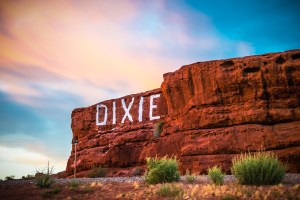
Directly across the street lived an inspirational hero named Dixie. I met her when she was 97 or 98 years of age. I went to the 99th Birthday bash at Dixie’s home, the same house she and her late hubby moved into 50 years prior, in 1964, when the houses and the neighborhood were all new.
A wee bit bent over, Dixie walked unassisted and talked bitingly sharper than many folk decades younger. If I had a favorite people list, Dixie would be in the top five. I don’t know what it was about the little bull dog that we found so compelling, but Dixie was a treat to behold. A pill, but one you must love.
Meeting and making new friends when they are in their late 90s (Dixie was 30 years my senior) is like no other relationship. There were many things special or unique about her (not all of them sweetness and love), but at that point in life, attitude is more important than ever. One of Dixie’s last great adventures had been an excursion to the Galapagos Islands ten years earlier. She told me all about the trip, remembering many specific details and saying that she got around much better back then, at age 88.
Dixie was convinced that a local lawn guy had dumped a pile of yard-waste at her curb. He hadn’t, but that was not the point. She refused to permit me to dispose of the waste. My wife talked to the guy and offered to pay him to clean it up. He said, “I know she thinks I did that, but I did not. However, I will clean it up without charge.” He did. In Dixie’s mind, he was guilty, and she had won because she had waited him out. We let her go with that.
I have attended exactly one 99th Birthday Party in my life: Dixie’s. She wore two-inch heels and personally greeted each of the many guests. As she would introduce them around the room, naming each guest, she accurately told a little story about each person or couple.
That went on for more than an hour before Dixie finally sat down and took her shoes off. Dixie looked at my wife and asked if she still drove. Dixie’s Mercedes was parked in her driveway, but she had only recently stopped driving. When Yolonda said that she did drive, Dixie said, “Good. Because we need to get out and do some running around and have some fun.”
I don’t know what doctor thought a cardiac pacemaker would be good for Dixie at 99, but a few months following the party she had that surgery. Some weeks later, Dixie was found dead in her split-level home, ostensibly from some form of cardiac failure. Dixie’s 100th Birthday Party was combined with a memorial of her passing as well as celebrating her life. I knew Dixie for less than two years of her long life, but I will not forget her.
In many ways, I would like to be like Dixie. However, I could never measure up to her spark, enthusiasm for life, or love of nature.
Look both ways in life, even when there is a lot more was than will be. Mind your gaps.
I had a mom. And I loved her too.
Then she died, as all mothers do.
Now I have this woman here,
Texas gal and hell-of-a-dear.
Not my mother, no siree,
Nor sister or brother, but oh is she
Mother to the progeny,
who are something
that’s part of me.
She is my lady,
you can see,
love ‘er to bits like a
long-time lover
should.
She’s their mother.
They all love ‘er –
she loves ’em too,
as mothers do.
I love her so,
And likewise them.
Mom o’ my children,
all Texas born.
Now all growed-up
with kin a their own
Tex-bred kids
of one kind or other.
We love ‘em all,
short, fat, skinny and tall.
We love ’em up,
but she Loves them
more than I,
‘cuz that’s what Moms
can do. Love them all
a lot, you see,
more than you and more ‘n me.
Daughter, sis, and cuzin to some,
Wife to me, a very special one
Good sport of a kind and sort,
Mom to three,
Oma to more.
Yolonda,
this poem, my dear lady,
is just for you.
The 29th (of 30) NaPo prompt challenged me to write a poem based on the Plath Poetry Project’scalendar. I was to pick a poem from the calendar, and then write my own verse that relates to it.
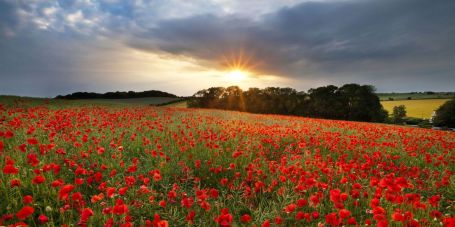
If you don’t know anything about Sylvia Plath, you should. Click on her name to link up. I selected her poem Poppies in July (click for link to analysis) because the city I live in is having a Poppy Festival today. Also, reading the poem and learning about Sylvia’s life was deeply moving.
Poppies In July (by Sylvia Plath)
Little poppies, little hell flames,
Do you do no harm?
You flicker. I cannot touch you.
I put my hands among the flames. Nothing burns
And it exhausts me to watch you
Flickering like that, wrinkly and clear red, like the skin of a mouth.
A mouth just bloodied.
Little bloody skirts!
There are fumes I cannot touch.
Where are your opiates, your nauseous capsules?
If I could bleed, or sleep! –
If my mouth could marry a hurt like that!
Or your liquors seep to me, in this glass capsule,
Dulling and stilling.
The day 26 NaPoWriMo prompt encourages me to write a poem that includes images that engage all five senses (touch, sight, hearing, smell, and taste). I’ve reached for this kind of writing in the past because I enjoy it. This is one I wish I had more time to work, but the deal is a poem a day, finished or not.
The Big Bike Ride
Special pants and socks and ankle-high boots,
jacket, sunglasses, and ear-plugs too.
Put on the gloves and crank her on up,
listen to the purr of ma sweet little pup.
Map and cell phone, no room for ma cup.
Turn her handgrip and feel her pull forward,
tap on her brakes, then turn on her blinker,
it’s left then right, to a big road we’re headin’ toward.
Feel as one this man and machine, search for a groove
as together we skate, and down the road, so swiftly we move.
Feel the freedom and the touch of the wind,
see other traffic and hope they see you.
Mowers ahead, oh yes, that smell of fresh-cut grass.
Getting hard, this seat could be a pain in my ass.
Onto that big road where the traffic will pass.
So many cars and big trucks run in this hot Texas sun.
Crank hard on her handgrip to push her big run,
zip into the traffic and all of its dangers, we are not
to this wind some unknown strangers. Cars and trucks,
unaware of chaos they cause, pushing air all around.
Racked by turbulent wind, we lean left then right,
be in control no matter the fight. Look all around
and hope they see us. Damn these trucks make a terrible sound.
Truck’s got some cooking hot tires and stinking back brakes,
add to this big deal, the unwanted odor of burning black diesel.
First thunder, then lightning, we tighten our grip.
The smell of the rain gives up its first tip.
No longer we see them, they cannot see us.
The downpour continues and collects in our saddle.
Up this creek, we need a boat and some paddles.
See the sign, take the next exit. Slow to be sure we find the road safe.
What if this, what if that? And the now to the rain – slowly it stops.
Soaked to our bones, with the taste of rain fresh in my mouth.
Together we dried, so onto the little farm road, we’re ready to ride.
Smell the clean air and sweet wild flowers, all country scents.
The danger is gone, the road is now ours,
lean into the turns and feel the fresh start.
Now it’s a good day to go on for hours.
See colorful flowers born in the fields,
and the green trees. Look at the streams, now running so free.
Look and lean into each turn, she feels the road and my soft touch.
See the cows looking at us. Behold the ride, feels so right.
Not too fast nor too slow, see horses and sheep as along we go.
As we smell mom’s apple pie, roll-on, smooth curvy road.
Now it’s all worth it that danger and fear are in the past.
Let’s pull on over, Honda my dear. This is Cow Creek,
and here we can rest. I will can eat lunch and read you this book,
sitting just there while you cool off your heat.
Maybe you’ll soften that firm and hot seat,
as I write this here poem and have something to eat.
(Bill Reynolds, 4/26/2018)
Rider? Look all ways. Mind the gaps. Mind everything. See, be seen!
The day 19 poem prompt of the 2018 National Poetry Writing Month challenges me to write a paragraph that briefly recounts a story, describes the scene outside a window, or even gives directions. I was to erase words from that paragraph to create a poem, or to use the words of the paragraph to build a new poem. Here is my result of that effort, without the paragraph.
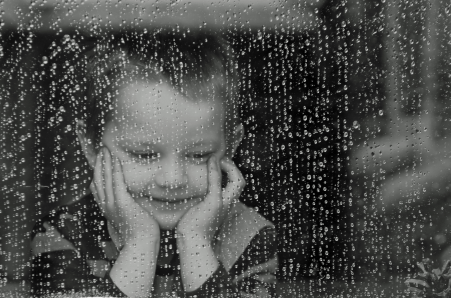
Envy ‘Neath a Window
With Mom I sat
As she was reading
Not to me – getting bored
On a raining summer day.
I’d catch some death of cold
She would say
From being wet with rain,
On that cool summer day.
Something ‘neath the window?
I walked to see a mouse.
I said no words, nor did he,
As I looked out the window.
My first envy feeling was seeing
Friends playing in the rain.
Making themselves damn fools.
I learned, in the adult version
Is as they call it, having a good time.
Damn fool for just sitting here.
“Mom, may I…?”
Envy. I felt it.
(Bill Reynolds, 4/19/2018)
Look both ways and love those rainy days.
Mind the gaps or hydroplane.
I’m opting out of the day 18, 2018 NaPoWriMo prompt. Instead, I wrote this poem.
Fight was His Game
Poor boy whose story we were told,
Danny was his name, fighting was his game.
Young and strong, with dreams of glory in his fists.
He fought to save his life, to be proud and ever bold.
Promised wealth with violence
Would bring so many gifts.
No warning was to move him
from his promised dream.
Boxing and his future, were both all agleam
It was his game, to be his fame, no one interfered.
In the pit of misery, while still just a boy
Trusting words of strangers, and what they had to say.
In the roaring twenties ring
he took the fighter’s stand,
Seeking victory and honor, with his body and his hands
Many marred and broken,
This Danny boy was all aflame.
Stepped into the ring, a fight to be his game.
Still looking for a young man’s fame.
Dan stood strong and determined.
He faced the champ, who gave that boy
quite a beating with a lesson.
Badly beaten, he lost the fight,
And all his pride went with it.
The champ made him a chump
looking too sad and lame.
Still more boy than man, with spirits badly broken,
He searched for work and asked for jobs.
A boy inside, with dreams gone south and broken.
Now the boy was older
In all the world’s wrong ways,
Now laying low without his game,
Still, Danny was his name.
(Bill Reynolds, 4/18/2018)
Look both ways and duck those punches, mind the gaps right cross.
The day seven poem prompt of the 2018 National Poetry Writing Month challenge was for me to list my different layers of identity (son, father, grand and step-grandparent, retiree, white male, septuagenarian, poet/writer, hippie, etc.) — ways I could be described. Per the prompt, I divided those identities into two lists: what makes me feel powerful; and what makes me feel vulnerable.
I wrote a poem in which one of the identities from the first list (man) contends or talks with an identity from the second list (sensitive man). This poem reflects the doubt seemingly inherent in that conflict.
A Pocket Full of Doubt
Walk tall and proud to be our one man
Carry strong your body, mind, and be of good spirit
Hold on to what’s yours as tight as you can
To be a man, my son, inside you can’t feel it.
It ain’t me. It ain’t me. But a man I must be.
Stand honest and truthful, be a real man
Sense love and sadness and touch with your soul
Let go of yourself, as alone you must stand
Into the soul of men, you must never there go.
Can’t you see? It just ain’t me. Like so, a man I can never be.
So, of two minds you continue to fight?
Two spirits, one soul we continue to see
Where is the truth to set this man right?
Conflicted as such, you’ll never agree.
Let you be the man. The one we can see.
…….A man such as this can never be free.
(Bill Reynolds, 4/7/2018)
Look both ways if you’re of two minds.
In the gaps lie the answers, so mind what you find.
Two hundred years ago in London, on 1 January 1818, 20-year-old Mary Shelley anonymously published the first edition of her novel, Frankenstein; or, The Modern Prometheus.
Mary was 18 when she wrote the book, the genesis of which goes to the topic of galvanism and other occult ideas that were themes of conversation among Mary and her companions, particularly her lover and future husband, Percy Shelley. Mary, Percy, Lord Byron, and John Polidori competed to see who could write the best horror story. After thinking for days, Mary Shelley dreamt about a scientist who created life and was horrified. Her dream evolved into the novel’s long-famous story.
The problem with this story is that history, Hollywood, and human imagination have been unfair, if not unkind, and inaccurate regarding Victor Frankenstein’s creation. Even Victor was too quick to judge by outside appearance, unpleasant as it undoubtedly was. In Shelley’s book, the outcome of Frankenstein’s experiment is never given a name, although the creature did suggest that he was Victor’s Adam.
At first, the creation is kind and gentle and only wants to be accepted. The creature was eight feet tall and ugly and he knew it. Yet, he sought life and normalcy, but he could not achieve that due to the fearful nature of mankind, and specifically Victor Frankenstein’s fear of what might happen.
I find it interesting that even in the mind of an 18-year-old girl 200 years ago, the innate goodness of a man’s creation can be judged as evil before ever doing anything but kindnesses to others.
One hundred thirty-six years later, the first human body part/organ transplant is completed. Numerous human lives have been extended through science and organ donations and transplants. I would not say we take that for granted, but we’re getting close and for some tissue, there are insufficient donors. One organ not transplanted is the human brain. I have read that it is the one donation where the donor would be the greater beneficiary in the process.
I wonder how Mary, her husband, and their circle of friends would react to the knowledge of today’s reality, scientific knowledge, and literary fantasy if they could suddenly be here and learn about it.
Lord Byron wrote his poemDarkness about the same time as Mary Shelley wrote this book. Given the nature of the book, the poem, and earth during 1816, I do wonder if his poem came to be for similar reasons as her Frankenstein story.
‘tis a dark world after all.
Skeptically, look both ways,
yet apply judgement of others and their creations carefully.
Mind the gaps in your own humanity.
The day four prompt of the 2018 National Poetry Writing Month challenge is “to write a poem that is about something abstract – perhaps an ideal like ‘beauty’ or ‘justice,’ but which discusses or describes that abstraction in the form of relentlessly concrete nouns.”
I used an essay I posted in December 2017, as an idea for the abstract noun tranquility. The concretes were the sights, sounds, tastes, and smells that led to the abstraction. You can read the essay if you click here.
Tranquility Remembered: the sounds of silence
My young mind was filled with thought
As I walked, no music or sounds I’d hear
Only deep moans from snow as I crushed it below
A cold white blanket on my pensive dark thoughts
Fairies, charming and peaceful my footsteps they heard
They opened my eyes to tranquil aura yet silent
I saw in the darkness a light with no sound, but
The sweet sounds of silence sent aroma that night
My thoughts melted away into the image of stillness
I heard not a hush of sound cut crisp cold calm air
A silence of power and of peace lifted me up
The flavor of quiet and snow calmed the darkness
Like the artistry of a perfectly painted picture
A vision of nature stillness lived in my brain
That moonlit night not long ago
in halo of street lights and a
reflection of memory of new lying snow
I remember the cold night
I remember the sounds and the silence
I remember the calm peaceful taste of tranquility
I remember I Remember I REMEMBER!
(Bill Reynolds 4/4/2018)
Fill the gaps with memory.
Look for beauty both ways.









 The problem with this story is that history, Hollywood, and human imagination have been unfair, if not unkind, and inaccurate regarding Victor Frankenstein’s creation. Even Victor was too quick to judge by outside appearance, unpleasant as it undoubtedly was. In Shelley’s book, the outcome of Frankenstein’s experiment is never given a name, although the creature did suggest that he was Victor’s Adam.


 Our Literary Journey