The tercet is a poetic stanza of three lines with a rhyme. While there is no specific rhyme scheme necessary and some even venture into free verse, I prefer to not to dig in unplowed turf. However, I did play with this and came up with rhyming lines one and two in each stanza, and using mid and end line rhymes in line three: aab2, bbc2, etc.
***
In Real Time By Bill Reynolds
Not to be seen, heard, or specifically smelt.
We know it’s there, cuz experiences felt,
No gods can stop it, no power to quit.
Some sew it wisely, while others just wait.
The outcome’s the same, we share the same fate.
Fight back as we may; that is only delay.
Wind we can feel, the rain we may taste.
But the passage of time, we have little to waste.
Let’s consider the past; make choices that last.
Perpetually running, it passes in silence;
Everything changes, nothing is timeless.
Reality speaks loudly, but time passes proudly.
***
Thinking of time, be looking both ways. While minding the gaps, watch only today’s.
This poem is about underground coal miners – people who did, or do, very dangerous work. My father and grandfathers were three. This is also about life in our home when Dad still worked in the mines.
During my early teens, the mining business shut down in northeastern Pennsylvania. This was due to the Knox Mine Disaster in the late 1950s and the easy, cheaper, and cleaner use of oil to heat homes. Today, most coal mined in the USA is exported, but the industry continues to decline. Only 30% of electrical power in America is produced by coal.
Old coal mine entrance. A dark abyss.
Nearer My Hell to Thee By Bill Reynolds
Before leaving the daylight, and going into the pits,
They look deep into the ground, to the soul of the abyss.
The blackest of blacks, the darkest of darks, and danger,
The dank abyss peers back as men descend into nature.
Far below ground, the mine was there lurking, waiting;
That dangerous, disgusting damnation of sound,
For some small wages, they go into that hole far underground.
Deadly it was and deadly it is, they never know when…
Many wives cried at the loss of their men,
Who died in the gut of the deplorable depths.
It was frightening work miners chose, those jobs that killed.
Black hard hats on heads, mining lamps on to cut the dark,
But still never safe. In denial or not, it was dangerous work.
Blackjack and Brass Knuckles same as my father had.
Father was, and so were both grandfathers, miners all.
Walking home through muddy fields and dark alleys,
Dangerous on pay days; all cash in their pockets,
With blackjacks and knuckles, maybe a gun.
He’d push open the gate, then let it slam with a thud.
Dad would stomp up the stairs and in the back door,
It was always the back way after a day’s work.
Covered with coal dust,
The sweat of the labor, and the stink of the mines;
Smoking his Camels, always coughing and coughing.
But he was my Dad, and it was always like this.
I remember Dad much blacker.
Everything filthy, his clothing all rotting,
Black on his skin, and in his gray hair,
He didn’t know about the black in his lungs,
the deadly back dust was glued on hard, but not to his soul.
White at his eyes and over his lips,
he’d set down his lunch pail. No hugs, no kisses,
just “hiya,” and not much of a welcome.
His coat and his cap, and his boots all come off.
Trounced upstairs to the bath, footsteps pounding the way,
Transformation, about to take place.
In cold water each day, he washed coal dirt away,
From his face and his hair, his neck and his chest,
From his waist to his feet, but not from the rest.
Nothing could wash the coal miner away.
Not the water, the union, the beer, or smokes.
Not on the inside, from his throat nor deep in his lungs.
Black dust in his body and in with his blood.
In a coal mine.
It was always the same, until the disaster.
Miners to work, to suffer and die.
Returning to homes, dirty but to homes they came.
Then one day, the depression set in.
The mines all shut down, proud miners, no work.
One day it all ended and everything changed.
Miners laid off, the mines were all closed.
Oil was king, and nobody noticed.
No more abyss, just a new kind of dark.
If you not yet sufficiently depressed, watch this.
An elegy is a mournful poem. I wrote this elegy regarding the loss of my mother, more than 25 years after her death. The elegy is one of the oldest poetic forms. It’s identified by what it says, not how it says it. The Greek word elegeia means song of mourning, and is often included in classical Greek tragedies.
Missing Mom
The day Mom died, I stood there and cried.
To the surface my guilt came out of my eyes,
Beside her deathbed, letting go of our life.
Her suffering had ended, and I was alone.
No person is perfect, no human unsoiled.
Enshrined mother’s love, was sunshine to me,
‘twas the essence of my childhood memory,
My loss just the same, never again she will be.
She’d lived a rough life, through to the end,
But she loved me as only the mother to son,
That unconditional love, will never be done.
Only her death could end our last day.
Alone. Just alone.
Her voice and her scent, ecstasy to me.
So much I still miss them. I can still see.
“Hiya,” she’d say, to even the worst.
As kind as she was, so how she asked me to be.
Mom we still miss you, your face and your smile,
The sound of your voice, the look in your eyes.
Never again, will you be for us to see.
The loss that brings a sadness, one forever I’ll feel.
Mind such gaps, look both ways, and remember love.
This poem refers to crew members (called crew dogs) of B-52 bombers and to their war-time mission of dropping munitions to destroy things and kill people, thus the dogs of war. This is a dark and threatening piece, set in six stanzas of six lines each, with even and odd lines rhyming. Misery and woe are metaphors for the many types of weapons dropped. The shrill is the eerie sound bombs make as they fall. The dog, or beast, refers to the model D, or variant of B-52, which is painted black on the bottom of the airplane. Please question in comment.
We are coming for you.
Dogs of War by Bill Reynolds
Let us slip from nature’s gravity hold
We war dogs of old, both willing and bold.
Into skies we shall go with misery and woe.
To maim and to kill, who we don’t even know.
Our airman’s life is to die if we will.
Into Death’s realm, we’ll send you the shrill.
We’re lashed to the beast, the marvelous dog,
Behind us we leave the stink and a fog.
The thunderous sound of flying around
We send you a hell, you on the ground.
Wonders of war are set at our feet
Our old friend death, soon you will meet.
A B-52H dropping high-drag bombs and flairs.
Destruction we’ll rain on your cities and towns,
You won’t know we’re there, we don’t make a sound.
Concussion will break you and all that is near,
Along with destruction, we’ll send you the fear.
The black-bottom dogs will come as you sleep
To rip and to tear, into hearts of your sheep.
The countdown will start, as our hearts will race,
But Death we’ll deliver at one horrible pace.
The flashes we’ll see and the fires will rise,
The dogs of war unleased, to your demise.
The horror will come as sure as the sun,
This nightmare relents when war is won.
The Beast
Safe home again with guilt, we shall not feel,
Because of the blow, we were vowed to deal.
To the bar we’ll retire and review the day’s mess,
In laughter and stories, we consider success.
The beast is now resting and finding a tune,
Ready again, the dogs shall return again soon.
The horrors of war are hidden away,
The death and the misery kept well at bay.
From dogs to humans we slowly turn,
To our homes and lives we always return.
Havoc returns with the dogs of war,
Until we can say, no war! No more.
Look both ways, mind the gaps, and fill the world with love and peace.
Lest we…
“…Cry “Havoc!” and let slip the dogs of war,
That this foul deed shall smell above the earth
With carrion men, groaning for burial.”
~ Marcus Antonius in Julius Caesar,
Act 3, scene 1, 270–275
I like dictionaries. Did you ever look for dirty words in a dictionary? I am not sure kids still do that. Everything is on line. I still use some of those words; but not today, not in my blog. At least, not those words. I plan to find new (to me) words for this challenge. You may find them interesting. I need one per day. Toss some my way, if ya be so inclined.
Words are the bits, pieces, and colors writers use to craft the art. When we tell it as the writer, we use words. We may enhance words with pictures or sounds, but we write with words.
During April, I want to immerse myself in poetry. I want to read more poetry, learn about writing poems, and discover my inner (wannabe) poet. I want to do that by writing them – to piffle out one poem each day for the month. I’m not (yet) a poet. I’ve never finished a poem that I considered ready for others to read or hear.
To that end, and in typical self-abusive fashion, I’ll write as many poems in April as I’m able. I will then post them for all to see. My goal is one a day for the month. To further ensure my personal embarrassment and pain, I am asking you for feedback – “Don’t quit your day job.” This may backfire, but I want (by example) to encourage others to put their work out there, to take the risk, to allow us to share in their efforts.
For each letter of the alphabet, I’ll attempt to use a word within a poem, or make it the subject of a poem, or I will somehow engage the word with the poem. I’ll create a piece that involves my chosen word (maybe more than one), and then proceed in alphabetical order, beginning on April 1st (Oh dear me, the fool’s day).
I will post every day. I plan to piggyback this A-to-Z challenge with the National Poetry Writing Month (NaPoWriMo/GloPoWriMo) challenge. NaPo requires posting all 30 days. I welcome your suggestions. For both challenges, a poem will be posted to my blog and linked to the challenges.
I tend to have logophilia, an emotional attachment to words. My vocabulary is no larger than average, but it should be. My spelling should also be better. I’m not much of an orthographer, but some of my readers are correctors of spelling and grammar, especially mine. Feel free to pile on with them to highlight my blunders so that we learn (my poetic license is up to date).
I want to use this opportunity to learn more about poetry. Will you help me? If you provide feedback comments, other readers see your comments, and thereby grow poetically. I’m willing to hang it out there. You can tell me about it, and we can all learn from the experience — if you share your poetic wisdom with us in the blogosphere.
“A poem should not mean/But be.” ~ Archibald MacLeish
Let’s face it. While poems are to express a feeling or an idea in a certain style, we don’t always understand them. I love poetry. I try to write it. I admit that it can be more complicated than we prefer, and perhaps more than this Old Texas Aggie’s gray matter can process.
Sometimes, as with music, it just sounds so damn good, even though I have no clue about the subject or purpose of the piece. Poetry sounds especially wonderful when read by the right, good voice. It works for me, even with my uncertainties about understanding the art.
I like the synonyms for poetry, chiefly versification, metrical composition, balladry, and the archaic (and perhaps politically incorrect) poesy. Occasionally, I run across a fine piece of balladry that I not only enjoy and understand, but I also relate to with some internal passion — Hell Yes!
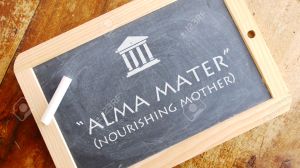
I love irony in life, in writing, in humor, and in verse. It strokes my silly ego to find others who give a pass to the literal minds of the world, and share my ironic reality. Last week I was handed a poem that was published in Stanford Magazine (Jan/Feb 2017), written by Mary Poindexter McLaughlin, titled: Alma Mater.
For me, this poem glorifies the wonderful simplicity of ordinary lives, and it resonates in me the value of things like freedom and love and family and friends. All of which wear the tag: priceless!
ALMA MATER
My apologies for using a link, but the publisher is unable to grant permission for me to republish at this time. Please click here to read the short poem from the Stanford Magazine page.
Because this is from the magazine of a prestigious American University (Stanford, I did not go there, but she did), I think Mary is referring to her alma mater. But, she could also mean any parent, friend, or muse who we believe had greater material expectations of us. It reminds me of that meme, “How do you measure success?”
Here are four lines of my own poetic dribble. I have been massaging this clunker for a while, there is more, but it’s nowhere near finished. I wonder if it conveys the right emotion.
Always, you’ve been here with me,
As children, we survived my foolish resistance.
While we ponder our thoughts, I sense yours in me,
As we bind together, into one two-sided life.
If you wanna write some, there are on-line poetry challenges, such as NaPoWriMo during April (sign ups begin 1 March 2017). You will be challenged to write a poem each day. I do the A-to-Z blog challenge during that month, so not sure that I could keep up. Maybe.
…. Great love. (In tribute to Pat Conroy)
Poetry or prose, mind the gaps and look both ways.
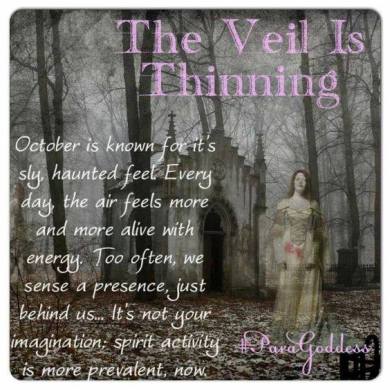
During late October many cultures begin preparing for the first days of November. They remember the dead, acknowledge the end of harvest, and prepare for the dark days of winter. It begins with Halloween, then All Souls’ or All Saints’ Day, The Day of the Dead, and Samhain. Many believe it’s the time of year when we’re closest to the other world and death itself. The Fairy Tree story that ends this blog tells a wee bit more.
It’s our only certainty—we die. Beliefs about what follows the end of human life range from nothing to Paradise and 72 virgins or reincarnation. Let’s not forget the whole Dante’s Inferno thing. Our beliefs about an after life affect our choices while living.
While no one has told of their experience following permanent death (we have near death accounts), there are stories with bits of information. Little of it is dependable or useful. Theories abound, but the database of the deceased is void of demonstrable facts. Only the dead know, and they’re not talking.
Efforts to resist death seem logical, but are eventually fruitless. While many consider death a condition leading to afterlife, most people (not all) avoid dying as long as possible. An exception is when living prolongs a life of hopeless suffering. Others choose death through martyrdom. We disagree about our right to die (whole other blog) and we normally work hard to keep living.
In the United States, more than two-million people die each year. The CDC reports the top four causes as heart disease, cancer, respiratory disease, and accidents. I say, smoking, smoking, smoking, and driving plus illicit drugs because they are the major producers or triggers of those four “causes.” The root cause of most preventable premature deaths in the USA is smoking (so quit).
It can be difficult to determine the difference between a still living or recently deceased person. Without more information, we can only define death as an absence of life. Our legal descriptions require a physician to certify the time and cause of death. While absence of all brain activity normally defines death, court cases fog the legal definition. When there are uncertainties, we gain information through autopsy.
While we’re fascinated with death, many of us avoid serious discussion of it and find it morbidly unpleasant. The death of friends, loved ones, and people we hold in high esteem represent the ultimate, painful loss. Our own death signals loss and aloneness, which is sometimes comforted by religious beliefs.
Yet, we sing of death, we write about death, and we (should) discuss it. We often honor death’s inevitability with both art and science.
Since first hearing it, I’ve liked Ralph Stanley’s (died, June 2016) rendition of the song, Oh, Death, which is a plea with the Grim Reaper for another year of life. It was made famous in the movie O Brother, Where Art Thou? Hear a short version by clickinghere.
From a list of ten poems about death, I selected two by famous poets. All ten can be foundhere.
“Death” by Rainer Maria Rilke (died 1926)
Before us great Death stands
Our fate held close within his quiet hands.
When with proud joy we lift Life’s red wine
To drink deep of the mystic shining cup
And ecstasy through all our being leaps—
Death bows his head and weeps.
From Queen Mab, by Percy Bysshe Shelley (became famous after his death in 1822)
How wonderful is Death,
Death, and his brother Sleep!
One, pale as yonder waning moon
With lips of lurid blue;
The other, rosy as the morn
When throned on ocean’s wave
It blushes o’er the world;
Yet both so passing wonderful!
Life is the time made precious by our inevitable death. May we fully enjoy the many pleasures and loves discovered and experienced while living. And may we all “…lift Life’s red wine to drink deep of the mystic shining cup…” because death is next for each of us.
The day is cold, and dark, and dreary;
It rains, and the wind is never weary;
The vine still clings to the mouldering wall,
But at every gust the dead leaves fall,
And the day is dark and dreary.
My life is cold, and dark, and dreary;
It rains, and the wind is never weary;
My thoughts still cling to the mouldering Past,
But the hopes of youth fall thick in the blast,
And the days are dark and dreary.
Be still, sad heart! and cease repining;
Behind the clouds is the sun still shining;
Thy fate is the common fate of all,
Into each life some rain must fall,
Some days must be dark and dreary.
——-By Henry Wadsworth Longfellow
Longfellow invokes the value of our dark days and the transient nature of life for each of us.
When our child was ill, my task was to directly address her illness with an emotionally written letter. I was to tell the illness how I felt, about or toward it, or how it made me feel.
Three days of toil produced words born of emotion, but laying bare only thought and opinion. That challenge to produce expressive discourse full of feeling was riddled with notion and conviction of purpose, while lacking passion. Such analysis had merit and value, but I had so missed the deeper inside of myself that it might have been mere opinion drawn from a detached stranger. Those mindful barnacles of human grief remained anchored to my thoughts, thus hidden except from me.
Why, I wondered, could I not find letters for my aguish? My internal emotional awareness was no less keen than my intellectual understanding of the presence of the illness that was harming our family.
Knowing my feelings was not enabling my telling about them. Had I created a self, unable or unwilling to express feeling? I wondered deeper if I had co-opted with a force to create an emotional Dorian Gray. Were my feelings doomed to be confined in the shadowy attic of my mind? Had I become so adept at emotional deception that I habitually prevented expression of feelings? Had I become factually superficial and emotionally shallow, thus apparently less than a human lacking outward feelings?
Consciously or not, my ability to express emotionally was crippled. Historically, I’d been an extremely emotional child, inside and out. Perhaps as an adult, I was the same, but kept my feelings hidden. I had emotional awareness and comfort. But learned how to mask emotion and display a filtered emotional public persona. I was willing to affectively express my feelings, but until attempting to express them in writing, I was unaware of my handicap.
Twenty years hence, my awareness is of two worlds. An external world full of social interactions, judgements by and of others, and basic human needs. This is the world of people wearing masks, hiding feelings, and struggling silently with internal and external burdens. It is a world we need in order to sense the other world – a deep world that is hidden from others and often from our own self-awareness.
The other world is not physical. It has no physical activity. But, it has a silence that we hear, a darkness that we see, and a hearing to which we speak. The other world has no touch, but we feel it. It has no eye, but it sees all. It has no physical strength or power, but it controls our external world in every way. We each have this real world, and it is exclusively ours, separated from the independent and silent world of others.
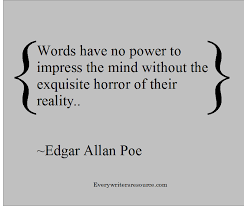
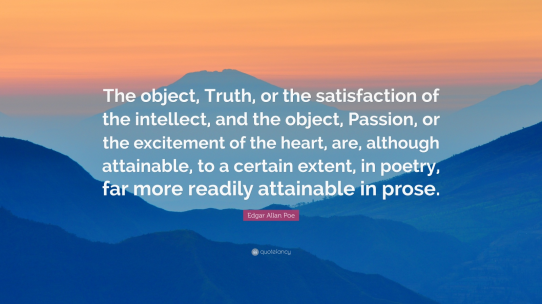
Real physical life is driven by emotion. While I know nothing of death other than its certainty exceeds all other events, if I must lament any loss – it is losing my emotions. Furthermore, the one I will regret most is same emotion that Edgar Allen Poe held so dear when he said…
“With me poetry has been not a purpose, but a passion; and the passions should be held in reverence: they must not – they can not at will be excited, with an eye to the paltry compensations, or the more paltry commendations, of man-kind.” (1845)
I want passion like that – uncontrolled by logic, analysis, profit, adulation, science, or ego. I want my reason for being and my reason for doing to leap from the shallows of purpose to the depths of passion. Whatever my passions, I want to keep them and to take them with me. I want to feel passionately happy, to be passionate about art and poetry. Maybe I will learn to write passionately about my feelings. Just for now I want to let the world know that I love my passions and lament their loss with life itself. And before I go, I want to write with emotion.
1 — An idealized place of great or idyllic magnificence and beauty
2 — Xanadu, China or Shangdu, the summer capital of Kublai Khan’s Yuan empire
3 — “Kubla Khan”, a poem by Samuel Taylor Coleridge, which popularized the name Xanadu for Shangdu
I’m posting two things here. First is the youtube song by Olivia Newton John. I like this tune. It is uplifting and exciting — very positive. The second is a poem that I like, but which has an earthier focus, written by Anthony (Ax).
Songs from the Dark Side of Xanadu
By Antony
Across the sacred river before the sea
A forest dense and dark, sparsely lit by sun and moon
Fragments filter through as beams that cut like lasers
Touch upon the ground where creatures scurry and avoid
Hide they try from demon eyes that snatch on prey Where all that move within the light become victims of the night
Snails and slugs beneath the moss find peace
Rodents of every kind twitch and stitch inside hollowed trees
Snakes slither up to coil branches, as they lay, become one
Four legged beasts tremble, buried deep below the ground
Misty darkness hovers, a rolling fog, black as the devils heart
Devouring every ounce of life that roams about
In a world where dark rules over light
A speckled glow, orangey-red with a tail of glitter trails
It floats among the sleeping flowers spreading magic dust
To kiss its sorrowed petals awake
Colors of reds, yellows and greens scream as violets and blue begin to beam
The leaves in trees rustle with a glee as the sun rises high Canopies open to view heavens gate as sparkles ignite
running with streams and rivers might
Faeries come by the plenty singing songs from the dark side of Xanadu
Paving the way for an entrance of two blessed unicorns
White as freshly fallen snow, soft as cotton spun by cherubs humming along
Their horns straight and true that point to a life of peace and harmony
A millennium ends for this sullen brittle land
To life it grows with the breath of salvations heart
Sparrows flying, eagles soaring, blackbirds harking heavy metal blues
Deer in the meadow, wolves howling on the hill
Butterflies and Dragonflies dance on the waves of the wind Ogni cosa ha cagione To say in life…
Everything has an underlying reason



 Words are the bits, pieces, and colors writers use to craft the art. When we tell it as the writer, we use words. We may enhance words with pictures or sounds, but we write with words.
 For each letter of the alphabet, I’ll attempt to use a word within a poem, or make it the subject of a poem, or I will somehow engage the word with the poem. I’ll create a piece that involves my chosen word (maybe more than one), and then proceed in alphabetical order, beginning on April 1st (Oh dear me, the fool’s day).

 If you wanna write some, there are on-line poetry challenges, such as NaPoWriMo during April (sign ups begin 1 March 2017). You will be challenged to write a poem each day. I do the A-to-Z blog challenge during that month, so not sure that I could keep up. Maybe.
 In the United States, more than two-million people die each year. The CDC reports the top four causes as heart disease, cancer, respiratory disease, and accidents. I say, smoking, smoking, smoking, and driving plus illicit drugs because they are the major producers or triggers of those four “causes.” The root cause of most preventable premature deaths in the USA is smoking (so quit).

 Life is the time made precious by our inevitable death. May we fully enjoy the many pleasures and loves discovered and experienced while living. And may we all “…lift Life’s red wine to drink deep of the mystic shining cup…” because death is next for each of us.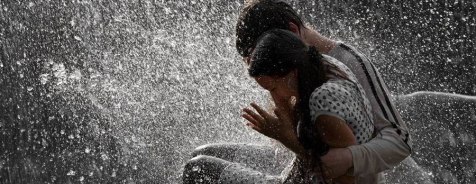


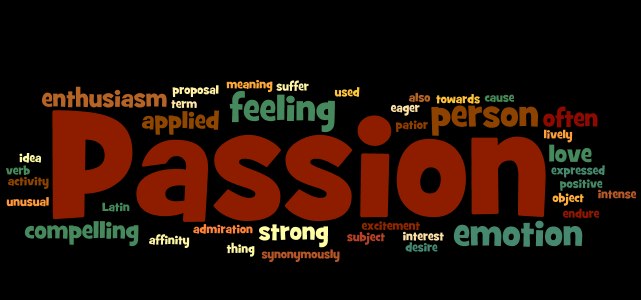
 Three days of toil produced words born of emotion, but laying bare only thought and opinion. That challenge to produce expressive discourse full of feeling was riddled with notion and conviction of purpose, while lacking passion. Such analysis had merit and value, but I had so missed the deeper inside of myself that it might have been mere opinion drawn from a detached stranger. Those mindful barnacles of human grief remained anchored to my thoughts, thus hidden except from me.
 Knowing my feelings was not enabling my telling about them. Had I created a self, unable or unwilling to express feeling? I wondered deeper if I had co-opted with a force to create an emotional Dorian Gray. Were my feelings doomed to be confined in the shadowy attic of my mind? Had I become so adept at emotional deception that I habitually prevented expression of feelings? Had I become factually superficial and emotionally shallow, thus apparently less than a human lacking outward feelings?
 Twenty years hence, my awareness is of two worlds. An external world full of social interactions, judgements by and of others, and basic human needs. This is the world of people wearing masks, hiding feelings, and struggling silently with internal and external burdens. It is a world we need in order to sense the other world – a deep world that is hidden from others and often from our own self-awareness.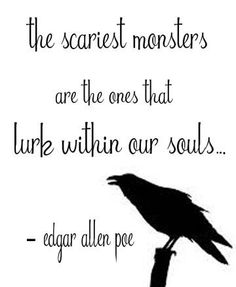
 Xanadu may refer to:

 Across the sacred river before the sea
 Where all that move within the light become victims of the night
 Canopies open to view heavens gate as sparkles ignite
 Our Literary Journey