The day six prompt of the 2018 National Poetry Writing Month challenge is to “write a poem that stretches your comfort zone with line breaks. That could be a poem with very long lines, or very short lines. Or a poem that blends the two.”
I wrote the poem, but the words? Perhaps you recognize them.
My Affirmation
calmness
serenity
comes to me
the universe I cannot see
change
or control
grant them dignity
to be
as they are
humanity…mine…yours…theirs
face change with
wisdom from experience, peace through acceptance, knowledge of listening
with silent love
and…
it
all
begins with
………………………….me
(Bill Reynolds 4/6/2018)
Alertly relax as you look both ways. Fear not gaps but be mindful.
One of my favorite movie lines is, “What if this is as good as it gets?” Watch the movie trailer here.
This scene takes place in a shrink’s office after Melvin Udall’s (Jack Nicholson) doctor tells him that he needs an appointment. The doctor is pleased that Udall maybe taking responsibility and he acknowledges Udall’s difficulty with that. Have you ever asked yourself, is this as good as it gets?
Let’s answer this empowering question with, “It is what it is.” But, it’s more than that, and it applies to life.
Sometimes, feelings of sadness or depression blow through me like gusts of wind through the branches of trees. These visiting emotions last just long enough, and are disturbing enough, to let me know they visited. Then, just as quickly, they’re gone. I feel normal again. I know the feelings aren’t far away and they will return. When they come back, I have no way to expel them. These feelings have their own will; one I don’t control. When they return, I hope they don’t stay long.
I fancy myself a happy person, although I find happiness in my own way. Life is about how we feel. I love life and living – being me. I accept reality, which gets a bad rap for being negative. Life is what it is, which is mostly good for me. I know it’s good from my experience with when it was bad. I don’t like feeling desperate, but I feel hopeless at times. It’s not the same as depressed.
I’m hopeful about many of the things over which I have no control. When I fly, I hope the airplane doesn’t crash. When I drive through the I-90 tunnels toward Seattle, I hope there’s not an earthquake. Fear could prevent me from doing either. Planes crash and earthquakes happen. In The Road Less Traveled, Scott Peck talks about denial keeping us from dying of freight. I’m not sure about that, but it might help me get to Austin. It’s not denial – shit happens.
However, I am willing to work with my feelings of hopelessness. I’m not referring to the charming but hopeless romantic, or being merely incompetent (Bill’s hopeless). And I’m not talking about sadness, fear, or denial. I’m talking about the feeling that can cause despair (being without hope). Back in the day, ‘twas that conclusion I expressed when I’d say OMGIF! (Oh my God, I’m fucked).
Some things are hopeless. While my online dictionary defines hopelessness as causing despair; being desperate, wretched, demoralized, or impossible; I prefer a simpler hopelessness: feeling the loss of hope. And hope is “a longing for a future condition over which you have no agency (control, influence, or power); it means you are essentially powerless.” (Derrick Jensen)
I recall an audio tape where the narrator asked, “What is the best hoped-for outcome of any relationship?” My answer is best expressed in the movie The Notebook. What I like most about that movie is Noah, who never gives up on his love for Allie despite their apparent hopeless situation. Spoiler alert: they don’t live happily ever after (which is my point). But they do have a great life.
Think of the Buddhist issue with desire as the cause of all of our problems. Is a desire not something hoped for? Two related Buddhist sayings are: “Hope and fear chase each other’s tails,” and “When you give up on hope, you turn away from fear.”
Time for some philosophical music….
Is it all dust in the wind? Are we? Metaphorically, perhaps so; in reality, we will be. The song talks about the impermanence of passing time, the endlessness of earth and water, and the certainty of death, whereby our only immortality is by returning to earth and water.
Embracing hopelessness is not the same as giving up. It’s a form of acceptance. It is time for us to do what we can. It is time for our action. It helps us to live more in the present moment. We rely less on tomorrow being a better day. I’ve been accused of being negative when I defended reality. Others may want to live in fantasy, to deny reality to the point of making things worse (i.e., not seeking medical assistance), but that feeds denial and makes things worse. Accepting things as they really are, even when hopeless, gives us a better life.
I read this good article about hopelessness in the Orion Magazine called “Beyond Hope,” by Derrick Jensen. He talks about hopelessness as a general topic, but specifically applies environmentalism as an example. Hopelessness does not deprive us of that final act of defiance.
As we accept the reality of hopelessness,
we need to look both ways and mind the gaps.
Ten years ago, I lost one of my best friends from my childhood. Today, I received a phone call telling me that I have now lost the other. A few weeks ago I was tasked with a writing assignment to provide an essay on what I long for. You can see it blogged under “Nostalgia and Longing.” Reading my blog, you can glimpse my view of humanity and the world. Seldom do I live at any time but the present moment.
But today, I want to think about the past. Not in a regretful way, but in an “I remember” way that might allow my brain to be the tool of a child’s mind again.
I want to remember friends and our time together when we did things without much regard for the good or the bad. There was no judgment or guilt. The important part that I recall is that we did those things together. That is what a childhood friendship is all about; an unconditional acceptance of us as is. Blood brothers we were – literally.
I know that I cannot go back to that time, and I’m not sure that I would want to. But I want to have those memories until I have no memories. I would like to again feel the freedom, the special bond, and the unquestioned certainty that we would all live forever. I want to think about my future and talk about how much better it will all be. I want free and unlimited amounts of candy and ice cream. We didn’t have that, but when we took over, well, you know, right? I want to know that next year, I will be allowed to stay out after it gets dark, to drive a car (legally), to date girls (with everyone knowing).
Today, I want to cry over the loss of my friends and I want to smile in their memory. I want to think about their faults that I never saw or didn’t care about, as they dismissed mine. Indeed, I miss Jimmy and I miss Jack, but the one is miss most is Billy the Kid — me.
What do I remember most? In our late teens Jack made his belief and faith in me clear. Few people had faith in me when I was a teenager, and I don’t blame them. More than my parents, more than any teacher or any other person, he believed I could do what even I doubted.
I subsequently believed him and that was a significant turning point in my life.
I slightly changed the lyrics of Yesterday When I was Young to reflect how I feel today — Melancholy
The game of life I played with arrogance and pride
And every flame I lit too quickly, quickly died,
The friends I made all seemed somehow to die away And only I am left on stage to end the play.
Yesterday when I was young
The other night, as we sat discussing writing projects and their duration, the subject of time came up. There were three of us, representing roughly three generations. The more we talked about time and how each of us currently sees it in terms of the future, the more I realized how differently each one of us viewed it. Time does not change. We do, and thus our view of time changes with age.
I claim to be a right here, right now kinda guy. I live in the present moment. As I contemplate writing a memoir, this seems to cause me an ‘angst’ problem in that I wanna, and I don’t wanna. (I also struggle with writing about myself, but that’s not the issue.) I like History. It could’ve been considered my second minor at A&M. My manuscript is historical-fiction with too much history and not enough fiction. This morning I was asked if I would write a time-travel book (I’m noticing that Vickie has a knack for asking me thought-provoking questions). I didn’t have a ready answer, but after a lot of discussion and thought, my answer is ‘nope.’
After doing a bit of reading, I’m no longer positive that I know what ‘this moment’ in time is, or if it exists. My metaphysical (woo-woo) friends get excited about this fascinating subject. When they do, I look at my watch and note, “It is one-forty, PM.” But they’re right. It’s really an interesting topic. Physicists and philosophers are all over it. Check out all the wiki and academic research (here and here), it goes on-and-on. But, I want to address time in terms of normal people; ya-know, like a truck-driver, retired cop, and Sociology grad-student walked into a bar to discuss it.
The grad student is a young female (they live longer) and has tons of time and a bright future. She is planning her entire future. The truck driver is a middle-age, overweight, heavy smoker and drinker. He doesn’t think about it much, but needs to change his life style in order to have more time. The retired cop has been there and done that. He feels like he’s been lucky and may be on “borrowed time.” Each can see past and future time differently, but they are now in the same place doing the same thing. The biggest difference is age.
It’s not so much that all of us can’t plan to write our novel with five sequels. It’s how we see the time that it will take to do that, not to mention the patience and persistence that will be required.
Two of my favorite songs about time are below. The first is Jim Croce’s Time in a Bottle. The video is with his wife, Ingrid, and their son, A.J. This song was recorded just before Jim’s untimely death and later released posthumously.
The second is a rendition of the Byrds’ Turn, Turn, Turn, which has a biblical, Ecclesiastes basis.
Finally, the last video is a George Carlin skit on time. It is about 11 minutes long, so if you’re not a Carlin fan, skip it. If you are, enjoy.
In a scene from my childhood, I watched through our living room window as kids my age played in a rainstorm. They were laughing and having a wonderful time getting soaked. The streets and gutters were awash. One boy sat down in a flooded gutter as the water pushed against him and splashed hard around his body. I felt envy. Not because they were having fun without me, but because they were playing in the rain. I was home with my mother, and she told me that I couldn’t go out because I would get soaked and catch my “death-of-cold.” I have since learned and admit more about myself, and about colds.
The word ‘pluvial’ refers to rain or something characterized by abundant rain. The suffix ‘phile’ denotes fondness. Consequently, a pluviophile is one who finds joy and peace of mind on rainy days. I was taught that rainy days were sad, as in the Carpenters song lyric; “Rainy days and Mondays always get me down.” I was to believe nice days were sunny, cloudless, and warm. I’ve never felt that way. Sunny and pleasant days have their place, but few are enough. Later in life, I admitted to liking cloudy, rainy days. I now identify as a pluviophile. These days, I’m often asked why, after more than twenty years in California, Texas, and Florida; I recently moved to the Pacific Northwest. I ask, “Do you know what a pluviophile is?” Like it should be news to me, I’ve repeatedly been told “it rains a lot there.” I reply with a smile, “Yes, it does.”
“Rain is grace; rain is the sky descending to the earth; without rain, there would be no life.” ~ John Updike, Self-Consciousness: Memoirs
My involvement with rain changes with its many forms. Scientific names apply based on how it comes about. But, I am talking about how the rain itself varies from torrential downpour to a gentle drizzle. Duration, wind, thunder, lightning, air temperature, and other factors contribute to our experiencing rain. There are times of rain just falling, and times with thunder and lightning. There is morning rain, afternoon rain, and rain at night. Each is emotionally and physically encountered differently. It can be seen and heard while keeping dry, thus precluding feeling the rain. Only outdoors can we dance in the rain. If I don’t perceive rain with senses—I just get wet. Our world changes when it rains. We need it, just as we do sunshine. To me life smells, feels, looks, and sounds more alive in the rain. In the city, rural areas, and in the forest, everything improves. When I am with the rain, I heal and recover. It’s a spiritual exposure difficult to explain. I’m not especially spiritual, but in rain I sense life — nature.
I recently delayed my daily walk when rain was forecast. After waiting for the rain to start, I donned shorts and tee. I was off in good spirits, expecting to be, and was, soaked. After an hour, I was back home. I sat on a dry and covered bench, removed my soaked shoes and socks, slapped water from my dripping baseball cap, and chuckled. I was thinking how others might consider me deranged. But, this is why I’m here.
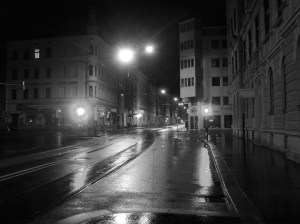
Nighttime rain is different—good, but different. There’s more drama on rainy nights. When I have a challenging day, I like to experience night rain by imagining the character of Mike Hammer from a Mickey Spillane crime novel. I picture me on a dark, moonless night; standing under a lamp post illuminating my silhouette. With muffled, distant thunder following flashes of light, rain sparkles from the beams of the light post. I wear the characteristic trench coat with raised collar and a gray fedora, tilted forward and cocked right. The front brim bent slightly downward with water flowing off. The sound of falling rain is all around. I hear it splash into puddles and onto sidewalks. With water moving everywhere, I forget the day’s problems and the annoying people. But mystery is afoot. Like it or not, Mike Hammer is involved. And of course, there is a woman. As Hammer, in the writing of Spillane, I mumble, “In the flora and fauna of the Bowery, she was a lot of flora and quite a bit of fauna. She looked like she belonged in a field of Wyoming wildflowers instead of wandering through the human backwash of the avenue.” In the night rain, I can do this. Rain brings magic and drama.
I’ve passed through forest after a rain. My senses were filled with sights, sounds, and the aroma of nature. There I can see and feel it because everything is wet. For me, awareness of water is experiencing the essence of living.
Let’s take life, rain or shine, one day at a time. It’s about how we feel. We’re not alone in our emotional response to rain. In the Pacific Northwest, we love the outdoors, rain or shine. Too much shine and we miss the rain. After some rain, we’re ready to let a little sunshine in. “In every life a little rain must fall….” Of course, and why not?
“The richness of the rain made me feel safe and protected; I have always considered the rain to be healing—a blanket—the comfort of a friend. Without at least some rain in any given day, or at least a cloud or two on the horizon, I feel overwhelmed by the information of sunlight and yearn for the vital, muffling gift of falling water.” ~ Douglas Coupland, Life After God
I consider myself a realist. Don’t we all? I recall a comment someone made to me a number of years ago. She considered herself to be a spiritually positive person. She read and followed all the right spiritual gurus, in her option. As we were talking, I used the word reality. She told me that was negative. Really? I haven’t quite figured out why I saw conflict between her negative view of reality; and her positive, optimistic thinking, but she didn’t see an inconsistency at all. I didn’t understand then and don’t now. In fact, if she considers herself to be a positive person, but sees reality as negative, I must conclude that she’s not only a pessimist, but she is in denial about it. She may have been Pollyannaish. Believing in a positive outcome and things will work out for the best in the end is fine. But even being absurdly optimistic is not the same as seeing reality as negative.
According to Bill Bryson, the terms optimistic and pessimistic “should be used to describe a general outlook rather than a specific view….” Some people have changed the ending of old tales to “and they lived happily ever after.” Is that more optimistic or positive than “…happily for their remaining years.”? Both are positive outcomes. One has a realistic limit, but it is still good. Having positive thoughts is good and often leads to improved results, but better words (still leaning on Bryson) might be hopeful or confident. They’re optimistic, but fit better with the specific situation and the level of consequence for most daily encounters.
I like to think of myself as a realistic-optimist. (If a presidential candidate can be a democratic-socialist, then there is precedent for my claim.) But I have interesting discussions with people who would say that I am negative or pessimistic because I foresee less than desirable outcomes if reality is not respected. Most of us seem to have good days and bad. Assuming that they will all be good henceforth is denial of reality. We will continue to have natural and man-made disasters. That is reality. Making preparations for emergencies so that we can have the best possible outcome is optimism. Doing nothing is denial that often leads to further disaster.
I believe that a balanced outlook is the key to a healthy life and a healthy world. We need not assume the worst, but blocking out, or ignoring, the inevitable is not being optimistic. It is being foolish.
As I prepared for retirement about a year ago, I wondered what to put on my calling, or business card. Retired didn’t seem right, even if accurate. It tells nothing about what I do, as I thought the card should. When a doctor retires, she is still a physician. Others who no longer practice their vocation often can still rightfully be called, say a pilot, but not necessarily an airline pilot. He may even continue to fly airplanes.
With tongue in cheek, I listed my position of expertise as Leisure Aficionado. Also on the card, I listed three skills. One was Pleasure Seeker. I found reactions to that interesting and would often ask, “Don’t you pursue things that give you happiness and pleasure?” Apparently, some people only interpret a pleasure seeker as immoral. Unless your name is Church Lady, even sex is both moral and normal. Admittedly, it gets a lot of people into trouble. Without it, however, none of us exist. My topic is not sex, or even retirement. It is the pursuit of pleasure and the reduction of pain: Epicureanism.
I am an Epicurean. I see nothing wrong with that and even see it as positive. In my house I have food and drink, some of which has minimal or no nutritional value. But I like them and they bring me a certain amount of pleasure. I also have substances that have value in the reduction of pain. Chances are that you do too.
Epicureans are disciples or students of the Greek philosopher Epicurus. In the more modern sense, we are people devoted to sensual enjoyment, especially derived from fine food and drink both in a person’s taste and, as it often relates to delight-providing establishments, restaurants. Synonyms for epicureans could include hedonist, sensualist, pleasure-seeker, sybarite, voluptuary, bon vivant, and bon viveur. More related words are epicure, gourmet, gastronome, connoisseur, and gourmand; a generous, life-loving epicurean. Much of how we use the term invites thoughts of fine food and drink. I personally favor the adjective Epicurean to mean leaning more toward an understanding of Epicurus and his ideas.
Of course, there are problems with excess. Health factors such as weight gain, allergies, addictions, and waste leading to environmental damage can be consequential. But those problems are about excess, not pleasure or the relief of pain. Epicureans are not opposed to common sense and we applaud evidence-based solutions to problems.
I’m in good company with my pleasure seeker philosophy. Other adherents to the teachings of Epicurus included the poet Horace, whose famous statement Carpe Diem (“Seize the Day”) illustrates the philosophy quite well, in my opinion.
I’ve had new cards make up. They have my photo, name, contact information. The job title on the card is “Writer” – nothing more. That is what I consider myself to be, because it brings me pleasure. While it also brings me pain of a certain kind, Epicurus had an answer for that too. If the result of the pain is pleasure, in the end it is good.


 However, I am willing to work with my feelings of hopelessness. I’m not referring to the charming but hopeless romantic, or being merely incompetent (Bill’s hopeless). And I’m not talking about sadness, fear, or denial. I’m talking about the feeling that can cause despair (being without hope). Back in the day, ‘twas that conclusion I expressed when I’d say OMGIF! (Oh my God, I’m fucked).
 I read this good article about hopelessness in the
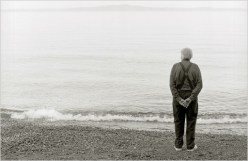 Ten years ago, I lost one of my best friends from my childhood. Today, I received a phone call telling me that I have now lost the other. A few weeks ago I was tasked with a writing assignment to provide an essay on what I long for. You can see it blogged under “Nostalgia and Longing.” Reading my blog, you can glimpse my view of humanity and the world.
 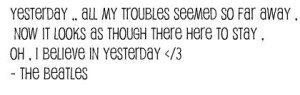 But today, I want to think about the past. Not in a regretful way, but in an “I remember” way that might allow my brain to be the tool of a child’s mind again.
 I know that I cannot go back to that time, and I’m not sure that I would want to. But I want to have those memories until I have no memories. I would like to again feel the freedom, the special bond, and the unquestioned certainty that we would all live forever. I want to think about my future and talk about how much better it will all be. I want free and unlimited amounts of candy and ice cream. We didn’t have that, but when we took over, well, you know, right? I want to know that next year, I will be allowed to stay out after it gets dark, to drive a car (legally), to date girls (with everyone knowing).

 The other night, as we sat discussing writing projects and their duration, the subject of time came up. There were three of us, representing roughly three generations. The more we talked about time and how each of us currently sees it in terms of the future, the more I realized how differently each one of us viewed it. Time does not change. We do, and thus our view of time changes with age.
 I claim to be a right here, right now kinda guy. I live in the present moment. As I contemplate writing a memoir, this seems to cause me an ‘angst’ problem in that I wanna, and I don’t wanna. (I also struggle with writing about myself, but that’s not the issue.) I like History. It could’ve been considered my second minor at A&M. My manuscript is historical-fiction with too much history and not enough fiction. This morning I was asked if I would write a time-travel book (I’m noticing that Vickie has a knack for asking me thought-provoking questions). I didn’t have a ready answer, but after a lot of discussion and thought, my answer is ‘nope.’
 After doing a bit of reading, I’m no longer positive that I know what ‘this moment’ in time is, or if it exists. My metaphysical (woo-woo) friends get excited about this fascinating subject. When they do, I look at my watch and note, “It is one-forty, PM.” But they’re right. It’s really an interesting topic. Physicists and philosophers are all over it. Check out all the wiki and academic research (
 In a scene from my childhood, I watched through our living room window as kids my age played in a rainstorm. They were laughing and having a wonderful time getting soaked. The streets and gutters were awash. One boy sat down in a flooded gutter as the water pushed against him and splashed hard around his body. I felt envy. Not because they were having fun without me, but because they were playing in the rain. I was home with my mother, and she told me that I couldn’t go out because I would get soaked and catch my “death-of-cold.” I have since learned and admit more about myself, and about colds.
 The word ‘pluvial’ refers to rain or something characterized by abundant rain. The suffix ‘phile’ denotes fondness. Consequently, a pluviophile is one who finds joy and peace of mind on rainy days. I was taught that rainy days were sad, as in the Carpenters song lyric; “Rainy days and Mondays always get me down.” I was to believe nice days were sunny, cloudless, and warm. I’ve never felt that way. Sunny and pleasant days have their place, but few are enough. Later in life, I admitted to liking cloudy, rainy days. I now identify as a pluviophile. These days, I’m often asked why, after more than twenty years in California, Texas, and Florida; I recently moved to the Pacific Northwest. I ask, “Do you know what a pluviophile is?” Like it should be news to me, I’ve repeatedly been told “it rains a lot there.” I reply with a smile, “Yes, it does.”
 My involvement with rain changes with its many forms. Scientific names apply based on how it comes about. But, I am talking about how the rain itself varies from torrential downpour to a gentle drizzle. Duration, wind, thunder, lightning, air temperature, and other factors contribute to our experiencing rain. There are times of rain just falling, and times with thunder and lightning. There is morning rain, afternoon rain, and rain at night. Each is emotionally and physically encountered differently. It can be seen and heard while keeping dry, thus precluding feeling the rain. Only outdoors can we dance in the rain. If I don’t perceive rain with senses—I just get wet. Our world changes when it rains. We need it, just as we do sunshine. To me life smells, feels, looks, and sounds more alive in the rain. In the city, rural areas, and in the forest, everything improves. When I am with the rain, I heal and recover. It’s a spiritual exposure difficult to explain. I’m not especially spiritual, but in rain I sense life — nature.
 I recently delayed my daily walk when rain was forecast. After waiting for the rain to start, I donned shorts and tee. I was off in good spirits, expecting to be, and was, soaked. After an hour, I was back home. I sat on a dry and covered bench, removed my soaked shoes and socks, slapped water from my dripping baseball cap, and chuckled. I was thinking how others might consider me deranged. But, this is why I’m here.
 tilted forward and cocked right. The front brim bent slightly downward with water flowing off. The sound of falling rain is all around. I hear it splash into puddles and onto sidewalks. With water moving everywhere, I forget the day’s problems and the annoying people. But mystery is afoot. Like it or not, Mike Hammer is involved. And of course, there is a woman. As Hammer, in the writing of Spillane, I mumble, “In the flora and fauna of the Bowery, she was a lot of flora and quite a bit of fauna. She looked like she belonged in a field of Wyoming wildflowers instead of wandering through the human backwash of the avenue.” In the night rain, I can do this. Rain brings magic and drama.
 Let’s take life, rain or shine, one day at a time. It’s about how we feel. We’re not alone in our emotional response to rain. In the Pacific Northwest, we love the outdoors, rain or shine. Too much shine and we miss the rain. After some rain, we’re ready to let a little sunshine in. “In every life a little rain must fall….” Of course, and why not?
 I consider myself a realist. Don’t we all? I recall a comment someone made to me a number of years ago. She considered herself to be a spiritually positive person. She read and followed all the right spiritual gurus, in her option. As we were talking, I used the word reality. She told me that was negative. Really? I haven’t quite figured out why I saw conflict between her negative view of reality; and her positive, optimistic thinking, but she didn’t see an inconsistency at all. I didn’t understand then and don’t now. In fact, if she considers herself to be a positive person, but sees reality as negative, I must conclude that she’s not only a pessimist, but she is in denial about it. She may have been Pollyannaish. Believing in a positive outcome and things will work out for the best in the end is fine. But even being absurdly optimistic is not the same as seeing reality as negative.
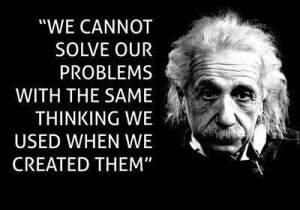 I like to think of myself as a realistic-optimist. (If a presidential candidate can be a democratic-socialist, then there is precedent for my claim.) But I have interesting discussions with people who would say that I am negative or pessimistic because I foresee less than desirable outcomes if reality is not respected. Most of us seem to have good days and bad. Assuming that they will all be good henceforth is denial of reality. We will continue to have natural and man-made disasters. That is reality. Making preparations for emergencies so that we can have the best possible outcome is optimism. Doing nothing is denial that often leads to further disaster.
 I believe that a balanced outlook is the key to a healthy life and a healthy world. We need not assume the worst, but blocking out, or ignoring, the inevitable is not being optimistic. It is being foolish.
 I am an Epicurean. I see nothing wrong with that and even see it as positive. In my house I have food and drink, some of which has minimal or no nutritional value. But I like them and they bring me a certain amount of pleasure. I also have substances that have value in the reduction of pain. Chances are that you do too.
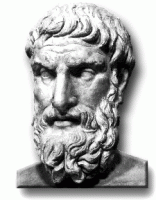 derived from fine food and drink both in a person’s taste and, as it often relates to delight-providing establishments, restaurants. Synonyms for epicureans could include hedonist, sensualist, pleasure-seeker, sybarite, voluptuary, bon vivant, and bon viveur. More related words are epicure, gourmet, gastronome, connoisseur, and gourmand; a generous, life-loving epicurean. Much of how we use the term invites thoughts of fine food and drink. I personally favor the adjective Epicurean to mean leaning more toward an understanding of Epicurus and his ideas.
 Our Literary Journey