My Analogy
 Let’s make a pencil drawing.
As we create this drawing, our personal art, we move the pencil across the page. As it leaves lines and other marks on the page, let’s say those marks are in the past – our past. We are creating the art, but we drew the lines and made the marks, past tense.
We can see the pencil point. The tip is touching on the page. We may look directly at it, or not. That small point of contact with the paper represents our present time — now. It’s in that brief instant of time where we live. We may look at the past marks, or we may focus on the pencil on the page. We may move it in any direction, going fast or slow, applying firm of soft pressure. We may even lift the pencil from the page and move it to a different location.

As we move the pencil, the point joins with other lines on the page. Our present reaches into our past. As our vision unfolds, we make plans for where the pencil will go next, how we’ll maneuver it, how we apply pressure to it, how we will lift it off, and return it to, the page. As our drawing takes form, the page fills with marks and lines.
The blank part of the page is the future. We think about and plan our next moves, or we allow our hand to be guided by external forces, moving us into our personal future.
We keep looking to see the entirety of the drawing. We consider the past lines in light of our future plans. We make decisions to move lines in the present to be tangent with, or to intersect lines of the past. Thus, we create a new future that mingles with, and eventually becomes, our past.
We erase. We change it. We keep looking at our whole life as art. As we move in closer and back away to change our perspective, we begin to see the big picture of our life.
 As we draw, we feel things: love, anger, spiritual things, and the passions of life. As we experience our feelings, our work of art changes. Those emotions travel to our hands to control the pencil that is drawing our life.
We learn as we draw. What worked? What didn’t? Where did we succeed and what were our failures?
As we fill the page with marks and lines, there are more lines and less white space. We are running out of places to make our marks. We don’t know how many more lines and marks that we can put on the page.
Our drawing, our art, our life. It’s on the page, or is it?
Mind the gap.
 With 10 days of Nano remaining, I’m rolling along with my memoir. Finding memories and searching for lost feelings. It has helped me to keep writing in a searchable chronological order, so that as I recall things I want to add; I can find the right place to write (draw?) those memories.
Now, with over 34,000 words, I can tell that I may have to run this stuff past some involved eyes before I consider asking anyone to read it for feedback. Along with trying to write over 1,500 words a day, I’m reading Writing is My Drink, by Theo Pauline Nestor, and Your Life as Story by Tristine Rainer.
Have you ever tried to write your life story as a fairy tale? I have. Try it sometime.
“One should either be a work of art, or wear a work of art.” ~ Oscar Wilde
To see your life story, look both ways.





 So I snuck like a Ninja, undetected by the dozing, fat, fuzzy feline. Then, my stomach rumbled because I was hungry. Cats have very sensitive hearing. She woke up and chased me. I quickly climbed some drawers to the stove.
 Yolonda, my wife of 50 years (we married at age 2), is a native Texan and has her ‘druthers.’
 Billy on right, (w/Phish bassist Mike Gordon), our oldest child is in his mid-40s, a very nice, loving, big-man. He’s always been an avid reader, a talented writer, a movie aficionado, and a hard-core Phish-head. Add bicyclist, father, hubby, friend, musician, and deep-thinker.
 Steven is our middle-child, now in his early 40s. He’s another good guy. An avid sports fanatic (Spurs and Cowboys) and mountain biker. Add hubby, step-father extraordinaire, house music DJ (Steve Balance), friend, and all-around cool-dude (maybe pragmatic and analytical). He initially said that he had no fav quotes, but when he and his sista’ got to texting, there they were.
 Our beautiful ‘baby’ is Julie. She can recite every line from the movie Grease (oddly did not quote it), is an artist, a thirty-something, 21st Century hippie, a mom and step-mother. I think she is a wonderful writer and, like her mom, a Grammar-Nazi. She lives in the middle of nowhere with her hubby, son, occasionally a step-son, or two lovely elves, too many cats, horses, and sometimes (because he likes to chase the horses) a dog.
 My wife doesn’t like one (or more) of my favorite songs: Night Moves by Bob Seger and the Silver Bullet Band. I thought it was our differing tastes in music (she’s country, I’m rock and roll), but one day our son pointed out why. It’s a ‘guy’ song. I also realized that we each look back in time with different memories. Never mind that she really does not enjoy the raspy-voiced shouting of old Bob. The song, written and recorded by Seger in 1976, is a coming of age tale about adolescent love and an adult memory of it. It strikes memories of my times in the early sixties.
 During the 1970s I graduated from college (many thought impossible), I re-entered the Air Force as an officer, I completed flight training, all my children were born, and I turned thirty (I thought that impossible and I sadly became untrustworthy— relates to the famous “don’t trust anyone over 30” adage of Jack Weinberg, activist of the 1960s, now 76). I usually listen to the music of the 70s. While I enjoy those songs for their own value, the music also often brings with it memories and feelings that can only be called nostalgia. Sometimes, it makes me feel profoundly sad. I’m not sure why, but I suppose it has to do with something that will never be again.
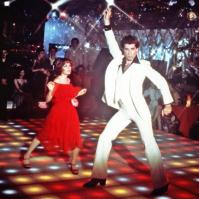 It was the decade of great music, great movies, and great TV. The politics were interesting. How often do we get to see a president resign? I am working on a historical-fiction novel, set in the 1970s. We had Star Wars, ABBA, and the Beatles break-up. Elvis died. Everything was either brown or orange including the shag pile carpeting (ok, add yucky gold). We had platform shoes, Charlies Angels, Mork and Mindy, metal drinking cups, portable hair dryers, Holly Hobbie, Lava Lamps, and the most outlandish fashions ever for America and England. Who could ask for more? We typed on typewriters, went to Tupperware parties, and air conditioning was a welcome luxury. And who did not have an 8-track?
 I know that we are all fallible. We all make mistakes if we make or do anything. Usually, it’s our parents who provide the first clue. Somehow, we are often gifted as teenagers with the wisdom and insight to identify each and every flaw of our parents and anyone else who we consider an authority. Somehow, we overlook the foibles of our friends. And of course we have none, or too many, or we must hide, or we are perfect, and will never make that mistake, depending upon the day of the week, if anything. Confusing? You bet. Human? Absolutely.
 And that is the point. Do we judge the content of books by the mistakes in it? Do we judge others based on their circumstances, be it through their own fault or not? What do we expect from our fellow human beings? What do we want from them? Why are we this way?
 We all have them, to one degree or another. We are born with them and they change over time. They seem to always be there. Admittedly, health issues have a profound effect on our feelings, but that does not diminish the importance of feelings. And feeling can have an equally profound effect on our behavior, and can conversely effect our overall health. I like to say, “It is all about how you feel.” I mean that in life how we feel is critical. People may advise us to cheer up, but how?
 I am not talking about clinical depression, chronic sadness for no reason, or any form of diagnosable mental health problem. I am talking about the normal things in life that may affect us because the emotional weight is so great. Things that make us sad are part of life, but they can, and often do, emotionally stop us right in our tracks. We feel bad. And depending on the degree and how it is handled, it has everything to do with eventually feeling good enough again to get on with it. I will not say get over it, or that we even have to.
 We have heard, “How do you feel about it?” and “How does that make you feel?” We may ask ourselves that question every day. While this is normal, living with a daily problem that makes us feel bad can often be improved. But we have to want to improve and we need to be willing and motivated to do what it takes to feel better.
 Our Literary Journey