Literal Thinking; Ironic World

“The literal mind does not understand the ironic mind, and sees it always as a source of danger.” ~ Christopher Hitchens

Once we perceive something and it gets into our brains, the confusion begins. We communicate by employing methods or techniques to stimulate the senses of others, intentionally or not. Face-to-face, we can bring out all the best guns. Teachers employ every conceivable technology to get students to learn by seeing, hearing, touching, smelling, and tasting.

ironic-mind2

I doubt that our individual minds are exclusively either literal or ironic. I suspect that some of us have trouble communicating, especially on the receiving end, because we lean one way or the other. When the ironic mind works with the literal, caution and precision must be applied. The reverse seems to be less of a problem.

I recall a conversation with my daughter about a man who, in my opinion, was an irresponsible pet owner. I forget the details of his transgression toward the pets, but I used a rather common and innocuous phrase regarding what she told me: “He should be shot.” Julie became upset with me (he may have been a boyfriend at the time). It was quite a while before I knew the reason. Apparently, she took what I said literally. Even after our discussing and my explaining the idiom, she never quite seemed to grant me a full pardon for promoting the demise of her friend. While this may appear extreme, it’s not uncommon.

Another example involves a writing quote I like from Steve Almond.

“All readers come to fiction as willing accomplices to your lies. Such is the basic goodwill contract made the moment we pick up a work of fiction.” ~ Steve Almond

When I posed this quote to another writer, she asked, “Is that how you see it?” I confessed agreement before I realized the problem with the noun lies. What makes this even more interesting is that at the time, I was writing historical fiction (an oddity in its own) and my friend was wrestling with a memoir (a quest for truth). Her efforts were focused on discovering the truth while mine were based on developing an untrue story in a true, but flexible, setting.

Fiction is only a lie when it is not presented as such. While neither of us set out to deceive anyone (truth is not in every memoir), her goal was fact with interest. Mine was interest with a false story based upon fact. My friend’s literal mind-set related to her concern with the accuracy of her project. Mine was based more on fiction, which is not the truth, thus figuratively can be called lies.
ironic-mind4

I enjoy the humor of sarcasm and irony. Without awareness of the intended humor, harm is frequent. Furthermore, if someone does not share another’s sense of humor regarding irony, even more so, sarcasm; the exact opposite of the intended communication is inevitable. Damage control using a follow-on explanation never seems to completely mend the fence, “I can’t believe you thought that was funny.” My personal sense of humor gets me into that sort of bind on a regular basis.
ironic-mind3A humorous book I enjoyed was Lamb: The Gospel According to Biff by Christopher Moore. The book is full of tongue-in-cheek humor, innuendo, sarcasm, and other forms of witty humor. It even has an angel who is so literal as to be the best heavenly straight man I can imagine.

I (somewhat proudly) wear the label snarkastic to fit my fondness for being both snarky and sarcastic. But, I’ve learned that how I communicate makes a difference. In writing, I am advocate for a sarcasm font (we need one). In person, I exaggerate facial expressions, gestures, and voice inflection so that I can give others the opportunity to get it right. I don’t enjoy the struggle of trying to explain my humor to someone who I know will never get it, but I try. And, I’m watchful for things not turning out as planned after I shoot off my mouth.

ironic-mind1Sometimes I don’t get it either. Like when I say something and someone bursts out laughing and yells, “Bill, I love your sense of humor.” I smile and nod, then lean to the person next to me and ask, “What did I say that was so funny?” Literally?

We live in an ironic world.
Love, laugh, get wet, look both ways,
and mind the gap.
Evil’s Not My Problem

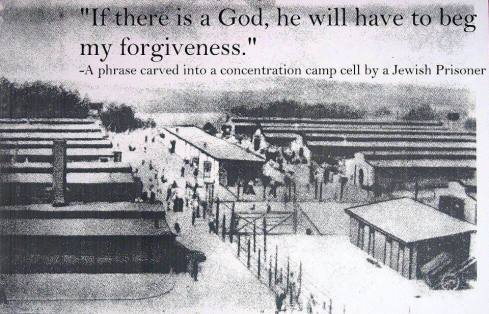
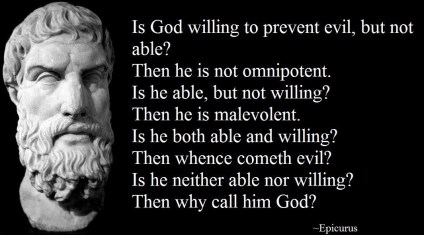
Monotheistic believers have no convincing way to deal with this issue. Because it has been around for a long time, it has been written about, answered, explained, taught, or discussed in groups of one kind or another. But it remains a problem that can only be settled one way—ignore it. Ignorance is bliss.

problem-of-evilOr, you might end up where I did, facilitating a classroom discussion of the topic in the Adult Education program at my Catholic church. Preparation for teaching, and then leading the group discussion, led me to an enlightenment. I was not, at the time, spiritually or religiously challenged by the problem of evil, but I learned a lot.
Most of what I learned involved getting deep into a topic that I’d not seriously considered. As I was reading the Bible, especially the Old Testament, I started coming to terms with my own evolving beliefs and conclusions.

I was a believer (or wannabe) at the time. My biggest aha moment was when I realized that I had no qualms pinning evil on god. And, of course, that led to the uh-oh moment. That’s when I realized that god could not be so good after all. That disconnect was not gunna work for me. “Houston, we have a problem.”

problem-of-evil4

If you’re fuzzy on what the problem of evil is about, click here  to link with a youtube that provides a quick-n-dirty review in ten minutes. Pay attention because that guy talks fast and covers a lot of ground.

I’m intrigued when a priest, deacon, nun, or any religious person says, “I can’t understand why God allowed that to happen.” Pick any natural disaster, which some people do not consider evil, or some other moral evil such as mass murder. We have heard it said.

In the case of Islamic terrorism and other nut cases, evil is even done in the name of god, ostensibly with god’s help, followed by a hefty reward from god. (WTF does anybody want with 72 virgins anyway?). I know there are other kinds of murderers, but everyday that religion is used to justify slaughter around the world.

I know, “one man’s terrorist is another man’s freedom fighter.” But, along with most Americans, I consider 9-11 the mass murder of innocents. My point is: there is evil—lots of it, and all kinds of it. If you believe in a god who knows, cares, and can fix it; you should radio Houston Control with your problem.

problem-of-evil3

We mere humans, when not being the perpetrators of some evil, expend energy preparing for and dealing with it in some way. We know it’s coming. So, in that way, it’s logically a problem that is often taken for granted (i.e., shit happens). Even the religious folks mentioned above devote their lives to promoting the goodness of god and fighting evil, albeit usually they focus on moral evil, as defined by them, of course. Other groups do a wonderful job of providing aid to victims, after the fact.

Since there is evil, it must ultimately be permitted by, if not created by, the god one believes exists. Depending on the religion, reconciling this with religious belief takes some doing and may call for a heavy dose of denial. Maybe a little help is in order? Enter the best scape goat ever—Satan. Next best are Adam or Eve. If someone says, “It’s god’s way,” you should be reaching for your bullshit flag because here it comes.i-dont-care4

In some way, religious folks must be working through or around this problem. Last I checked, monotheists aren’t switching to polytheism or finding another way to make it work. Or are they?

Atheists and believers seem to agree; there is evil in abundance. My definition of it is probably broader than many religious folk, but it’s close enough.

Atheists don’t have to determine why evil is permitted. We only need to acknowledge its existence, do what we can to make others aware of it, and prevent it when possible. If not, maybe we can find ways to deal with it when we must, which is more often than I like. I never have to ask why god did, or didn’t, do something. But you have every right to ask me why I don’t do something.problem-of-evil2

There is both good and evil in the world
and too often within us. Look both ways.

Are You an Enigma?

enigma3

I’m comfortable with not understanding everything and everybody. It has little to do with what I want, but more to do with my level of acceptance. I can be curious, and sometimes I’d like to know more. But I’ll never know everything.

Here’s an example. About a year ago I was in a discussion group talking about the US Government, and the government of another country that many of us consider an enemy. One lady said, “All I want is to know the truth.”

I watched her to be sure she was serious. Then asked, “The truth about what?” Following her tongue-tied response, I asked why she thought she could learn the truth. I explained that we had all the information available, filtered by the providing media source. Her problem was, and ours is that we usually form opinions and make decisions without knowing the facts. She said, “Well, that’s interesting.”

enigma2

The first time that I recall anyone calling me an enigma was back in the mid-1980s. I was walking back to my office when one of my staff looked at the contents of my hands he said, “You’re an enigma.” I looked down at my hands, smiled at him, and asked why. “A Snickers candy bar and a Diet Pepsi. That makes no sense.” I hadn’t considered the conflict of the combo. I answered, “It does to me. I like them both. If I was interested in diet, it would be celery sticks and a glass of water.”

If an enigma is a person or thing that is “mysterious, puzzling, or difficult to understand,” may I add “and interesting” without changing the definition? If you are an enigma to me, that means I find you difficult to understand. So what? I may see you as interesting for that same reason. I should accept that is who you are.

If I ask you to explain what I see as a puzzling conflict in your behavior or opinions, and you do, are you still an enigma? Or is it my failure to understand the makes you an enigma?

The enigma phenomenon pronouncement is an outside view. The inside view usually makes perfect sense. Furthermore, if people change behavior or opinion, are they still enigmatic?

I am an enigma to many. Here’s why.

enigma5

I spent over 45 years working in the Department of Defense (military, contractor, and civil service). I graduated from the most conservative (by most measures) public university in the country. I’m an old white guy who lived in Texas most of my life, and most of my long term acquaintances are conservative, republican, and religious. Stereotype me based on that and you’ll get me wrong, as many do.

enigma4

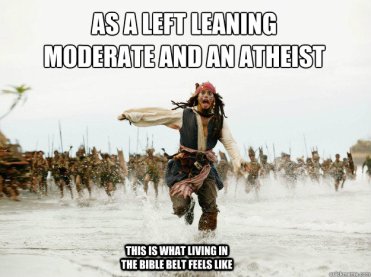
Politically, I’m a left of center moderate democrat. Depending on the issue, I’m often liberal, but I often find myself defending traditional things. I am fairly disciplined, but a good and flexible listener. I am an atheist who spent too many years trying to be that church guy. My past, age, race, education, and former residence belie the real me.

Love and peace are the answers. We should do all we can to avoid wars. After that, I think the limited, partial measures war-like actions of the past were folly. War should be fought to win. Because war is so ugly, that goal is only reasonable after all peaceful measures have failed. Talking war is a murky swamp full of traps. But I think we need to apply logic to our policies so that we can stop being on the losing end.

I’m neutral regarding the term open minded. I prefer a willingness to hear some other points of view, to be accepting of what I can, but to hold to my beliefs until information changes my mind.

I’ve done a lot, seen a lot, and lived a lot; but I can still be perplexed about myself. So, if you’re confused, maybe you should be. My wheels turn slower than they used to, but they’ve not stopped.

enigma

To keep an open mind, look both ways.

Are Atheists and Believers on Equal Moral Ground?

atheist-morality3

Yes. We are. In most cases, for exactly the same reasons. But too many believers are taught that atheists are worse than immoral. They’re taught that atheists are evil. The following quotation was reported as being recently sent by an orthodox priest to his followers (meme found on a WordPress blog).

One priest’s view

“Lots of sicknesses have come out [of] the closet, and unbelief has come out of the closet too. And unbelief is the worst of them all. Better to be an adulterer…. Better to be a killer…. Better to be any of those things, brothers and sisters, than an unbeliever. There is nothing more foul, there is nothing more grotesque, for a human person to do than to embrace atheism”

At least he seems to see us as human, or almost. When I challenged the person who posted this, she tried to explain that he did not mean to say what he obviously said. Unless the man is grooming for a political campaign, I’ll take him at his word.

A governor’s viewRepublican presidential candidate Ohio Governor John Kasich speaks at the 2016 Conservative Political Action Conference (CPAC) at National Harbor

Then there is the reported statement by the Governor of Ohio, and former republican presidential candidate, John Kasich. His reaction to actor Daniel Radcliffe’s (Harry Potter) disclosure as atheist is revealing.

“You know that Daniel Radcliffe has declared himself an atheist? I’m serious. What a weird thing. Why would a guy who has had all that success just, I mean, what the hell is wrong with him?” ~ John Kasich

Read about it by clicking here.

The public’s view

atheist-morality6I recently read about research conducted by two prominent universities, one in Canada and the other in Oregon. Their general finding was that people trust atheists slightly less than rapists.

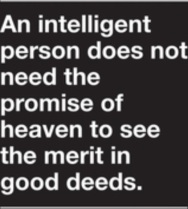
It’s easy to find more, but you get the point. And people wonder why atheists might object? Seriously?

While I am neither surprised nor angry, when some moron priest with a following says that I am worse than a serial killer, a jihadist bomber; that I am nothing but a grotesque, foul human being, please forgive me for being offended.

I’ll face palm, have a beer, and forgive this Christian for his stupid, insulting remark. Which, no doubt, at least hundreds of followers now believe. The clown who posted this seemed to think that atheists might be offended by it. Do ya think? Are you gunna tell me that people like this make the world a better place? These trolls think they are legitimate, and their followers agree.

Another priest on morality

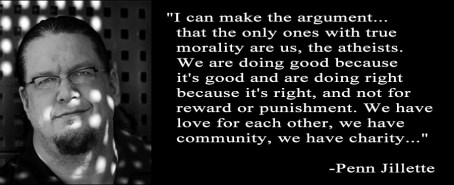
Well, I have a priest to quote too—a Roman Catholic Parish priest. He told us that we should do the right thing. Not to keep out of hell, not to please god, not to impress anyone, not because the Bible or some bishop or pope told us to, but simply “because it is the right thing.”

This atheist agrees. I think most atheists believe in following, or changing, the laws. Even the ones that should not be laws, but are religious rules forced on everyone (civil disobedience protests notwithstanding).

We may protest, object, file law suits, or ping some governor, but we will usually follow the rules. It is the moral thing to do. This is partly why athesists are underrepresented in prison populations. Statistically, the proportional numbers of believers compared to the number of atheists in prison may be worth considering. I’ll let you look it up.

Nihilism (<—click for wiki)

Many believers confuse atheism with nihilism. They’re not the same. It’s unlikely that a moral nihilist would be a theist. Conversely, few atheists may be nihilists, but they could be. Understanding the difference helps, even if it is confusing. Another consideration for believers, be they doubters or true believers, is to ask themselves these four questions.

If I stopped believing in God tomorrow, would my morals change?
Would I become a criminal?
Would I be more willing to rape or murder?
Would I change so much that I would become a different person?

atheist-morality1

The other day I read a comment by someone who, while quite confused about Christian moral standards and values (and he is one), was even more out of line with his view of atheism. He implied that if I was Russian or Chinese, I might view human life as a “warm bucket of spit.” I’m sure that his opinion is held by too many Americans.

That would be nihilism, which is a philosophy—atheism is not. When someone asks an atheist how life can have meaning without god, they’re often thinking philosophically, and probably of some kind of nihilism.

Those loving Christians

atheist-morality4

I’m trying to figure out why so many Christians work so hard to make atheists look so bad. What do you suppose that is all about? Some lie knowingly (as in bear false witness), some may misunderstand, some may be warning their own group not to look upon nonbelievers or free thinkers as being just like them. Otherwise, the believers might become apostate and walk away from that religious fantasy (and take their money with them).

Atheists want a better world

atheist-morality2Whether someone dislikes the fact that nonbelievers exist, that we work with believers to keep church and state separate, or that their family members may embrace atheism; we will continue to come out. We will continue to speak up. We will continue to deny the existence of any god. And, we will continue to share the moral high ground with most believers and to counter all claims to the contrary.
Believe as you will, be sure to look both ways.

DEATH

The inevitable & unavoidable conclusion to life.

During late October many cultures begin preparing for the first days of November. They remember the dead, acknowledge the end of harvest, and prepare for the dark days of winter. It begins with Halloween, then All Souls’ or All Saints’ Day, The Day of the Dead, and Samhain. Many believe it’s the time of year when we’re closest to the other world and death itself. The Fairy Tree story that ends this blog tells a wee bit more.

death6

It’s our only certainty—we die. Beliefs about what follows the end of human life range from nothing to Paradise and 72 virgins or reincarnation. Let’s not forget the whole Dante’s Inferno thing. Our beliefs about an after life affect our choices while living.

While no one has told of their experience following permanent death (we have near death accounts), there are stories with bits of information. Little of it is dependable or useful. Theories abound, but the database of the deceased is void of demonstrable facts. Only the dead know, and they’re not talking.

Efforts to resist death seem logical, but are eventually fruitless. While many consider death a condition leading to afterlife, most people (not all) avoid dying as long as possible. An exception is when living prolongs a life of hopeless suffering. Others choose death through martyrdom. We disagree about our right to die (whole other blog) and we normally work hard to keep living.

death4In the United States, more than two-million people die each year. The CDC reports the top four causes as heart disease, cancer, respiratory disease, and accidents. I say, smoking, smoking, smoking, and driving plus illicit drugs because they are the major producers or triggers of those four “causes.” The root cause of most preventable premature deaths in the USA is smoking (so quit).
It can be difficult to determine the difference between a still living or recently deceased person. Without more information, we can only define death as an absence of life. Our legal descriptions require a physician to certify the time and cause of death. While absence of all brain activity normally defines death, court cases fog the legal definition. When there are uncertainties, we gain information through autopsy.

death3

While we’re fascinated with death, many of us avoid serious discussion of it and find it morbidly unpleasant. The death of friends, loved ones, and people we hold in high esteem represent the ultimate, painful loss. Our own death signals loss and aloneness, which is sometimes comforted by religious beliefs.

death2

Yet, we sing of death, we write about death, and we (should) discuss it. We often honor death’s inevitability with both art and science.

Since first hearing it, I’ve liked Ralph Stanley’s (died, June 2016) rendition of the song, Oh, Death, which is a plea with the Grim Reaper for another year of life. It was made famous in the movie O Brother, Where Art Thou? Hear a short version by clicking here.

From a list of ten poems about death, I selected two by famous poets. All ten can be found here.

“Death” by Rainer Maria Rilke (died 1926)

Before us great Death stands
Our fate held close within his quiet hands.
When with proud joy we lift Life’s red wine
To drink deep of the mystic shining cup
And ecstasy through all our being leaps—
Death bows his head and weeps.

From Queen Mab, by Percy Bysshe Shelley (became famous after his death in 1822)

How wonderful is Death,
Death, and his brother Sleep!
One, pale as yonder waning moon
With lips of lurid blue;
The other, rosy as the morn
When throned on ocean’s wave
It blushes o’er the world;
Yet both so passing wonderful!

death1Life is the time made precious by our inevitable death. May we fully enjoy the many pleasures and loves discovered and experienced while living. And may we all “…lift Life’s red wine to drink deep of the mystic shining cup…” because death is next for each of us.

Life is uncertain, look both ways.

Why be Atheist?

Disclosing as atheist is personal. Each person’s circumstance and disclosure story is different. The real question is: why should anyone publicly acknowledge being atheist? For some, it’s best kept private. There are legitimate reasons to hide not accepting the existence of any god. The reason is always the same: believers.

coming-out2For many of us, the importance of religion is stressed from a young age–religion must be taught. Logically, we are usually taught that our religion is the correct one and all others are wrong. While atheists have a similar conviction of accuracy, it’s not the same since the basis is no god exists, and consequently no religion is right.

coming-out5

Regardless of the religion or denomination, it seems that most believers don’t understand or accept atheists or atheism without extreme prejudice. Unitarian Universalists are a possible exceptions, as well as a few others such as some pagan groups and Buddhist schools, divisions, or sects.

From my teenage days, I recall my mother telling me that she didn’t care what religion I was, as long as I had one. Mom was raised in a multi-denomination Christian family. I don’t recall Dad saying anything about it. I think he’d approve any religion as long it was “Cat-lick.” I wouldn’t risk telling him anything he might not agree with, certainly not that I didn’t believe in god.

coming-out3I haven’t had to deal with negative family or friend issues regarding my public atheist disclosure, which was fairly recent. Other than a hint or two about someone praying for me, it’s been quiet.

After reading my spiritual memoir blog, Free from Religion, my wife said, “I could have written that.” Her experience was like mine, but she remains a theist. While supportive of my decision, she wonders what our religious friends think.

I’m old and can be cantankerous, but I’m usually laid back, quiet, and friendly. I’m retired, and have outlived many of my friends and family. While I want to be liked and loved as much as the next guy, I stopped caring so much about what anyone else thought of me long ago. At least I no longer care in the foolish manner that I once did. By remembering that what others think of me is none of my business, I find that I function much better in life.

For me, accepting my atheism involved learning, personal analysis and self evaluation—all done on my own over many years. Deciding to go public required me to think deeply about it. I wondered, why bother? I’m out, but I still think about it.

coming-out4While my disclosure has been inconsequential, I’m concerned for anyone struggling with it. While the decision is personal, I think atheists should disclose (come out) as soon as they’re ready. But, preparation and timing are important, if not critical.

We should not disclose when angry, arguing, or with any motive other than share something about ourselves. Even simply answering a question, as in my case, should be at the right time.

My answers to the question about coming out, posed in the first paragraph are:

  • Honesty is the best way to deal with some of the challenges. Experiencing guilt from being deceitful is an unnecessary burden.
  • Support. Depending on where one lives, there are groups of other atheists willing to provide advice and support. Being open allows us to take full advantage of such groups. On line groups are plentiful and helpful. The names and contact information for these groups are available through blogs and books.
  • Mental health. It feels good. Along with the lifting of a mental burden, many of us feel a new enthusiasm for embracing atheism. My experience is like that.
  • Social contribution. It is good for the individual, good for society, and good for atheists and believers alike. The stereotypical view of atheism and atheists is unfair, damaging, and wrong. By allowing others to know we are atheist, it helps them to know the truth. While I’ve been incorrectly labeled an exception, my openness is beneficial to every atheist.

To deal with the idea of disclosure, I recommend the following.

This book: Mom, Dad, I’m an Atheist, by David G. McAfee

Good blog article: 3 Doubts Closet Atheists Should Have Before Coming Out (And 3 Reasons To Do It Anyway)

And another one: Why Come Out As An Atheist?

coming-out1A second book that I’ve not read, but looks promising, is Coming Out Atheist by Greta Christina.

Each of us should stand up for our rights. To do that, we need to be out of the closet. Being honest with ourselves and others isn’t easy, but there’s abundant testimony regarding the lifting of a burden that we can only achieve by letting the truth be known.

Making life changing decisions can be difficult.
Look both ways.

I Want My Tribe

Tribe: On Homecoming and Belonging by Sebastian Junger

“War feels better than peace.”

tribe1That’s what it says. Not that war is better. It feels better. To put comments like that into context and perspective, you should read the book.

Tribe put me in touch with a part of myself that wants something which I haven’t had in long time–the feeling of belonging to a tribe. When I had it, it was temporary. I’ve lost my tribe, and I feel the void.

I don’t want to think we have a dystopian or apocalyptic world. But I realize that conflict and evil are pervasive in human nature. Also, all nature holds danger, evil threats, and risks to our survival. It has always been so and there is little sign of relief.

Junger’s book is supposed to be about Post Traumatic Stress Syndrome (PTSD) and American combat veterans returning to our normal and civilized society. It is about that, but there’s more to it. While vets are the focused subjects of the book, they are examples he uses to make an ultimate point about human nature and American society. I suspect that is why the book is so popular.


tribe3

Maybe we are not what we think we are. Are we as peace-loving as we claim to be? We’ve certainly done much to create a peaceful society in America and other countries around the world, with varying degrees of success–mostly minor or the opposite of what we intended to do.

tribe7

My favorite sentence in the book is just two words: “And yet.” (p. 109)

We crave peace, comfort, safety, pleasure, privacy, and independence. And yet, when we look at the history of human behavior under dangerous and stressful situations, something strange often happens to us. We are healthier and apparently (oddly?) happier—less depressed, when under stress. It should be the opposite, right?

I’ll not say more about the phenomenon because I don’t want to play spoiler. I want you to read the book. But, don’t use my library. There are now 184+ waits to read it. The word is out.

This book spoke to me. It’s my inner voice. Maybe I’m in denial. While I’m not overtly competitive and I’m so-so on some sports (I prefer playing to watching); I enjoy tension, drama, and mystery more than I like to admit. I have a love-hate relationship with fear and stress. I want them, and I don’t. WTF?

And yet.

tribe2

That voice is saying something. I know what it’s telling me. I know exactly what Junger is talking about—and I agree.

I avoid trouble. I want peace and love in the world. But I am a realist (in my mind, anyway). I enjoy conflict. While I’m unlikely to start trouble, when it’s forced on me, I’m in.

tribe5I despise fighting. I don’t enjoy pain or suffering, especially my own. But when I fight, I don’t want to stop. Something is deep inside me crying for more. Where’s my tribe?

When conflict is forced on me, I feel a change (a charge?) in my being–I feel strangely better. Got a tribe to protect and feed? I’m your man.

Consider the tribe concept in dealing with a crisis. We are all fighting for survival. We need each other. Your struggle is my struggle. We can share everything and overcome adversity for the good the tribe.

My personal paradox is that I’m an introvert and I enjoy my alone time. I value my privacy and a good night’s sleep as much as anyone. But I find the concept of a tribe fascinating, intriguing, and alluring—the challenge. The fight! Combat!

tribe10

Our survival didn’t just happen. When you consider natural human strength, we’re easy prey in the animal kingdom. While we’re most vulnerable alone and we need protection, there’s something comforting and rewarding about the danger out there and what the tribe does for us.

Read the book.

When you find your tribe,
join them and cherish them. But, look both ways.

“What Do You Believe?”

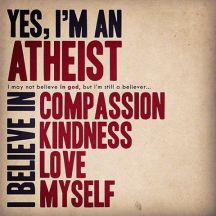
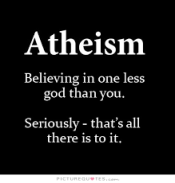
Last week, I wrote about who I am. Today, it’s about what I believe. A dictionary tells us that when we think something is true, we believe it. Among things I don’t believe exist are of few hundred thousand gods, a living Elvis, and good-tasting light beer.

what-i-believe1You might ask, “Ok, Bill, I understand what you do not believe. What do you believe?”
I want to answer, “Observe my behavior and you’ll know.” But I can’t. You can’t tell from my behavior what I believe. I have to tell us both. We all know the jokes about Southern Baptists drinking, Catholics and birth control, or Mormons and stimulants. The word dissonance comes to mind. At the extreme, celebrity hypocrisy is regular news.

Despite human disparity between belief and behavior, contemplating our beliefs often changes behavior (true to self, and all that). I need to answer this question for myself, but it’s not easy. I’ve heard that you are what you believe. That seems sensible, but human behavior is its own mystery.

what-i-believe4Atheists have no written creed, profession of faith, or official paradigm of beliefs. While some have written non-dogmatic manifestos (public declarations of policies and aims), there’s no agreement or authority to which anyone is bound. You could read dozens of books that provide hints about what some atheists may believe, but many are crap. When you see or hear words like atheists believe or atheists think, false generalizations often follow.
My jury’s out on some things because I don’t know the truth, have insufficient evidence, or I suspect superstition and confusion. The power of humans is awesome. The things people can do are amazing. Our nature interests me more than anything. Some things I would like to be true include karma (for you, not me), unconditional love, time travel, mysteries of the universe, and Mother Nature. If people can levitate—cool, and I want to bend spoons with my mind. I’m skeptical about all of that.

I certainly believe things. Here’s today’s list.

  • We live in one true reality. Psychologically, we each have our personal reality. The real world will remain mysterious.
  • People are basically good. But, we have two conflicting natures—a yin and yang, if you will.
  • Nature is marvelous. It’s the closest thing to a god there is.
  • Love conquers all and nature always wins. So love nature.
  • Human spirit is real. We are more than chemicals (awareness, consciousness, morality, emotion).
  • Morality is subjective. We usually know what the right thing is. We should do it because it is the right thing.what-i-believe3
  • It is not necessary to believe in god to be good. Many who do, are not. Many who do not, are.
  • As a plea to a god, prayer is useless. As a mechanism to raise the human spirit, it may be useful for believers. Meditation is a good, healthy thing to do for everyone.
  • All religious and spiritual writings were done by people. They were not inspired by any god.
  • Much scripture is nonsense. But it contains some wisdom and, like all literature, is valuable.
  • Capital punishment is illogical. I believe that in the USA we have executed innocent people.
  • Compassion is a good human trait. We’ll never have enough.
  • To love is to make yourself vulnerable (be sure it’s worth it).
  • Love is forever, even when minds forget it.
  • Passivism is not moral.
  • Music, art, and writing are important—so is learning.
  • Magic is usually good and always real. Eventually, it can be explained (thus, spoiled fun).
  • Everything is impossible, until we know how to do it.
  • Religion is not good for science or human freedom of thought, organized religion is worse. Today, Islam is the scariest of religions. Muslims must fix that.
  • All the good things done by people of religion could have been done by those same people without it, and in many cases better.
  • We’re all in this together. There is a joining and togetherness within humanity that I don’t understand. But it’s there.
  • When we die, we are physically dead. The living should celebrate life and love. I don’t know what happens to that spirit.
  • Life is unfair. We can’t change that, but we can improve it.

For your listening pleasure, two links to a little belly-rubbin’ music about love and I believe:

https://www.youtube.com/watch?v=RksFhgayhtY (Don Williams)

http://www.bing.com/videos/search?q=tom+t+hall&view=detail&mid=CA19A63D49165A99FE94CA19A63D49165A99FE94&FORM=VIRE (Tom T. Hall)

May your spirit bring love and compassion to everything you do. May our interactions be sincere, respectful, and caring. I hope that we all come to believe that humanity and nature are either all we have, or all we’ve been given, and we need to take care of both. May we love and care for one another with, or without, the help of a higher power.

That’s enough for today.

To choose your beliefs, look both ways.

Writing Short

write-short2

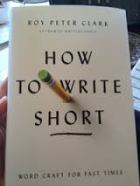
I’m not sure what I expected from How to Write Short by Roy Peter Clark. But it was better than that. I make all the writing errors, especially using too many words. So, while I was looking for what might improve my writing, I learned much more about our craft. Writing short applies to all writing, but the focus of the book is intentionally writing well using fewer words.

write-short3Some of the best, most memorable English language writings are short. I try to keep my blogs brief, but they often surge over 800 words. I’ll continue to work on that; to chop, murder, and cut.

This book was great. For one thing, it’s a readable, friendly style to my liking. If you’re a writer, journalist, poet, or ad hack, this is a good book you. You can plow through it quickly.

write-short-7The 35 brief chapters are divided into two sections. Section I, How to Write Short, has chapter titles that deliver on the promise to improve short writing. Such as the following famous short writes:
“These are the times that try men’s souls.”

“The reports of my death are greatly exaggerated.”

“A feeling is an idea with roots.”

Or, from the top of my blog page, Into every life rain must fall (from “Into each life some rain must fall” ~ Longfellow)

Dr. Clark provides motivation and reasons for short writing.write-short1

  • To enshrine (monuments)
  • To amuse (jokes, snarky comments)
  • To explain (instructions)
  • To narrate (microfiction, live blogs)
  • To alert and inform (text messages, news blurbs)
  • To remember (notes, lists)
  • To inspire (proverbs, quotations, prayers)
  • To sell (adverts, resumes, bumper stickers)
  • To converse (Blog comments, Q&A, social nets)

The second section consists of 13 chapters where he tells how to write short with a purpose.

Even if you’re only mildly curious about writing short, I recommend this book.

write-short6Some WordPress blogs provide prompts that are helpful practice for developing the craft of writing short. One I like is one liner Wednesdays. Can you can suggest others?

Who would not like to get the point across in fewer words? Okay, some, but few.

write-short4

Keep it short. Look both ways.

Who Am I?

who am i2

Why should anyone want to answer this question? I was asked, then immediately told no answer was expected. It’s not a rhetorical question.

When others ask my name, that’s easy enough. What do I do? Also simple. What are you? begins to get more personal. Who are you? Who am I? In terms of what? Our relationship? Am I your friend, enemy, son, father, or husband? I’m the son of, the father of, the grandfather of; but is that who I am?

I’ve always been willing to allow my pastimes to wrap with my identity. For example: I am a runner, artist, writer, dreamer, reader, etc. I’ve been less willing to do that with my profession. I know people who took their livelihood as an identity, only to feel lost when they could no longer perform at their vocation. I no longer run. When I was forced to stop, I was mildly depressed for two weeks. After that, I was fine.

Do I need all the answers?

Apparently, some folks think going public as an atheist raised my IQ, my awareness, and my general knowledge—all by some large measure. Other atheists and believers alike seem convinced that I now must provide answers and solutions, understand deep metaphysical mysteries, and know myself better than ever. It changed nothing about me—certainly not who I am.

Admitting atheist does not inflict anyone with knowing the source of the universe–certainly not me. Of this I am certain: if there is a god, I am not him, her, or it. On that, we must all agree. There is scientific evidence to show that my intelligence is now less than it was in the past. Admittedly, I know more trivia and I should have greater wisdom than when I was younger. My answer to life, the universe, and everything is: 42. (You get bonus points if you know why.)

I am two things. I’m the biological result of generations of genetic selection. The other thing I am is what I’ve become (maybe you’re becoming) as a result of the past 70 years of life, social and physical interactions, and learning. I have no idea why I’m male, bald, mildly pudgy (okay, the beer), or have blue or green eyes (depends who you ask). I’m also one of y’all. We’re exactly the same, yet completely different. And we both know it. But that’s not who I am.

Who do I think I am?

As a writer of stories with human characters, I know more about my characters (everything) than I do about any other person. I understand them better than I get myself. I’m their god. I give them life, and sometimes death. I give them pain and pleasure. I know what they’ll do tomorrow. I know what happens when they enter those secret places where they don’t tell others what happened–I know their secret thoughts.

Last night, before going to sleep, my wife asked, “Are you going to walk in the morning?” I said, “I don’t know.” I walk virtually every morning. Today, I did not. My characters are much more dependable.

Some answers are simple

I am who I always was, and who I will be. I’m the sum of the past. I am part of you, as you are of me. I know who I am at this moment. Right here and now, I am who and what I am. If any deeper, more esoteric, philosophical, theological, sociological, or scientific answer is required, then my answer shall remain forever insufficient.

I don’t know everything about me, but I know enough. We’re gunna have to live with that.

To you, you are who you say you are, what you believe, and what you do. To me, you are who I say you are—it’s my opinion–subject to error and change.

But, is “who am I?” the critical question? I think the most important question is: who are we? How do we define us? We may add layer upon layer of humanity, and layer upon layer of nature, then layer upon layer of the universe. We are still in this together and we need each other.

As me dear departed Irish fadder often ass’d meh, “Whoda hell d’yeh tink ye’re?” Since that usually precipitated me being in a jam…Exit stage left!”

Who am I? Look both ways.