A2Z Challenge — I is for Imps

Imp

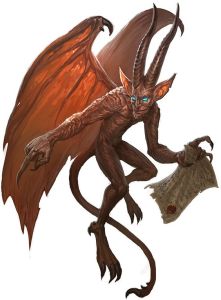
An imp is a mythological being like a fairy or goblin, frequently described in folklore and superstition. They can be ugly little trouble makers. Their faces are like thin stone frequently twisted into a smirk or a grimace. They have big ears, sometimes horns, and leathery bat-like wings. Their skin may be a reddish brown, or gray and scaly. Imps walk with an unpleasant hunch.

Imps are pranksters who know how to switch babies in cradles. They lead people astray in the wilderness. But they’re not very creative. They don’t design elaborate, malicious schemes by themselves. Their pranks are impulsive humor. If an Imp is seen engaging in more cleaver games, someone else is the mastermind.

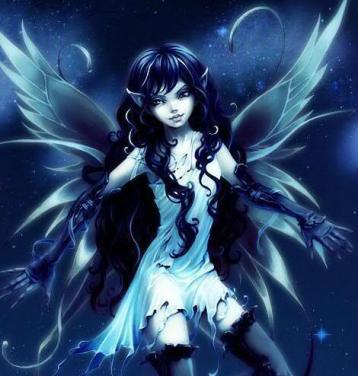
Long ago, imps and fairies were considered the same. At some point, the imps became ugly and evil, while the fairies transitioned into sweet things like fairy godmothers, or Disney’s Tinkerbelle.

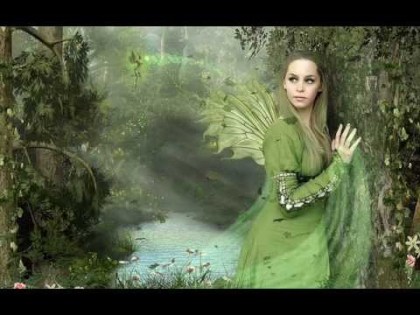
Fairy. See the difference?

According to folklore, Imps have limited magical powers. They can shapeshift and they may conjure up fire. They’re good spies because they sneak along quietly, disguise themselves, and can disappear. Every private investigator wants at least one. Imps could put all investigative journalists out of work if they could write.

Some cultures may still see Imps to be the same as fairies because both share a sense of free spirit and enjoyment of all things fun. Both enjoy pranks and misleading people. Most of the time, the pranks are harmless fun, but some could be upsetting and harmful.

Imps are not solitary. They like people and crave our attention. To that end, they consider their behavior good when we find it funny. This sometimes backfires when people tire of the imp’s annoying efforts, or become the target of impish antics.

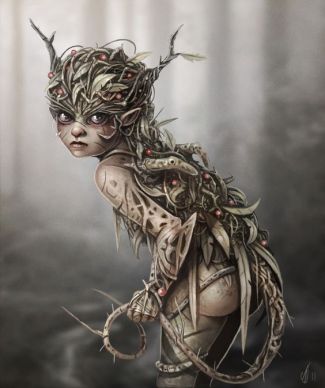
A cutie, but still an Imp

Even when an imp is successful in friendship, it often plays pranks and jokes on its friends because that is the nature of the imp. It’s what they do. This trait is the source of the term “impish” for someone who loves pranks and practical jokes.

When tolerated, imps are familiar spirit servants of witches for whom the little demons serve as spies and informants. During the time of the witch hunts, supernatural creatures such as imps were sought out as proof of witchcraft. Often, the so-called “imp” was a dog, cat, lizard, toad, or some other form.

Imps can be bound or contained within an object like a sword or a crystal ball. They can be kept nearby and summoned when their master wants. Some may grant wishes like a genie.

In the 1891 story by Robert Louis Stevenson, The Bottle Imp, an imp is contained in a bottle and would grant the owner their every wish, provided that the owner’s soul would be sent to hell if the owner did not sell the bottle to a new owner before dying.

Carefully look both ways. The imps are watching you.
Mind the gaps.
Don’t forget to sell the bottle. An estate sale is way too late.

Poetry — NaNoWriMo: Of God’s Little Pests

The day nine poem prompt of the 2018 National Poetry Writing Month challenge was for me to write a poem in which something big and something small come together.

If you’ve experienced fire ants, you know. If you have not, you may want to read this.

I wrote this as a single sentence poem without line breaks so that it can be a fast, angry read. All the king’s power will not eradicate the fecking, misery-causing tiny fire ant.

Henry David Thoreau wrote a famous essay about ants and humans and combat. You can read it here.

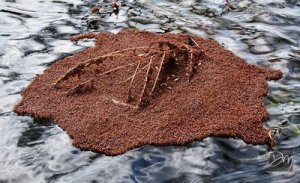
Fire ants survived well Hurricane Harvey

Of God’s Little Pests

Thoreau did not know, nor did his essay thus show, the vicious pertinacity of your many tribes to attack and destroy, to sting and cause pain, to kill and devour, to disrupt with the evil of nature’s horror where the fittest survive, but not your power and numbers, that even all Texas resources with added more state and nation agriculture war departments, we burn and we poison, we kill and we murder, we hire mercenary flies to eat away your brain; yet you invade and continue your fight to survive costing billions each year with panic and pain, so that even attacks from Zeus Urei and the rains of Harvey allow you to still survive and produce from one queen astronomical numbers to replace workers each day and the best of science still calls you an exotic invasive species, still you’re a stinging nasty fire ant to me and you always will be, and you win, but I hate you.

(Bill Reynolds, 4/9/2018)

Standing or walking the land in the south USA,
look down and both ways for fire ant mounds.
If you don’t, you’ll soon learn. Mind the gaps.

Click link to National Poetry Writing Month

A2Z Challenge — H is for Hamadryads

If you’re a tree hugger, all is well. If you’re an arborist, even better. But if yer a tree chopper, you might want to be sure these little darlin’s don’t really exist. If you kill the tree, you kill the Hamadryad of that tree. That pisses off the gods and you know what that means, right?

Hamadryads live in the trees, more precisely in an individual tree. They are a specific type of dryad, which are a type of nymph. A nymph is a minor female nature deity usually associated with a specific location or landform.

They are different from other goddesses in that they are divine spirits who animate nature. They are beautiful young maidens who love to dance and sing. Their amorous freedom makes them very different from wives and daughters of the Greek polis. Now we know why those guys were hugging those trees.

Nymphs are beloved and can be found in forests by lakes and streams, and in or on trees.

Hamadryads are born bonded to a certain tree. If the tree dies, the hamadryad associated with it dies as well. For that reason, dryads and the gods punished any mortals who harmed trees.

I feel a twinge when I read Poe’s sonnet to science. To a degree, the poet is scolding science and, in a way, me.

He pines well for the wonderfulness of fantasy and nature’s unknown wonders. He is right.

Sonnet—To Science (By Edgar Allan Poe)

Science! true daughter of Old Time thou art!
Who alterest all things with thy peering eyes.
Why preyest thou thus upon the poet’s heart,
Vulture, whose wings are dull realities?
How should he love thee? or how deem thee wise,
Who wouldst not leave him in his wandering
To seek for treasure in the jewelled skies,
Albeit he soared with an undaunted wing?
Hast thou not dragged Diana from her car,
And driven the Hamadryad from the wood
To seek a shelter in some happier star?
Hast thou not torn the Naiad from her flood,
The Elfin from the green grass, and from me
The summer dream beneath the tamarind tree?

Source: The Complete Poems and Stories of Edgar Allan Poe (Pub: Alfred A Knopf, 1946)

Look both ways as you walk the woods
and recall within each tree lives a Hamadryad to protect.
Mind the gaps and morn the loss of so many trees.


Poetry — NaPoWriMo: Night Witch

The day eight poem prompt of the 2018 National Poetry Writing Month challenge was for me to write a poem in which mysterious and magical things occur. Last year, I wrote a long poetic story with a slightly different, yet similar twist. You can read it here.


Night Witch

For years I negotiated my labyrinth of life.
Then one day the path all went dark,
It filled me with alarm and I shook with a fright.

Burning deep within me watchful eyes I felt,
My temptation was rising to the oldest of times,
fear continued to grip me, from within and without.

She was the blackest of darks, that witch of the nights.
Her gaze was upon me when I opened my eyes,
I was blinded by flashes, visions of the enchantress.
I saw in her wonders worlds of exquisite pleasures.
She came from the magic of the eternal hereafter.

Without moving her lips, she spoke directly to me,
“Return with your love, to the darkness and danger,
back to my universe we can travel with ease.
Give over your being to my mystical kisses,
my promise of love will grant all your wishes.”

As she reached out and touched me,
I felt pain and wondrous pleasure,
Yet, drawn to her I nodded my answer.

She took my hand, and with a rapturous laughter,
I saw in the distance her dragons and castles.

She marked our arrival with thunder and lightning.
I saw in her army both imps and her glories
All served at her pleasure.
Now was I there, her newest found treasure.

To me she said, “Through pain and with suffering,
you’ve found a new realm.
Transition, dear man, as best that you can.
Give over your being to the queen of this land.
And she shall make you our king,
if the pleasures don’t kill you.
Together we’ll dance, for our love and our glory.
Let’s begin to write this wonderful story.”

(Bill Reynolds 4/8/2018)

In the labyrinth of life, look both ways for witches of the night.
Mind the gaps.

Click link to National Poetry Writing Month

Poetry — NaPoWriMo: A Pocket Full of Doubt

The day seven poem prompt of the 2018 National Poetry Writing Month challenge was for me to list my different layers of identity (son, father, grand and step-grandparent, retiree, white male, septuagenarian, poet/writer, hippie, etc.) — ways I could be described. Per the prompt, I divided those identities into two lists: what makes me feel powerful; and what makes me feel vulnerable.

I wrote a poem in which one of the identities from the first list (man) contends or talks with an identity from the second list (sensitive man). This poem reflects the doubt seemingly inherent in that conflict.


A Pocket Full of Doubt

Walk tall and proud to be our one man
Carry strong your body, mind, and be of good spirit
Hold on to what’s yours as tight as you can
To be a man, my son, inside you can’t feel it.

It ain’t me. It ain’t me. But a man I must be.

Stand honest and truthful, be a real man
Sense love and sadness and touch with your soul
Let go of yourself, as alone you must stand
Into the soul of men, you must never there go.

Can’t you see? It just ain’t me. Like so, a man I can never be.

So, of two minds you continue to fight?
Two spirits, one soul we continue to see
Where is the truth to set this man right?
Conflicted as such, you’ll never agree.

Let you be the man. The one we can see.
…….A man such as this can never be free.

(Bill Reynolds, 4/7/2018)

Look both ways if you’re of two minds.
In the gaps lie the answers, so mind what you find.

Click link to National Poetry Writing Month

A to Z Challenge — G is for Grendel

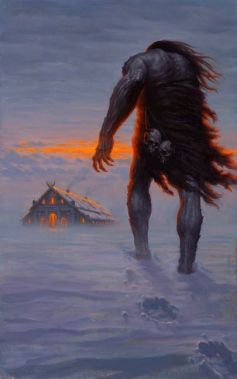
Taken from the epic and ancient poem Beowulf, Grendel, the first and most terrifying monster in English literature, is said to be a direct descendant of Cain, the first biblical murderer. This poetic story of unknown authorship barely survived the atrocious monastic destruction perpetrated by Henry VIII in England. One copy of the poem survived, and it had to be patched up in a few places. But we do have it.


Beowulf may be the oldest example of English (nothing we might recognize) language literature. Dating back to about 700 to 1000 AD, it deals with life and culture around the sixth century. The story is set during a time and in a place when battle, conquest, and death were honored descriptions of what life was like.

The protagonist is Beowulf, a young, strong, and powerful warrior who eventually becomes a king. Unlike the average leader of the time, Beowulf seemed to care about his people and introduced leadership with compassion as opposed to fear and dread. Beowulf must defeat three antagonists: Grendel, Grendel’s mother, and the dragon.

A mead hall

The story tells us that Grendel had been attacking and killing Danes every night for 12 years. Beowulf comes to the aid of the Dane king whose mead hall had been under nightly attack by the monster.

If Beowulf was to fight Grendel to the death on Grendel’s terms, it would be unarmed and (presumably) naked. Since Grendel used no weapons, Beowulf chose the same. Grendel had done a lot of damage and killed many of the king’s mead hall drinkers in his years of harassment. In the poem, Grendel is presented as an evil that must be stopped and Beowulf is the man to do it.

Flash forward a thousand years or so, and in an interesting twist, another side of the story is told in the 1971 book by John Gardner, titled, Grendel. In this frequently banned book, Grendel tells his side of the story. This is a retelling of Beowulf that follows the monster Grendel as he learns about humans and fights the war at the center of the Anglo Saxon classic epic.

I have always felt that there are at least two sides to every story, but one must wonder what the Danes were thinking when they returned to the mead hall every night for 12 years, there to drink and sleep, only to be attacked by the monster. With so many being killed during so many attacks, the Danes must have been close to decimated before Beowulf made his mark.

Open the window and look both ways, the monster approaches.
Mind the gaps as you escape his anger and his vengeance.

Poetry – NaPoWriMo: My Affirmation


The day six prompt of the 2018 National Poetry Writing Month challenge is to “write a poem that stretches your comfort zone with line breaks. That could be a poem with very long lines, or very short lines. Or a poem that blends the two.”

I wrote the poem, but the words? Perhaps you recognize them.


My Affirmation

calmness
serenity
comes to me
the universe I cannot see
change
or control

grant them dignity
to be
as they are
humanity…mine…yours…theirs

face change with

wisdom from experience, peace through acceptance, knowledge of listening

with silent love

and…

it
all
begins with
………………………….me


(Bill Reynolds 4/6/2018)

Alertly relax as you look both ways. Fear not gaps but be mindful.

Click link to National Poetry Writing Month

A to Z Challenge — F is for Frankenstein’s Monster

One book published many times.

Two hundred years ago in London, on 1 January 1818, 20-year-old Mary Shelley anonymously published the first edition of her novel, Frankenstein; or, The Modern Prometheus.

Mary was 18 when she wrote the book, the genesis of which goes to the topic of galvanism and other occult ideas that were themes of conversation among Mary and her companions, particularly her lover and future husband, Percy Shelley. Mary, Percy, Lord Byron, and John Polidori competed to see who could write the best horror story. After thinking for days, Mary Shelley dreamt about a scientist who created life and was horrified. Her dream evolved into the novel’s long-famous story.

The problem with this story is that history, Hollywood, and human imagination have been unfair, if not unkind, and inaccurate regarding Victor Frankenstein’s creation. Even Victor was too quick to judge by outside appearance, unpleasant as it undoubtedly was. In Shelley’s book, the outcome of Frankenstein’s experiment is never given a name, although the creature did suggest that he was Victor’s Adam.

At first, the creation is kind and gentle and only wants to be accepted. The creature was eight feet tall and ugly and he knew it. Yet, he sought life and normalcy, but he could not achieve that due to the fearful nature of mankind, and specifically Victor Frankenstein’s fear of what might happen.

I find it interesting that even in the mind of an 18-year-old girl 200 years ago, the innate goodness of a man’s creation can be judged as evil before ever doing anything but kindnesses to others.

One hundred thirty-six years later, the first human body part/organ transplant is completed. Numerous human lives have been extended through science and organ donations and transplants. I would not say we take that for granted, but we’re getting close and for some tissue, there are insufficient donors. One organ not transplanted is the human brain. I have read that it is the one donation where the donor would be the greater beneficiary in the process.

I wonder how Mary, her husband, and their circle of friends would react to the knowledge of today’s reality, scientific knowledge, and literary fantasy if they could suddenly be here and learn about it.

Lord Byron wrote his poem Darkness about the same time as Mary Shelley wrote this book. Given the nature of the book, the poem, and earth during 1816, I do wonder if his poem came to be for similar reasons as her Frankenstein story.

‘tis a dark world after all.
Skeptically, look both ways,
yet apply judgement of others and their creations carefully.
Mind the gaps in your own humanity.

Poetry – NaPoWriMo: Reflections Of…

I’m ditching part of the NoPoWriMo, day five, “optional” prompt (assignment?), cuz I dunna get it. It is to write a poem that “reacts both to photography and to words in a language not your own.” I have enough trouble with English.

Instead, I wrote to a photo of a mirror and an essay, both very much my own. You can read the essay by clicking here. I need to credit Yolonda (meh wifey) for this inspiration to write a poem based on that piece which has been judged both the best and the worst thing I have written.

I also found inspiration in music by (click on group’s name for hyperlink to song) The Supremes, Fleetwood Mac/Stevie Nicks, and The Marmalade.


Reflections Of…

When I turned around you were there
Your reflection of my life as then
You came with my world, my now
Through you I saw I, as am, right here

Yet, you reflect the landslide
Of my life – as I lived – you watched
You magically mirrored my memory
Through you I see, I was, back then

Reflections of, I see in you, all my days
Crazy love and my crazy ways
Ways life used to be, my reality
Memories. No wasted times
…or wasted lives

Mirrored days of my sorrows
Hoped for betta’ ‘morrows
Now life’s a changing
Reflections rearranging

Memories in my mirror,
Changing
Rearranging
Birth, life,
only death
arranging.

(Bill Reynolds, 4/5/2018)

Use the mirror but look both ways too.
Mind the god of the gaps.

Click link to National Poetry Writing Month


A to Z Challenge — E is for Elf

The Elf has evolved into a category of beings, as opposed to a specific creature. As with the word human, to get the picture of an individual elf requires more information. Just as there are all kinds of humans or people (it takes all kinds?), there exists many types of elves and elven mixes. Yesterday, I spoke of the drow, or dark elves, just one sub race.

While the original concept of elves was Norse (álfar) or German, modern fantasy literature depicts elves as an almost divine race of beings with human stature and appearance, friendly natures (minus those from the dark side) and pointed ears (a must to my mind). The elves of today are different from traditional elves found in Middle Ages folklore and Victorian era literature.

The long and pointed ears seem to have started with Tolkien noting that the ears of elves were leaf-shaped. The length and shape of their ears depends on the artist, medium, or round-ear in question. I prefer pointed ears, but not the long ones like a donkey might have.

Wood elves are close to nature.

Modern fantasy elves (evolved from D&D or other role-playing media) may be immortal or slow maturing and long living compared to their humanoid cousins. They are also more attractive, smarter, gifted with magical power, and have a sharper sense of reality. Pure-blood elves do not possess facial or body hair. They are seldom portrayed as fat, lazy, or old.

Today, thanks to Tolkien, there are elf languages that have evolved and are often taken seriously and spoken by dedicated role players. Click here to get more information on the Elvish language.

The many types of elves include wood elves, high elves, aquatic elves, light elves, dark elves, sun elves, moon elves, forest elves, and savage elves. Even if you’re not an elf aficionado, you still should get the picture. If you are, you can add to the list.

Elf Legolas Greenleaf (Orlando Bloom), in The Lord of the Rings

Elves are more ancient than humans or other races and flourished in a sort of Golden Age forgotten by other races. The mixing of elves with other races is interesting in that it is a mix of the real world, with all its limitations, and fantasy worlds with its unlimited imagination.

If you discard the elf on the shelf and the comedy movie, Elf, staring Will Farrow, the best known modern elf is probably the archer Legolas Greenleaf, portrayed by Orlando Bloom in The Lord of the Rings film trilogy. Arguably Tolkien’s best-known elf. Good clips from the movie with great sound.


Cautiously, look both ways in fantasy and reality.
Mind the gaps if you mix the two.