Tribe: On Homecoming and Belonging by Sebastian Junger
“War feels better than peace.”
 That’s what it says. Not that war is better. It feels better. To put comments like that into context and perspective, you should read the book.
Tribe put me in touch with a part of myself that wants something which I haven’t had in long time–the feeling of belonging to a tribe. When I had it, it was temporary. I’ve lost my tribe, and I feel the void.
I don’t want to think we have a dystopian or apocalyptic world. But I realize that conflict and evil are pervasive in human nature. Also, all nature holds danger, evil threats, and risks to our survival. It has always been so and there is little sign of relief.
Junger’s book is supposed to be about Post Traumatic Stress Syndrome (PTSD) and American combat veterans returning to our normal and civilized society. It is about that, but there’s more to it. While vets are the focused subjects of the book, they are examples he uses to make an ultimate point about human nature and American society. I suspect that is why the book is so popular.

Maybe we are not what we think we are. Are we as peace-loving as we claim to be? We’ve certainly done much to create a peaceful society in America and other countries around the world, with varying degrees of success–mostly minor or the opposite of what we intended to do.

My favorite sentence in the book is just two words: “And yet.” (p. 109)
We crave peace, comfort, safety, pleasure, privacy, and independence. And yet, when we look at the history of human behavior under dangerous and stressful situations, something strange often happens to us. We are healthier and apparently (oddly?) happier—less depressed, when under stress. It should be the opposite, right?
I’ll not say more about the phenomenon because I don’t want to play spoiler. I want you to read the book. But, don’t use my library. There are now 184+ waits to read it. The word is out.
This book spoke to me. It’s my inner voice. Maybe I’m in denial. While I’m not overtly competitive and I’m so-so on some sports (I prefer playing to watching); I enjoy tension, drama, and mystery more than I like to admit. I have a love-hate relationship with fear and stress. I want them, and I don’t. WTF?
And yet.

That voice is saying something. I know what it’s telling me. I know exactly what Junger is talking about—and I agree.
I avoid trouble. I want peace and love in the world. But I am a realist (in my mind, anyway). I enjoy conflict. While I’m unlikely to start trouble, when it’s forced on me, I’m in.
 I despise fighting. I don’t enjoy pain or suffering, especially my own. But when I fight, I don’t want to stop. Something is deep inside me crying for more. Where’s my tribe?
When conflict is forced on me, I feel a change (a charge?) in my being–I feel strangely better. Got a tribe to protect and feed? I’m your man.
Consider the tribe concept in dealing with a crisis. We are all fighting for survival. We need each other. Your struggle is my struggle. We can share everything and overcome adversity for the good the tribe.
My personal paradox is that I’m an introvert and I enjoy my alone time. I value my privacy and a good night’s sleep as much as anyone. But I find the concept of a tribe fascinating, intriguing, and alluring—the challenge. The fight! Combat!

Our survival didn’t just happen. When you consider natural human strength, we’re easy prey in the animal kingdom. While we’re most vulnerable alone and we need protection, there’s something comforting and rewarding about the danger out there and what the tribe does for us.
Read the book.
When you find your tribe,
join them and cherish them. But, look both ways.

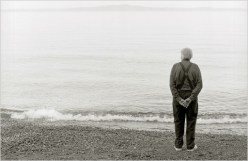 Ten years ago, I lost one of my best friends from my childhood. Today, I received a phone call telling me that I have now lost the other. A few weeks ago I was tasked with a writing assignment to provide an essay on what I long for. You can see it blogged under “Nostalgia and Longing.” Reading my blog, you can glimpse my view of humanity and the world.
 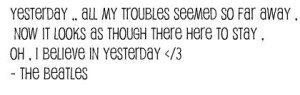 But today, I want to think about the past. Not in a regretful way, but in an “I remember” way that might allow my brain to be the tool of a child’s mind again.
 I know that I cannot go back to that time, and I’m not sure that I would want to. But I want to have those memories until I have no memories. I would like to again feel the freedom, the special bond, and the unquestioned certainty that we would all live forever. I want to think about my future and talk about how much better it will all be. I want free and unlimited amounts of candy and ice cream. We didn’t have that, but when we took over, well, you know, right? I want to know that next year, I will be allowed to stay out after it gets dark, to drive a car (legally), to date girls (with everyone knowing).

 My wife doesn’t like one (or more) of my favorite songs: Night Moves by Bob Seger and the Silver Bullet Band. I thought it was our differing tastes in music (she’s country, I’m rock and roll), but one day our son pointed out why. It’s a ‘guy’ song. I also realized that we each look back in time with different memories. Never mind that she really does not enjoy the raspy-voiced shouting of old Bob. The song, written and recorded by Seger in 1976, is a coming of age tale about adolescent love and an adult memory of it. It strikes memories of my times in the early sixties.
 During the 1970s I graduated from college (many thought impossible), I re-entered the Air Force as an officer, I completed flight training, all my children were born, and I turned thirty (I thought that impossible and I sadly became untrustworthy— relates to the famous “don’t trust anyone over 30” adage of Jack Weinberg, activist of the 1960s, now 76). I usually listen to the music of the 70s. While I enjoy those songs for their own value, the music also often brings with it memories and feelings that can only be called nostalgia. Sometimes, it makes me feel profoundly sad. I’m not sure why, but I suppose it has to do with something that will never be again.
 It was the decade of great music, great movies, and great TV. The politics were interesting. How often do we get to see a president resign? I am working on a historical-fiction novel, set in the 1970s. We had Star Wars, ABBA, and the Beatles break-up. Elvis died. Everything was either brown or orange including the shag pile carpeting (ok, add yucky gold). We had platform shoes, Charlies Angels, Mork and Mindy, metal drinking cups, portable hair dryers, Holly Hobbie, Lava Lamps, and the most outlandish fashions ever for America and England. Who could ask for more? We typed on typewriters, went to Tupperware parties, and air conditioning was a welcome luxury. And who did not have an 8-track?
 Our Literary Journey