
Defending Aging
How old are you? Please don’t give me that woo-woo crap about it being ‘just a number.’ If you are old, it matters. “What is old,” you ask? It’s 15 years older than the person judging old. At 20, it’s 35; 50 thinks it is 65. I think old is 85, but I know a few of 80-year-olds who say it might be 80.
I thought I was old on my 30th birthday. I used to hear “don’t trust anyone over 30.” The guy who invented that phrase is now 79 – just saying. We haven’t been able to trust him for almost 50 years. I’m sure that he didn’t trust me even when I was 25.
 So, I know when I made the change from young to old. It was about 40 years ago.
 Have you resigned yourself to the “it’s just a number that’s too friggin’ big” mentality? I’m not complaining about being old. Old people do not intend to complain about age. It is, after all, a successful result. On the other hand, the various consequences of age can’t be overlooked.
How Old is Old Enough?
 If we live long enough, we share one important thing with many teenagers – we become bored easily. Old people can be annoying to some young people (15 years, remember). The thought that the feeling may be mutual seems to escape many. Most older folks that I know are working away at life. I know writers in their 80s and 90s who write every day, are working on writing books, and are making plans to publish.
I retired a little late at 68. A 40-something friend who knew my plans said to me, “I want to be where you are some day.” I replied, “Good! Quit smoking and drive safe. Drink some, have lots of sex, and save every dollar you can.”
Of course, he wanted to know if I thought having sex contributed to a long life. I said, “No, it doesn’t. But if you don’t last, you won’t be sorry about that part.” I told him that he only needed enough money in retirement, but no one knows how much that is. There’s no penalty for having too much, but there is for not having enough.
Now What?
 I live in an over-55, “active” community. Some folks here are more active than others, but most are kind of amazing. I took a blogging class where I met a lady of 92. She’s smart, funny, and still learning. She taught art classes and one of her subjects was art by carving vegetables. She made a scrap-book of pictures and writings on veggie art. She is an expert. Based on her experience, maybe the only nonagenarian expert. She wants to publish this in a blog. I can look past the outer physical things that show up when one is 90+. This lady is a master at her craft and learning another so she can share the first. I think that’s cool. In heart and mind, she is young, enthusiastic, and capable.
 I just returned from a “Personal Creative Writing” class. There are 15-to-20 of us taking the class. Most are interested in writing life stories or memoirs. These folks are talented writers; some are published authors; all are able to tell it like it was. They have the ability to make every life story funny, and even sadder memories are delivered with humor. They are good at their craft, but no one can accuse them of taking life too seriously.
I changed my mind. Age is just a number. Attitude matters and it matters at any age or any number. What matters to you?
Prayer of an Anonymous Abbess:
Lord, thou knowest better than myself that I am growing older and will soon be old. Keep me from becoming too talkative, and especially from the unfortunate habit of thinking that I must say something on every subject and at every opportunity.
Release me from the idea that I must straighten out other peoples’ affairs. With my immense treasure of experience and wisdom, it seems a pity not to let everybody partake of it. But thou knowest, Lord, that in the end I will need a few friends.
Keep me from the recital of endless details; give me wings to get to the point.
Grant me the patience to listen to the complaints of others; help me to endure them with charity. But seal my lips on my own aches and pains — they increase with the increasing years and my inclination to recount them is also increasing.
I will not ask thee for improved memory, only for a little more humility and less self-assurance when my own memory doesn’t agree with that of others. Teach me the glorious lesson that occasionally I may be wrong.
Keep me reasonably gentle. I do not have the ambition to become a saint – it is so hard to live with some of them — but a harsh old person is one of the devil’s masterpieces.
Make me sympathetic without being sentimental, helpful but not bossy. Let me discover merits where I had not expected them, and talents in people whom I had not thought to possess any. And, Lord, give me the grace to tell them so. Amen” ~ Margot Benary-Isbert

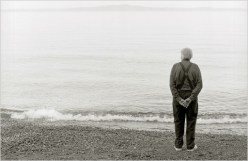 Ten years ago, I lost one of my best friends from my childhood. Today, I received a phone call telling me that I have now lost the other. A few weeks ago I was tasked with a writing assignment to provide an essay on what I long for. You can see it blogged under “Nostalgia and Longing.” Reading my blog, you can glimpse my view of humanity and the world.
 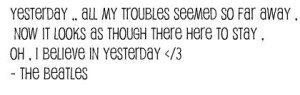 But today, I want to think about the past. Not in a regretful way, but in an “I remember” way that might allow my brain to be the tool of a child’s mind again.
 I know that I cannot go back to that time, and I’m not sure that I would want to. But I want to have those memories until I have no memories. I would like to again feel the freedom, the special bond, and the unquestioned certainty that we would all live forever. I want to think about my future and talk about how much better it will all be. I want free and unlimited amounts of candy and ice cream. We didn’t have that, but when we took over, well, you know, right? I want to know that next year, I will be allowed to stay out after it gets dark, to drive a car (legally), to date girls (with everyone knowing).
 For the novelist, POV is essential for writing the story. Fiction writers have the god-like ability to know exactly what is in the head of their characters. They create each character. This is true whether or not they share that information with a reader. Non-fiction writers are like the rest of us with human limitations knowing only what our senses (especially seeing and hearing) tell us. So, how do fiction authors tell us about characters? The questions for them, or us (depending on your point of view—sorry), are: how much do they tell us and how do they do it? The answer to one question limits the other. The same may apply to memoir.
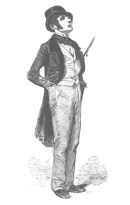 This is important and beyond this blog’s scope. Here are two good blogs on distance.
 The other night, as we sat discussing writing projects and their duration, the subject of time came up. There were three of us, representing roughly three generations. The more we talked about time and how each of us currently sees it in terms of the future, the more I realized how differently each one of us viewed it. Time does not change. We do, and thus our view of time changes with age.
 I claim to be a right here, right now kinda guy. I live in the present moment. As I contemplate writing a memoir, this seems to cause me an ‘angst’ problem in that I wanna, and I don’t wanna. (I also struggle with writing about myself, but that’s not the issue.) I like History. It could’ve been considered my second minor at A&M. My manuscript is historical-fiction with too much history and not enough fiction. This morning I was asked if I would write a time-travel book (I’m noticing that Vickie has a knack for asking me thought-provoking questions). I didn’t have a ready answer, but after a lot of discussion and thought, my answer is ‘nope.’
 After doing a bit of reading, I’m no longer positive that I know what ‘this moment’ in time is, or if it exists. My metaphysical (woo-woo) friends get excited about this fascinating subject. When they do, I look at my watch and note, “It is one-forty, PM.” But they’re right. It’s really an interesting topic. Physicists and philosophers are all over it. Check out all the wiki and academic research (
 In a scene from my childhood, I watched through our living room window as kids my age played in a rainstorm. They were laughing and having a wonderful time getting soaked. The streets and gutters were awash. One boy sat down in a flooded gutter as the water pushed against him and splashed hard around his body. I felt envy. Not because they were having fun without me, but because they were playing in the rain. I was home with my mother, and she told me that I couldn’t go out because I would get soaked and catch my “death-of-cold.” I have since learned and admit more about myself, and about colds.
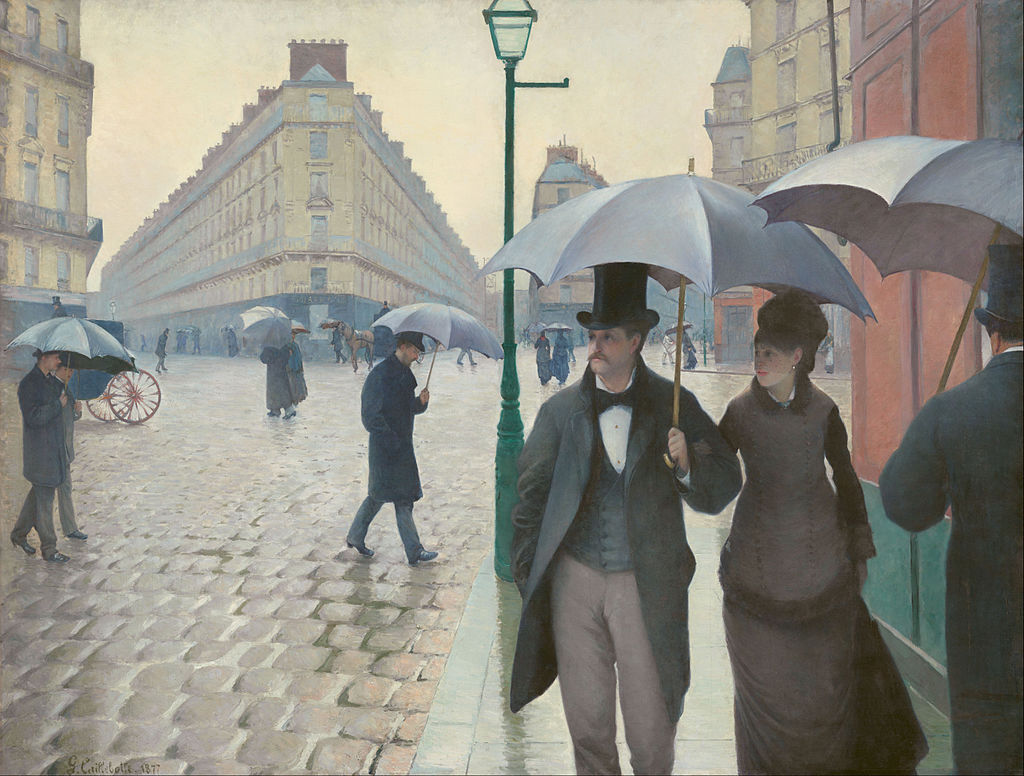
 The word ‘pluvial’ refers to rain or something characterized by abundant rain. The suffix ‘phile’ denotes fondness. Consequently, a pluviophile is one who finds joy and peace of mind on rainy days. I was taught that rainy days were sad, as in the Carpenters song lyric; “Rainy days and Mondays always get me down.” I was to believe nice days were sunny, cloudless, and warm. I’ve never felt that way. Sunny and pleasant days have their place, but few are enough. Later in life, I admitted to liking cloudy, rainy days. I now identify as a pluviophile. These days, I’m often asked why, after more than twenty years in California, Texas, and Florida; I recently moved to the Pacific Northwest. I ask, “Do you know what a pluviophile is?” Like it should be news to me, I’ve repeatedly been told “it rains a lot there.” I reply with a smile, “Yes, it does.”
 My involvement with rain changes with its many forms. Scientific names apply based on how it comes about. But, I am talking about how the rain itself varies from torrential downpour to a gentle drizzle. Duration, wind, thunder, lightning, air temperature, and other factors contribute to our experiencing rain. There are times of rain just falling, and times with thunder and lightning. There is morning rain, afternoon rain, and rain at night. Each is emotionally and physically encountered differently. It can be seen and heard while keeping dry, thus precluding feeling the rain. Only outdoors can we dance in the rain. If I don’t perceive rain with senses—I just get wet. Our world changes when it rains. We need it, just as we do sunshine. To me life smells, feels, looks, and sounds more alive in the rain. In the city, rural areas, and in the forest, everything improves. When I am with the rain, I heal and recover. It’s a spiritual exposure difficult to explain. I’m not especially spiritual, but in rain I sense life — nature.
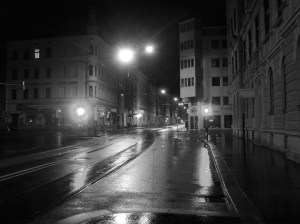 I recently delayed my daily walk when rain was forecast. After waiting for the rain to start, I donned shorts and tee. I was off in good spirits, expecting to be, and was, soaked. After an hour, I was back home. I sat on a dry and covered bench, removed my soaked shoes and socks, slapped water from my dripping baseball cap, and chuckled. I was thinking how others might consider me deranged. But, this is why I’m here.
 tilted forward and cocked right. The front brim bent slightly downward with water flowing off. The sound of falling rain is all around. I hear it splash into puddles and onto sidewalks. With water moving everywhere, I forget the day’s problems and the annoying people. But mystery is afoot. Like it or not, Mike Hammer is involved. And of course, there is a woman. As Hammer, in the writing of Spillane, I mumble, “In the flora and fauna of the Bowery, she was a lot of flora and quite a bit of fauna. She looked like she belonged in a field of Wyoming wildflowers instead of wandering through the human backwash of the avenue.” In the night rain, I can do this. Rain brings magic and drama.
 Let’s take life, rain or shine, one day at a time. It’s about how we feel. We’re not alone in our emotional response to rain. In the Pacific Northwest, we love the outdoors, rain or shine. Too much shine and we miss the rain. After some rain, we’re ready to let a little sunshine in. “In every life a little rain must fall….” Of course, and why not?
 Yolonda, my wife of 50 years (we married at age 2), is a native Texan and has her ‘druthers.’
 Billy on right, (w/Phish bassist Mike Gordon), our oldest child is in his mid-40s, a very nice, loving, big-man. He’s always been an avid reader, a talented writer, a movie aficionado, and a hard-core Phish-head. Add bicyclist, father, hubby, friend, musician, and deep-thinker.
 Steven is our middle-child, now in his early 40s. He’s another good guy. An avid sports fanatic (Spurs and Cowboys) and mountain biker. Add hubby, step-father extraordinaire, house music DJ (Steve Balance), friend, and all-around cool-dude (maybe pragmatic and analytical). He initially said that he had no fav quotes, but when he and his sista’ got to texting, there they were.
 Our beautiful ‘baby’ is Julie. She can recite every line from the movie Grease (oddly did not quote it), is an artist, a thirty-something, 21st Century hippie, a mom and step-mother. I think she is a wonderful writer and, like her mom, a Grammar-Nazi. She lives in the middle of nowhere with her hubby, son, occasionally a step-son, or two lovely elves, too many cats, horses, and sometimes (because he likes to chase the horses) a dog.
 My wife doesn’t like one (or more) of my favorite songs: Night Moves by Bob Seger and the Silver Bullet Band. I thought it was our differing tastes in music (she’s country, I’m rock and roll), but one day our son pointed out why. It’s a ‘guy’ song. I also realized that we each look back in time with different memories. Never mind that she really does not enjoy the raspy-voiced shouting of old Bob. The song, written and recorded by Seger in 1976, is a coming of age tale about adolescent love and an adult memory of it. It strikes memories of my times in the early sixties.
 During the 1970s I graduated from college (many thought impossible), I re-entered the Air Force as an officer, I completed flight training, all my children were born, and I turned thirty (I thought that impossible and I sadly became untrustworthy— relates to the famous “don’t trust anyone over 30” adage of Jack Weinberg, activist of the 1960s, now 76). I usually listen to the music of the 70s. While I enjoy those songs for their own value, the music also often brings with it memories and feelings that can only be called nostalgia. Sometimes, it makes me feel profoundly sad. I’m not sure why, but I suppose it has to do with something that will never be again.
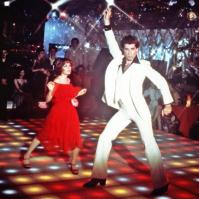 It was the decade of great music, great movies, and great TV. The politics were interesting. How often do we get to see a president resign? I am working on a historical-fiction novel, set in the 1970s. We had Star Wars, ABBA, and the Beatles break-up. Elvis died. Everything was either brown or orange including the shag pile carpeting (ok, add yucky gold). We had platform shoes, Charlies Angels, Mork and Mindy, metal drinking cups, portable hair dryers, Holly Hobbie, Lava Lamps, and the most outlandish fashions ever for America and England. Who could ask for more? We typed on typewriters, went to Tupperware parties, and air conditioning was a welcome luxury. And who did not have an 8-track?
 She had been in the kitchen helping her slightly-older, barely-teenage sister prepare dinner, but she knew it was nearly that time. She moved to the living room where she could take her usual position. Soon enough, she heard his familiar cough and the sound of his voice as he acknowledged neighbors. As he grew near and she could tell it was him, her excitement would grow as it had for years. She felt delight and love for this stoic Welshman. After work, he was usually more outgoing, partly due to the social and medicinal nature of his homeward-trek diversions. The front door was never locked, so when he opened it, his familiar frame was encased by the doorway. Each time this happened it was the same—she would jump up and run toward him and he would immediately stop her. “Now Bernie, you mustn’t get your dress dirty. Where is Dee?” The sight of her father set in the doorway after returning home would be fixed in her mind for the rest of her life.
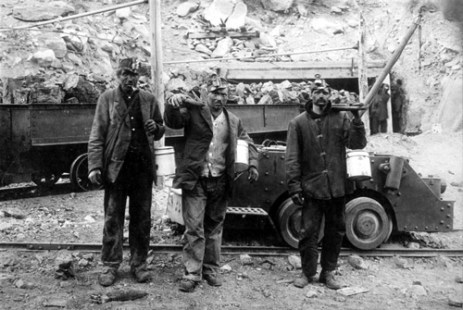 When this man returned home from work, he wore the same drab trappings of men who worked long days underground in a dark, dirty, and dangerous world. He would arrive home from the alley at the back and enter directly into the kitchen. When she looked up, his black silhouette was framed by the kitchen doorway. Her 1920s childhood had been replaced by post-WWII drudgery and insecurity. Their son was born seven months into the marriage. She named him after her father, who died a year earlier. Each day, she was relieved to see her husband return safely home. Funerals and memorial services for coal miners killed in mine disasters were common. Eventually, in the 1950s, the anthracite coal industry would be undermined and replaced by oil.
 She heard footsteps, a familiar cough, and his voice speaking to nurses. She had turned and was looking up just as he stepped on the threshold into her room. She loved the way he looked in his uniform and was delighted to see this man standing there, framed by the hospital-room doorway. She jumped up and ran to him as only a woman in her seventies could. Unlike the days with her stoic father and distant husbands, this man embraced her. They hugged and kissed for a while. She looked up at him and said, “I am so happy to see you.” He smiled and looking down at her asked, “Mom, didn’t you just have surgery?” “I don’t care,” she said. “You are here now.”
 Long before I ever entertained the idea that I might want to write
  things that people don’t pay me for (as in my old day job), I read a biography about J.R.R. Tolkien. It impressed me that he and his writer group (the Inklings), which included C.S. Lewis, would gather at a pub (The Eagle and Child) to discuss writing and literature. They would read what they had written to each other and critique each other’s work. I want to be there to watch, to listen, to learn, and to discover. Can you imagine? This happened in the 1930s, 40s and 50s. Lewis and Tolkien were alive and writing during my lifetime.
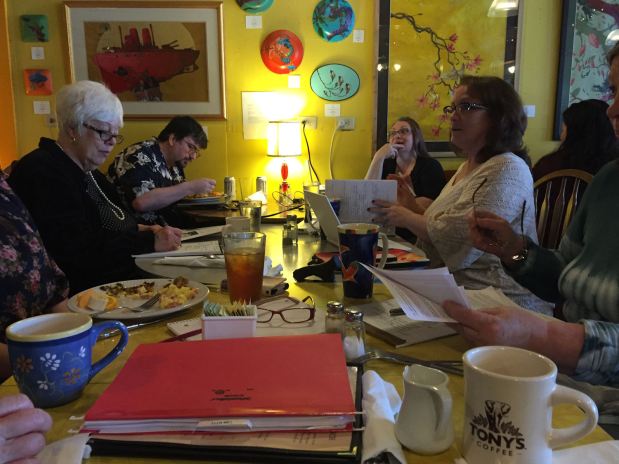 Ironically, unlike the Inklings who were exclusively male, most ‘members’ of the kaffeeklatch group are women. The group was started by one of them (Hi Caz). We drink coffee (or your choice of morning beverage), eat, and talk. Some in attendance have even confessed to getting some writing done. I wouldn’t miss it. If you’re looking for me between nine and noon on Friday mornings, check the Black Dog in Snoqualmie. I am the one with short gray hair, wearing a cap, mostly listening, frequently laughing, and totally confused. Who is to say that the next Tolkien or Lewis is not sitting there, telling me how I need to work on my plot?
 Our Literary Journey