A2Z Challenge: Q is for Qilin

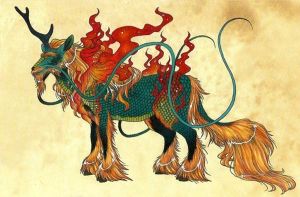
From Chinese mythology we may know about the dragon and the phoenix, but have you heard of the Qilin? As with other mythological animals, the Qilin is composed of different animals. Also, like others, depictions of Qilin have changed over time.

This YouTube video presents it much better than I can. Rather than read my flapdoodle, enjoy the video. It’s only about three and one-half minutes.


Reality or myth, look both ways and mind the gaps.


Poetry — NaPoWriMo: Fight Was His Game

I’m opting out of the day 18, 2018 NaPoWriMo prompt. Instead, I wrote this poem.

Fight was His Game

Poor boy whose story we were told,
Danny was his name, fighting was his game.
Young and strong, with dreams of glory in his fists.
He fought to save his life, to be proud and ever bold.

Promised wealth with violence
Would bring so many gifts.
No warning was to move him
from his promised dream.
Boxing and his future, were both all agleam
It was his game, to be his fame, no one interfered.

In the pit of misery, while still just a boy
Trusting words of strangers, and what they had to say.
In the roaring twenties ring
he took the fighter’s stand,
Seeking victory and honor, with his body and his hands
Many marred and broken,
This Danny boy was all aflame.

Stepped into the ring, a fight to be his game.
Still looking for a young man’s fame.
Dan stood strong and determined.
He faced the champ, who gave that boy
quite a beating with a lesson.

Badly beaten, he lost the fight,
And all his pride went with it.
The champ made him a chump
looking too sad and lame.

Still more boy than man, with spirits badly broken,
He searched for work and asked for jobs.
A boy inside, with dreams gone south and broken.

Now the boy was older
In all the world’s wrong ways,
Now laying low without his game,
Still, Danny was his name.

(Bill Reynolds, 4/18/2018)

Look both ways and duck those punches, mind the gaps right cross.

Click link to National Poetry Writing Month

A2Z Challanege: P is for Pooka

Pooka (or púca, phouka, phooka, phooca, puca, púka, or some other variant), while mostly a creation of Celtic folklore, is a ubiquitous goblin around the world. These little dudes are bringers both of good and bad fortune.

Pooka have dark or white fur that is more like hair. They are not very large. One can take on a variety of different looks, therefore, each may look different that others.

Pooka have similar equivalents throughout Europe. For instance, in Welsh mythology it is named the pwca and in Cornish the Bucca. In the Channel Islands, the pouque were said to be fairies who lived near ancient stones; in Channel Island French the pouquelée, pouquelay, poulpiquet, or polpegan may be them.

The pooka can be either menacing or beneficial. There are plenty of stories where they are wicked assholes, and others where pooka save the day and are heroic. Some stories have them as blood-thirsty, vampire-like creatures who are man-eating beings that hunt down, kill, and eat their victims.

According to legend, a pooka can assume a variety of terrifying or pleasing forms. This can be confusing, but they may be human, animal, or some hybrid creature. As an animal, they’re usually a horse, cat, rabbit, raven, fox, wolf, goat, goblin, or dog. So, we have lots of bases to cover since almost anything can be a pooka.

In most cases, if we humans are enticed onto a pooka’s back, it will be a wild ride. However, unlike a kelpie, which will take its rider and dive into the nearest stream or lake to drown them, the pooka does the rider no permanent harm. I know, “but you just said.” For a second there, I was pooka-possessed and wrote conflicting the things. It’s fantasy, but I suggest passing on the pooka ride.

Although pooka enjoy confusing or terrifying humans, they are generally benevolent.

If you carefully look both ways, you may see a pooka.
Keep away, be nice, and mind the gaps.

Click the P for link to A2Z site


Poem — NaPoWriMo: Anecdotally in the middle

The day 17 poem prompt of the 2018 National Poetry Writing Month challenges me to write a poem re-telling a family anecdote. I picked three, all involving stories about one of my sons.

Our middle child, Steven, had three incidents resulting in family anecdotes. I hope he forgives me for blabbing to the blogosphere. I just got his permission to publish this.


Steven in the middle


Anecdotally in the middle

Home before dark meant street lights on, it was time
But in friend’s house with curtains closed
Did not notice when lights came on
So sorry your friend has no clocks at home.

Teacher calls to announce rule was broken
Thou shall not eat departing school cafeteria
Why did you break such a simple rule, my son?
I was not eating. I was chewing. No rule broken.

Where is your new jacket, my son?
I don’t know where it is, dear father.
You lost it already, says I with surprise.
Not lost, says he, just don’t know where it is.

Now, mid-forties, with charges his own
This engineer surely missed his call
A gifted barrister would be so natural
The Prez needing new lawyers and all.

(Bill Reynolds, 4/17/2018)


Same guy with a touch of gray


If you’re in the middle, look both ways.
Mind the gaps.

Click link to National Poetry Writing Month

A2Z Challenge: O is for Orcs and Ogres

The traditional mythological creature is the ogre. Orcs are more contemporary and were used by Tolkien in literature (Lord of the Rings), and have since found their way into RP games such as D&D. But ogres and orcs have much in common.

Ogre

Both are brutish, aggressive, repulsive, malevolent, and nasty creatures. Both characterize evil and represent deadly harm to humans in some way. Both are generally presented as creatures that eat people. Orcs are cannibalistic. In most cases, both are presented as somewhat stupid creatures. There is one clever orc in Tolkien’s stories, but he was still evil.

In the case of Orcs, they often end up as fodder or pawns in battles or doing the bidding of another more intelligent character. They can also be cowardly.

Orc
Orc

Generally, Ogres, while rightly and properly representing evil, are used or fooled by others and are often tricked into things leading to their own demise, precipitated by their own greed and nastiness. But these creatures are more classic and date back farther in history than orcs.

Scary cartoon character?

A note about cartoons and nice little very un-Brothers-Grimmly characters such as Shrek. When these characters are depicted as sweet and not-so-ugly, misunderstood, and mistreated heroes; it is playing with folklore and a silly cartoon. Ogres are bad news, period. No exceptions. A character is an ogre based on behavior and outlook, not skin color, size, or birthright. I like Shrek, but he is no ogre, regardless of what the Hollywood script says.


You say I’m not an ogre?

To further jump the fence to human mischaracterization, peeps are often metaphorically referred to as ogres. This is not because they look like ogres (some may). It’s because they are considered by someone as bad people based upon their behavior. There are no good orcs or ogres. If they are good, behave well, and hold some moral high ground, then they are something other then an orc or ogre. Evil is what they do, and that defines what they are.

Remember: Scorpions sting frogs. Frogs that can be persuaded otherwise drown. If you don’t know that story, click here.


Look both ways for any harm coming your way.
Avoid doers of evil and mind your own gaps.


Poem — NaPoWriMo: It’s Never Just a Game

The day 16 poem prompt of the 2018 National Poetry Writing Month challenges me to write a poem that prominently features the idea of play.

My poem is about my memory of a game we played as children – a game still played today, albeit differently. It has been played for over a hundred years by boys and girls, now also by men and women. Essentially, it is street or vacant lot baseball played with a broomstick for a bat, bases like the manhole cover or the flag pole, and most often a rubber ball.

My gang used all sorts of balls including wiffle balls of various sizes. No one wore gloves or any form of protective gear. Our classic favorite was to use those small plastic practice golf balls with all the holes in them to increase the challenge. They could bounce off any window or person with no damage. No coaches, no adults, highly flexible rules, and we worked out our disagreements without paying lawyers.

My poem is this old fart’s memories of playing the game and living totally for the moment, for the game, to be as good as we could be, and to have fun for the sake of play.

We used handles cut from broom sticks or mops. I do not recall anyone buying a ball, but it would not surprise me to learn that the ones we used were found, or “found” (as in the bottom of dad’s golf bag). The first commercially produced stickball bat came out in the early 1950’s and sold for 89 cents. Today, you can buy a high-tech, Easton T10 Thunderstick stickball bat for $50.00.

One of the problems today is that it has become difficult to find a good wooden broom or mop handle not being used, and games like that have fallen out of favor. However, I have included a photo and video about the game. In both cases, commercial bats are used.

It’s Never Just a Game

I was in the game that day
when it was a hot midsummer afternoon
when we played in the Courtright elementary school yard
when Jimmy Lipinski hit a double off of Joe Mullins’ chest
when time outs were for injury or just to pee.

I was in the game that day
when the fight broke out between Balochi and the new kid
Smitty was new and wanted us to play by New Jersey rules,
Balochi and Smitty became close friends and grew old together
and we learned to play by Jersey rules, East End rules, and league rules,
but mostly we made up the rules based on many things.

I was in the game that day
when Teddy tripped on second base and broke his nose
when the Daniel’s kid at shortstop lit a cigarette in the third
when the school janitor came and ran us all off or he would call the cops,
when we vandalized the school cuz the Janitor was a dick,
when I got my first hit, and when I hit my last.

I was in the game that day
when Lipinski made his behind the back flyball catch
when the worst player on the team hit a grand slam
when cuts and scrapes and twisted ankles were part of growing up,
when it started to rain that day and we played on anyway,
when the game was just the game, and both sides always won.

I left the game that day
when we walked away cuz it was getting dark
when we were thinking of what in life came next
when we thought there were better things to do,
when we walked away one last time
from the game we all so loved.

Let’s go play some stickball.

(Bill Reynolds 4/16/2018)

Look both ways as you play the game.
When at bat, mind you, hit the gaps.

Click link to National Poetry Writing Month

A2Z Challenge: N is for Nyx

I have done some writing and reading about darkness and night. So, I picked this goddess to review. I am also a fan of another Nicks, the lady called Stevie. It made sense to me.


Nyx is the Greek goddess of the night. By some accounts, Nyx is the offspring of Chaos; by others, she precedes him. Varying accounts have Nyx, in mating with her brother Erebus (Darkness and Shadows), as the mother of many deities. All this Greek deity myth stuff is very confusing and conflicting. Kind of makes me wonder why someone didn’t just decide on one omnipotent god and leave it at that. Anyway, Nyx had a bunch of kiddoes as well as other brothers and sisters.

Other sibling of Nyx, children of Chaos include Gaea (Earth), Tartarus (Underworld), and Eros (Love).

Disregarding paternity (we don’t care who the daddy was), Nyx was the mother of Hypnos (Sleep), Thanatos (Death), Aether, (Brightness), Hemera (Day), Moirai (the Fates), Geras (Old Age), Moros (Doom), Keres (Destruction), Oneiroi (Dreams), Monus (Blame), Oizys (Pain), Hesperides (Daughters of the evening), Nemesis (Retribution), Apate (Deceit), Philotes (Friendship), and Eris (Strife).

I find it interesting that Eros, god of love or sexual desire (think an adultish Cupid), is a direct offspring of Chaos. Yet, unlike other primordial siblings, he is not a physical world deity, but a god for the condition of procreation. Thus, while accounts may vary, ancient Greek mythology elevated the god of love to a primary level. I like that. I have heard love and sex referred to as primordial desires. Now I know why. I plan to use this information when I get back to writing about the paradox of love.

Nyx appearances are sparse in mythology, but they grant the goddess of night such exceptional power and beauty that she was feared even by Zeus. The story goes that Hypnos (her mischievous son and god of sleep) put Zeus to sleep, allowing Heracles to have a very bad day. Can you imagine, the god Zeus sleeping on the job?

Zeus was pissed and would have tossed Hypnos into the sea. But the sleep-god ran to his mama, Nyx, for protection. Even gods did that. Zeus did not want trouble with Nyx, so he chilled and let Hypnos off easy. Tenuous relationships followed.

The vision of Nyx’s power in the cosmos is further enhanced in poems by Orpheus. In one, the entire universe dances to the tune of Nyx singing or chanting. Now that goddess has a voice better than any angel. Right?

Each night Nyx emerges with Erebus. They block the light emitted from Aether, bringing night and darkness to the world. The next morning Hemera emerges to sweep away the darkness of night. Nyx briefly returns to her abode. Mother Nyx and daughter Hemera are never in the same place at the same time. Things may have changed in later Greek mythology, but Nyx is never subjugated.

Look both ways, especially at night.
Find the gaps and mind them well.

Poem — NaPoWriMo: Grendel’s Reflection

The day 15 poem prompt of the 2018 National Poetry Writing Month challenges me to write a poem in which a villain faces an unfortunate situation and is revealed to be human but still evil.

This reminds me of a discussion I had with other writers regarding antagonists who are both good and bad.

Anyway, I decided to write a poem on one of the villains from Beowulf, Grendel. You can read my April 7th post on Grendel here.


Grendel’s Reflection

Humans.
How nice and kind and all
When they kill,
it’s for the glory
of some crazy god.
Stand and fight,
it is our right,
that is their battle call
They kill each other,
then blame me,
I find it rather odd.

They say old brother Cain
rests within my heart
Not clearly seeing
the happy demon
who owns their very spirit
As they rip and tear
their kind apart.
Why such hate
within them grows,
their god only knows.

In the king’s hall,
it’s all hell they raise
It wakes me from my slumber
Yet when I grant them peace,
‘tis me they blame
for the midnight slaughter.

Little do they know,
that I am not so bad
If they were better neighbors,
it wouldn’t be so sad.
I am, after all,
just being me,
as like them as I can be.
Be your brother’s keeper,
unless he looks like me.

(Bill Reynolds, 4/15/2018)

Look both ways at right and wrong but judge your own-self first.
Tread softly with others being mindful of the gaps.

Click link to National Poetry Writing Month

Poem — NaPoWriMo: When I had the hammer

The day 14 poem prompt of the 2018 National Poetry Writing Month challenges me to write entries for an imaginary dream dictionary. I was to pick one or more of the following words and write about what it means to dream of these things: Teacup, Hammer, Seagull, Ballet, slipper, Shark, Wobbly table, Dentist, Rowboat.

I really don’t get today’s assignment, but my goal is to write to the prompts. I decided to write what a hammer means in my dream, and then a little poetic ditty using hammer metaphorically within the dream. I’ve written too much about dreams lately not to at least attempt this.

When I had the hammer

The hammer is control in my dream
My dreams are always challenges
Problems to be solved, difficulties
My hammer is my courage and power to manage.

In my dream, I walked through four rooms.

In the childhood room, I could not lift my hammer
It was too big and too heavy and too confusing
All adults in the room had hammers, no child did
Some people had several. Someone carried my hammer.

In the young adult room, I struggled to move my hammer
Some days I could drag it, on other days I needed someone to help me
I tried to lift my hammer and to carry it as others seemed to
Several others were burdened as they carried many hammers.

In the middle age room, I carried my hammer with pride
I had a bag full of hammers because I carried hammers of others
…this I did with shameful pride,
…never admitting to the fear and burden of so many hammers
Confused, I wanted to give others their hammers to carry,
…yet, I wanted to continue to carry them.

In the room of seniors, I understood the hammers
I carried mine, yet asked for help when my hammer was too heavy
Some days I helped others carry theirs, some days I carried none
But with each passing day, my hammer got heavier,
…and I knew that soon
…I would have to give my hammer away.

(Bill Reynolds, 4/14/2018)

Look both ways to find your hammer.
Use it carefully as you mind the gaps.


Click link to National Poetry Writing Month

A2Z Challenge — M is for Minotaur

It is not always the impressive awesomeness of the fantasy creature that gets me. Sometimes it’s the story of how it came to be that I find most interesting. I was gunna go with something different today, but when I read about this one, I simply had to tell you about the Minotaur from Greek Mythology. Seriously, who came up this stuff?

With all the family drama, jealousy, hanky-panky, and bestiality, here is how it all went down. Minos, king of Crete, fought his brothers for rule. So, Minos asked the god Poseidon to send him a snow-white bull. Seeing this, his brothers would back off. The god sent the bull and it worked. But then Minos was supposed to kill the bull to honor Poseidon. Minos had a better idea, and that’s when the trouble started.

King Minos decided to keep the bull cuz he thought it was cool. So, King Dum-dum kills another bull thinking this sea-god will not notice or care. Greek gods can be so persnickety. Not just any dead bull would do. It had to be the pretty white one. Poseidon was pissed.

To get revenge, the god does a thing so that Pasiphaë, Minos’s wife, gets the beasty hots for the white bull. You with me? The king’s queen falls all lusty-love for this freakin’ horny bull. Today, this shite would be all over youtube.

No bull, white or not, is gunna do the dirty deed with the queen, lusty-love or not. So, Queen Pasiphaë had a very skilled crafty guy name of Daedalus make a hollow wooden cow. Can you see where this is going?

It must have been one fine piece of work to fool the bull into climbing on board and hammering away. Anyway, the queen climbed inside it and for the rest of the story, I suppose you had to be there. All I can say is Poseidon had an insane sense of humor, if Greek gods did funny things.

The child born was the monstrous Minotaur. The baby was not so cute with the dad’s head and a mostly human body. Pasiphaë nursed him (don’t get sick on me), but he grew and became a ferocious vile creature, being an unnatural (to say the least) offspring of a woman and a bull.

Minotaur devoured humans (preferably children every few years) for sustenance. Minos, after getting advice from the oracle at Delphi, had Daedalus (builder of the wooden cow) construct a gigantic labyrinth to hold the Minotaur and that is where he lived until he was killed by Theseus.

Look both ways.
If there is a bull in the field, do not climb the fence.
Mind the gaps as you cautiously walk around.
And do not piss off any Greek gods.