dVerse Poetics November 7th, 2023

This was a complex prompt, so it is best to go to the dVerse page and read about Lisa’s Time Machine Bucket List: TMBL and the subsequent prompt with options.

I think I sort of did Option 1, but this comes from my heart. I know Lisa said ten and cull out, but I can’t do that. I focused on both the stars and the venues because, seriously, I would try to go.


Coming Around Again

Forty-five (or more)
albums later, fifty years
of water under two bridges,
if we could go back.

Back to when you opened up
to your kind, to your fans,
and friends and family,
your folks, without
a care or anxiety
for either of us.

Long over now except for
the forever connection
of Ben and Sally; I still
love to hear you and James
sing duets and harmonies.

Save me seats so I can go back;
back with my beloveds
with you to concerts like:

Live from Martha’s Vineyard,
or from Grand Central,
or from aboard the QM 2.

Can we meet at the Eagles’
Sad Café? It’s been fifty years
Carly. What do ya say?

Listen,
mock, yeah,
ing, yeah—let’s sing!


Look both ways, but when the more is in the past,
we can wish for times to go back to for just a brief concert to visit,
to sit and listen, to applaud, perchance to take in a toke.
Mind the gaps until time travel is perfected. Our goals are very specific.

Click here to enjoy more TMBLs.

And Carly—

dVerse Poetics: Why war?

It is not difficult for me to write about war or things military. My difficulty is to not.

I wrote this as directed by today’s dVerse prompt.


His Secret War

When he emotionally told me—
he confessed, he squirmed—
with the guilt and shame
that had long lived in his gut.

For him,
it was a hard story to tell.

Surrendering emotions,
“If evil were evil enough;
if good were good enough.

“I would find the courage.
I would fight for right,
one war to end war—forever!”

He was conscripted. Drafted!
It was what he could do
for his country. To serve. To kill
(or be killed).
Maybe he’d find glory. Heroism.
Maybe death.

But wait.
He opposed this war.
He was to fight and kill
but he hated this war.

“Is there another war
more to my liking?”

He felt that killing and dying
were not in his peacenik milk nor
cup of tea.

“Send another,” he protested.

He was ordered to report.
But he was too good for this war.
Too smart. Too woke!
Too compassionate.

He was above it.
But war he did.
And he killed so as not
to be killed. To survive.

And when his war
was no more,
he came home
to discover
that he too,
was no more.
Sadly, he missed it.


Look both ways in war and peace
because each is merely the absence of the other.
Mind the gaps, the traps, the mines, and bombs.
Win your battles to lose the war.

***

Inspired by “On the Rainy River,” a section in the book The Things They Carried, by Tim O’Brien.

Click here to read more poems based on the same prompt.


My book.

Click on the cover to see the Amazon page for either print or e-book.

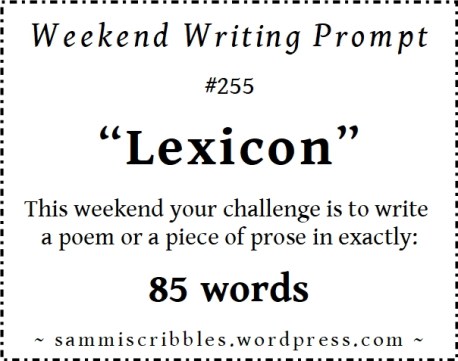
Sammi’s Weekender #255 (lexicon)

Click on lexicon for Sammi page and more takes on the prompt.

Poets’ Lexicon.

One must have lexicon to poem.
Language to arrange words right.
Poet’s lingo contains abundant terms
shared with the world of writing
like style, voice, or tone. Words,
as Mary Oliver said, “If words were only words…”

We need to learn vernacular and forms;
The Rules of the Dance, poetry handbooks to
comprehend values of meter: monometer,
pentameter, and octameter.

Toeless feet with iamb, trochee, and dactyl.
How often does one see a spondee running free?
Books by Packard, Turco, Oliver,
and more for poetics.


Look both ways as you dip you pen into the poet’s ink.
Mind the gaps as there is so much to learn about the plethora of poetry terms.

dVerse Poetics : Passions Stamped on Lifeless Things

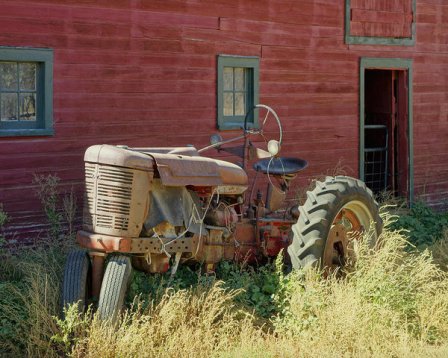
Click on the tractor for link to dVerse post by merrildsmith in Poetics.

Old tractors can’t retire with much dignity.
Ours rests over yonder, near the barn.
With winter’s cold, snow, and ice,
or dry poundings of hot summers,
she tries to show well, just a little rust,
peeling paint, heavy worn tires.

Made to plough and cumber a heavy beam,
an ox of steel and rubber, she carried men to work,
sowed seeds, and tilled the soil.

A mammoth farm and ranch hand, she
pushed and pulled cultivators and harrows,
drug fertilizer wagons,
pulled mowers, rakes, and bailers
with tires heavy with water and mud.

I still remember the day I first grabbed ahold
of her wheel learning to drive and work hard.

Thank you, my friend, for teaching me
so much about life, work, sweat, tears,
and the weather. But mostly about how
to age gracefully and with dignity.


Look both ways but history teaches more.
Mind the gaps, find the truth, keep your pride and dignity until a tractor retires.