Poetry: Rainy-Day Me


It is raining.
Outside everything is wet.
My long walk this morning
was in the rain. I wore
that red rain jacket,
got soaked only below my waist,
and I loved it.

Now it is afternoon
and the rain is still here,
and I should be reading,
drinking coffee, and
sitting on my back porch,
contemplating life and pondering
about what’s next.

But I’m having poetic thoughts
about rain (again), about
writing, and about Julie,
and I need to make some notes.

I’ll go sit on the porch now
where I can enjoy the rain more.
I hear distant thunder,
nature’s version
of rainy-day drama.
I can think about Zeus
or any one of dozens of other
gods of thunder and lightning.

I shall read, drink coffee,
and enjoy the rain, maybe
some thunder, if it’s not right
in my face. Maybe I’ll wonder.
We should wonder often, right?
I wonder what I’ll wonder about.


Look both ways for desire and disfavor.
Mind the gaps for indifference.

Sammi’s Weekender #210 (eerie)

Click image for Sammi’s Blog

There We Were

Six miles high at midnight, dodging lightning bolt thunderstorms, eerie Saint Elmo’s Fire covered; below, equally deep, the Marianas Trench beckoned. No one prayed.


Look both ways in foul or fair, self-reliance saves lives.
Mind the gaps between the storms for the reach of deadly lightning.

(Note: Yes, it happened like that.)

Poetry: Nature Knows (NaPoWriMo day 16)

The NaPo prompt for Friday, April 16th, was to write a poem using a form called Skeltonic, or tumbling, verse. Skeltonic poems have short lines of three to six words, two or three stressed syllables, and are simple verses. There is no specific length. Lines must rhyme and new rhymes may be introduced. There is no alternating rhyme scheme.


Nature can be dastardly
Random in her apathy
Extending thru the galaxy
Giving freely of catastrophe
With all her immortality
With no kind of partiality
Uncaring of our flattery
In her lavish asexuality
At the center of gravity
Lacking godly spirituality
Devoid of all sentimentality
Guilty of total impartiality
What can I possibly say?
What will save us this day?
As to tragedy we give way
Maybe we should pray
To express our dismay
Of her uncaring touché.


Look both ways, in the blues and thru the grays.
Mind the gaps as there may be traps making all of us saps.

Poetry: The Shadorma and Fibonacci Forms (NaPoWriMo day 7)

My seventh day NaPo adventure is to write at least two poems structured in forms that have a specific number of lines and specific syllable counts per line: the shadorma, and the Fib.

A shadorma is a six-line, 26-syllable poem. Each line’s syllable count is 3/5/3/3/7/5.

A Fib, besides being a white lie, is a six-line form where syllable count is based upon the Fibonacci mathematical sequence of 1/1/2/3/5/8. I may reverse line syllable counts after the first six to 8/5/3/2/1/1.

In both forms, I may use multiple six-line poems to create one multi-stanza poem, provided I use six lines per stanza and the appropriate syllable count per line. Neither form is mentioned in any of my books on poetry, including the Third Edition of Turco’s, The Book of Forms.


Intimacy

dance with me
be my love partner
hold me close
i hold you
step with time to forever
let’s dance into love

forever
i am your lover
music plays
steps we know
we endure as years twirl past
we dance together

(Inspired by the songs “Dance With Me,” by Orleans; and “Dance Me To the End of Love” by Leonard Cohen)


Tree Hugger

All
Life
Is one.
Together
In this challenging
World of delicate us and truth.

Symbiotic mutualism
Will still save us all
Together
We are
One
Life.

(Inspired by this quotation, “It cannot be said too often: all life is one. That is, and I suspect will forever prove to be, the most profound true statement there is.” From A Short History of Nearly Everything by Bill Bryson)


Look both ways in life and love.
We are not, and wouldn’t survive, alone.
Mind the gaps, plant trees, and be kind to animals.

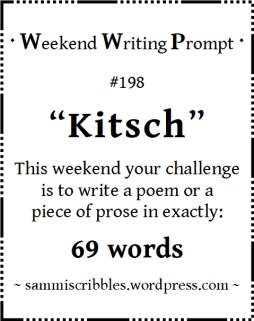
Sammi’s Weekender #198 (kitsch)


Click for Sammi’s Blog

What’s Cool?

Is kitsch quality or poor taste?
Are minimalists monotonous?
Are sandal’s socks courageous?

Do pink Flamingos
promulgate plastic?

Is Bahama Mama racist?
Are Brazilian Beauties sexist?
Is bland better than spice?
Is culture copy complimentary?

No fuzzy dice on mirrors,
but the green turtle on my dash
and a little yellow rubber duckie love me,
without some good god’s crucifix
or prayer beads.
I admit. I’m a bit kitschy.


Look both ways with taste and preference.
Human nature dictates, human nurture personificates.
Mind the gaps between and among us.

Poetry: Love Sounds

Thorns are in gardens,
And colors from pretty flowers,
Rose pedal jellies are sweet.

This world of sounds,
Voices heard, long before birth—
Mother, father, sister, brother.

Sounds of nature,
So sweet and quiet,
Some warn of danger,
Others safe passage,
Voices of friends,
A love,
Some grumpy old men.

In time,
Life’s pleasures wane and wither,
Music comes not as before,
Beautiful sounds are
Nothing to waste.

Disallow atrophy
Of lust
For a wondrous life.
Be alert.
Sounds. Enjoy them.
Be aroused
By smiles and touches
Of troubadour drums.

Surround yourself with pleasures.
Hear every note
With silences between.
Waste nothing.
Mind our gifts.

Take care,
my love.
Some things shall not
Always be there.


Look both ways with eyes and ears.
Mind the gaps between notes and words.

Poetry: My Comfort Zone


I pass sweet scented bushes on my trek to hike trails,
I listen to songs. I see the cobalt blues and pinks
of early morning predawn skies. Then sunrise.

The familiar places, benches to rest, to drink,
to ponder, sometimes to listen
and to think about nature.

No talking. I write notes in my book,
a poem about this ravine I dare not cross,
about rocks for stepping or tripping.

About finding happiness outside my comfort zone,
as they say in the voice of cliché,
about what’s a name or identity. Am I what I did?

And the viper, that snake may not allow
my passage as he or she sunbathes
and the morning warms its cold blood.


Look both ways, but tread with care. Mind the gaps where vipers rest.

Three-foot rattlesnake blocking my trail.

Poetry: Natural Brutality

Being one with nature,
the coexistence of life on Earth
is such a wonderful concept.

What is more part
of every life than death?

Has anyone told the fire ants,
much less gained the cooperation
of such touchy predators?

Will they forgive my use
of deadly chemicals to remove
a hideous colony
setting up housekeeping
on my back porch?

Will the bite of the rattlesnake
be part of Nature’s
delightful beauty?

I love Nature, but
I know something about it.

It’s unforgiving, painful,
deadly, and indiscriminate.

Natural selection
is Nature’s evolutionary tool
and the reason
ninety-nine percent
of all life types are extinct.


Look both ways,
mind the gaps in everything,
especially where place your body parts,
lest Nature object in some naturally painful way.

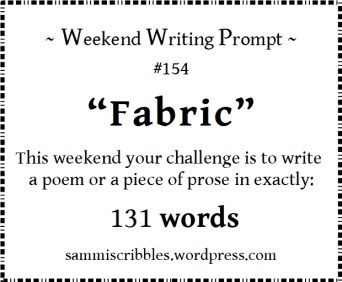
Sammi’s Weekender (154): Fabric


It was almost olive drab once,
now faded OD, but green,
the back says, Nothin’s Easy.
A well-worn tee from my days
running or trekking Government
Canyon, near San Antonio. It’s
not a canyon at all.

On the front you can make out
the drawing of the hills,
the name ends with, State
Natural Area
. The crew neck fabric
is tattered from use and washes.

It’s size large to hang loose,
but no longer does.
Do you think it shrunk?
Or have I expanded
my physical surroundings?

If I had a favorite tee,
this might be it,
but I don’t want others to feel
helly-jelly. It’s just a shirt.
Like the brown one I’m wearing now
from my second Cowtown Marathon
that says, opposite the front,
I’m Back. Cuz I was.


Look both ways for ties to tees and memories.
Mind the gaps or it’s the rag bin for sure.

NaPoWriMo: 30 poems in 30 days (day 24)

Day 24 prompt: write a poem about a fruit. Where do we get the word for the color when we mix red and yellow?


A Norange by Another Name: Orange

What shall we call this yellow-red color?
Geoluhread was, but is not right. From China
came five centuries ago the answer, a round
citrus fruit. We shall call it orange, as is the fruit.

See the color, not persimmon, pumpkin, or tangerine
they are all orange. See textured shiny bright rind
hiding yellow seed, white albedo pulp and triangle
segments of juicy sweet meat for kings and queens.

Feel the firm round breasted textured shape,
softly, almost spongy, heavier than an apple
with a protruding nipple or navel or pedicel
from the flower of past blossoms mating.

Smell the fragrant fruit, the peel, the acceptance
of inviting sensual aroma used in fine perfumes
or arousing essential oils. Hold the orange
to your nose, near your lips, take her home.

Taste the tangy citrus flavor after peeled,
soft, bitter skin is removed, baring mixed taste
and aroma of sweet bliss, a robust exiting,
acidic-sweet flavor sliding into your mouth.

Hear the soft sound of bursting flavor,
for quiet wet eating, the soft thud when
dropped or tapped. Hear yourself masticate
briefly before swallowing treasured pleasure.


Look both ways for the common and the rare.
Mind the gaps, by any other shade, tone, or hue, and orange is still orange.
The fruit came before the color.