Tribe: On Homecoming and Belonging by Sebastian Junger
“War feels better than peace.”
 That’s what it says. Not that war is better. It feels better. To put comments like that into context and perspective, you should read the book.
Tribe put me in touch with a part of myself that wants something which I haven’t had in long time–the feeling of belonging to a tribe. When I had it, it was temporary. I’ve lost my tribe, and I feel the void.
I don’t want to think we have a dystopian or apocalyptic world. But I realize that conflict and evil are pervasive in human nature. Also, all nature holds danger, evil threats, and risks to our survival. It has always been so and there is little sign of relief.
Junger’s book is supposed to be about Post Traumatic Stress Syndrome (PTSD) and American combat veterans returning to our normal and civilized society. It is about that, but there’s more to it. While vets are the focused subjects of the book, they are examples he uses to make an ultimate point about human nature and American society. I suspect that is why the book is so popular.

Maybe we are not what we think we are. Are we as peace-loving as we claim to be? We’ve certainly done much to create a peaceful society in America and other countries around the world, with varying degrees of success–mostly minor or the opposite of what we intended to do.

My favorite sentence in the book is just two words: “And yet.” (p. 109)
We crave peace, comfort, safety, pleasure, privacy, and independence. And yet, when we look at the history of human behavior under dangerous and stressful situations, something strange often happens to us. We are healthier and apparently (oddly?) happier—less depressed, when under stress. It should be the opposite, right?
I’ll not say more about the phenomenon because I don’t want to play spoiler. I want you to read the book. But, don’t use my library. There are now 184+ waits to read it. The word is out.
This book spoke to me. It’s my inner voice. Maybe I’m in denial. While I’m not overtly competitive and I’m so-so on some sports (I prefer playing to watching); I enjoy tension, drama, and mystery more than I like to admit. I have a love-hate relationship with fear and stress. I want them, and I don’t. WTF?
And yet.

That voice is saying something. I know what it’s telling me. I know exactly what Junger is talking about—and I agree.
I avoid trouble. I want peace and love in the world. But I am a realist (in my mind, anyway). I enjoy conflict. While I’m unlikely to start trouble, when it’s forced on me, I’m in.
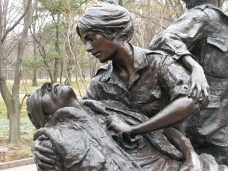 I despise fighting. I don’t enjoy pain or suffering, especially my own. But when I fight, I don’t want to stop. Something is deep inside me crying for more. Where’s my tribe?
When conflict is forced on me, I feel a change (a charge?) in my being–I feel strangely better. Got a tribe to protect and feed? I’m your man.
Consider the tribe concept in dealing with a crisis. We are all fighting for survival. We need each other. Your struggle is my struggle. We can share everything and overcome adversity for the good the tribe.
My personal paradox is that I’m an introvert and I enjoy my alone time. I value my privacy and a good night’s sleep as much as anyone. But I find the concept of a tribe fascinating, intriguing, and alluring—the challenge. The fight! Combat!

Our survival didn’t just happen. When you consider natural human strength, we’re easy prey in the animal kingdom. While we’re most vulnerable alone and we need protection, there’s something comforting and rewarding about the danger out there and what the tribe does for us.
Read the book.
When you find your tribe,
join them and cherish them. But, look both ways.
 The internet is loaded with lists. Lists are recommended for writing/blogging because we read them. My wife likes to read lists to me. Neither of us have any idea why. This is my personal short list with explanations for why the item is here. In a way, it’s a gratitude list, but that’s not exactly what this is about. It’s about me, not the list. Please comment with your top five. I’d like to know if you share my opinions.

 Actually, I have no idea which is worse. Together, they conspire to make anything I handwrite virtually useless. Even I can’t read it. Professional, highly trained code breakers would never figure it out. It’s like a disability. Fellow writers often proclaim the great value of writing by hand. One page and my hand hurts. My head hurts from trying to make it legible. And my brain is pissed from focusing on scripting and spelling and not on content.
 Airplanes. I like to fly. Much of my first career was spent flying or teaching others how. My second career was still associated with teaching others to fly. I like aviation museums. I also like books and movies about flying.

 This blog is about a book. If you look at my ‘about’ tab, under Frat Friday, think of topics 1, 2, 3, 9, 11, 12, and 13. While I will not include my personal religious or political opinions today, the book I want to talk about is about religion and politics. It is a lot about hate, causes, and it’s certainly in the news. The religion is Islam. The book is Islam and the Future of Tolerance by

 She had been in the kitchen helping her slightly-older, barely-teenage sister prepare dinner, but she knew it was nearly that time. She moved to the living room where she could take her usual position. Soon enough, she heard his familiar cough and the sound of his voice as he acknowledged neighbors. As he grew near and she could tell it was him, her excitement would grow as it had for years. She felt delight and love for this stoic Welshman. After work, he was usually more outgoing, partly due to the social and medicinal nature of his homeward-trek diversions. The front door was never locked, so when he opened it, his familiar frame was encased by the doorway. Each time this happened it was the same—she would jump up and run toward him and he would immediately stop her. “Now Bernie, you mustn’t get your dress dirty. Where is Dee?” The sight of her father set in the doorway after returning home would be fixed in her mind for the rest of her life.
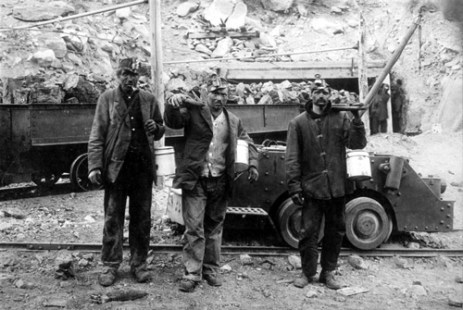 When this man returned home from work, he wore the same drab trappings of men who worked long days underground in a dark, dirty, and dangerous world. He would arrive home from the alley at the back and enter directly into the kitchen. When she looked up, his black silhouette was framed by the kitchen doorway. Her 1920s childhood had been replaced by post-WWII drudgery and insecurity. Their son was born seven months into the marriage. She named him after her father, who died a year earlier. Each day, she was relieved to see her husband return safely home. Funerals and memorial services for coal miners killed in mine disasters were common. Eventually, in the 1950s, the anthracite coal industry would be undermined and replaced by oil.
 She heard footsteps, a familiar cough, and his voice speaking to nurses. She had turned and was looking up just as he stepped on the threshold into her room. She loved the way he looked in his uniform and was delighted to see this man standing there, framed by the hospital-room doorway. She jumped up and ran to him as only a woman in her seventies could. Unlike the days with her stoic father and distant husbands, this man embraced her. They hugged and kissed for a while. She looked up at him and said, “I am so happy to see you.” He smiled and looking down at her asked, “Mom, didn’t you just have surgery?” “I don’t care,” she said. “You are here now.”
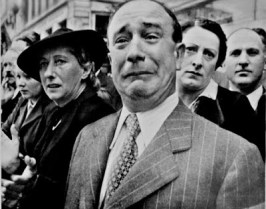 When I ponder c’est la guerre, my thinking goes more toward the conditions or philosophy of war, or the way of life during times of war. As an American, the concept is a little foreign to me (like our wars), since the only ground war we experienced was our war with ourselves: The Civil War. Ironically, it may have been the most destructive of our history in terms of loss of life and property. For at least the past 100 years, we have considered war as something that happens over there. Lucky us.
 While there are many good books regarding the philosophy of war, the classic gold standard is On War by Carl Von Clausewitz – required reading for virtually every military officer. War and Peace by Leo Tolstoy may be the preeminent novel on the subject. And the classic for weaponry and strategy is The Art of War by Sun Tzu; more required reading, if not necessarily the best reading entertainment.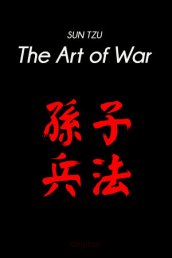
 Blind Man’s Bluff: The Untold Story of American Submarine Espionage (ISBN 0-06-103004-X), published in 1998 by Sherry Sontag, Christopher Drew, and Annette Lawrence Drew, is a non-fiction book about U.S. Navy submarine operations during the Cold War.
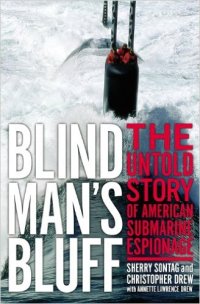 The museum was worth the stop and the tour of the Nautilus was wonderful. If you like that kind of stuff, I recommend it. I usually take time to visit gift shops at such touristy places. That was where I purchased Blind Man’s Bluff: The Untold Story of American Submarine Espionage. I was motivated to read it by what I had seen in the museum and how I felt walking around on the submarine. I’ve had but one friend who was a bubblehead. He was stationed on a boomer (slang for a nuclear-powered ballistic missile submarine; the British say bomber) out of the Navy base at Groton. Those subs are different from the vessels in Blind Man’s Bluff, although boomers represented one leg of the US triad of nuclear defense during the same Cold War (still does).
 Our Literary Journey