“The literal mind does not understand the ironic mind, and sees it always as a source of danger.” ~ Christopher Hitchens
Once we perceive something and it gets into our brains, the confusion begins. We communicate by employing methods or techniques to stimulate the senses of others, intentionally or not. Face-to-face, we can bring out all the best guns. Teachers employ every conceivable technology to get students to learn by seeing, hearing, touching, smelling, and tasting.

I doubt that our individual minds are exclusively either literal or ironic. I suspect that some of us have trouble communicating, especially on the receiving end, because we lean one way or the other. When the ironic mind works with the literal, caution and precision must be applied. The reverse seems to be less of a problem.
I recall a conversation with my daughter about a man who, in my opinion, was an irresponsible pet owner. I forget the details of his transgression toward the pets, but I used a rather common and innocuous phrase regarding what she told me: “He should be shot.” Julie became upset with me (he may have been a boyfriend at the time). It was quite a while before I knew the reason. Apparently, she took what I said literally. Even after our discussing and my explaining the idiom, she never quite seemed to grant me a full pardon for promoting the demise of her friend. While this may appear extreme, it’s not uncommon.
Another example involves a writing quote I like from Steve Almond.
“All readers come to fiction as willing accomplices to your lies. Such is the basic goodwill contract made the moment we pick up a work of fiction.” ~ Steve Almond
When I posed this quote to another writer, she asked, “Is that how you see it?” I confessed agreement before I realized the problem with the noun lies. What makes this even more interesting is that at the time, I was writing historical fiction (an oddity in its own) and my friend was wrestling with a memoir (a quest for truth). Her efforts were focused on discovering the truth while mine were based on developing an untrue story in a true, but flexible, setting.
Fiction is only a lie when it is not presented as such. While neither of us set out to deceive anyone (truth is not in every memoir), her goal was fact with interest. Mine was interest with a false story based upon fact. My friend’s literal mind-set related to her concern with the accuracy of her project. Mine was based more on fiction, which is not the truth, thus figuratively can be called lies.
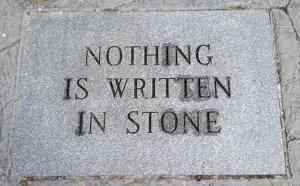
I enjoy the humor of sarcasm and irony. Without awareness of the intended humor, harm is frequent. Furthermore, if someone does not share another’s sense of humor regarding irony, even more so, sarcasm; the exact opposite of the intended communication is inevitable. Damage control using a follow-on explanation never seems to completely mend the fence, “I can’t believe you thought that was funny.” My personal sense of humor gets me into that sort of bind on a regular basis.
 A humorous book I enjoyed was Lamb: The Gospel According to Biff by Christopher Moore. The book is full of tongue-in-cheek humor, innuendo, sarcasm, and other forms of witty humor. It even has an angel who is so literal as to be the best heavenly straight man I can imagine.
I (somewhat proudly) wear the label snarkastic to fit my fondness for being both snarky and sarcastic. But, I’ve learned that how I communicate makes a difference. In writing, I am advocate for a sarcasm font (we need one). In person, I exaggerate facial expressions, gestures, and voice inflection so that I can give others the opportunity to get it right. I don’t enjoy the struggle of trying to explain my humor to someone who I know will never get it, but I try. And, I’m watchful for things not turning out as planned after I shoot off my mouth.
 Sometimes I don’t get it either. Like when I say something and someone bursts out laughing and yells, “Bill, I love your sense of humor.” I smile and nod, then lean to the person next to me and ask, “What did I say that was so funny?” Literally?
We live in an ironic world.
Love, laugh, get wet, look both ways,
and mind the gap.
 You might say, “Bill, I don’t agree with you. Explain how you decided that.” I may provide my information based upon my experience, reading, some internet or TV source, or maybe I’d inform you about some scientific evidence. If you still disagree with me, you may then counter what I said by presenting similar evidence.
 We may respect each other—people, not necessarily ideas or beliefs. I think we should always be civil, polite, and treat each other well. I don’t mean politically correct. Maybe we like (or love) each other. If we share any common opinions, those should make our relationship better. At some point, we may even find respect (see 1 or 2, above) for each other’s opinions.
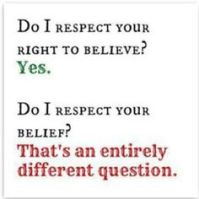 Respect for, or tolerance of, religious belief is an interesting topic in itself, especially to an atheist. All atheists want equal treatment (or respect, if you prefer) and tolerance in return from believers and religious persons—equal to what those folks want from everyone else. Look at the definitions of respect above one more time. Does the believer choose number 1 or 2 regarding someone’s atheism? Stop rolling your eyes and answer the question. Ok, then we shouldn’t talk about it. We need to move on.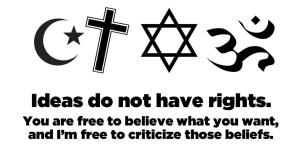
 We should certainly not be limited in our actions by any religion, nor are we under any obligation to pay for any religious practice.
 Our Literary Journey