Today I am prompted to write “kind of” a self-portrait poem wherein I explain why I am not an object of art. Additionally; I should include a fake fact and a highly unlikely comparison.
objet d’art
A can of soup was not art.
Wait now, the can may be but not the soup.
Tell the chief her food is not art
and you may invoke a visceral emotional response
from them (pronoun problems today)
about his grossly gristly
chicken fried steak found at some greasy spoon
somewhere in the middle of Texas or Montana.
Intent counts in sin and art. Fuck for effect.
I am the conscious effort, like the fork, push pin,
or skin covered hairless fat over brittle bone and
Weird Andy Dubya paints me as a Brillo box
for which some fool pops millions. I’m not that.
But is it art? Am I?
Am I that posed and canned portraiture photo of me
p-shopped to make me artfully handsome and young
soliciting a salacious feeling from someone
who practices the high art of pornography?
I am not that kind of art, thank you, Reverend.
We all love being objectified, of evoking
an aesthetic or emotional response
from the neighbor’s horny wiener dog down the road which
is not art. The road I mean, not the cat. I mean dog.
But maybe, could be, should be transformed
into a painting of an old hammer, which I am also not, but
a can of soup is. Art’s weird if you ask me,
which you were not and I’m not saying.
Look both ways and up at a ceiling full of shit-filled condoms and call it art
because it evokes within you an emotional response.
Mind the gaps where function follows form, and a poem is a form of expression
but isn’t art.
Maybe you have heard this: Sets low standards. Achieves same. Or this: Good enough for government work. I find both phrases tediously trite and possibly insulting. But, I’ve cheerfully used both. How about, practice makes perfect? I later heard it as, perfect practice makes perfect.
As that quality assurance guy for government contracts, I was very busy, never bored, and often unloved by contractors. They did not have to be perfect, but they did have agreed to, measurable standards to meet. Nobody likes it when “shit don’t work like it’s supposed to.”
As I write this, I’m sitting in the Tap Room of my local microbrewery sipping an excellent porter. I shall have another. It’s good and reasonably priced, but it’s not perfect. Perfect beer cannot be improved upon.
Perfection, by definition, cannot be made better.
Rarely do I say the word or identify something as perfect. When I do, I’m lying. Perfect works best when it’s said sarcastically and implying the exact opposite: FUBAR (definition below).
My strained relationship with the word perfect started with software – Word Perfect. It was not. Later, the word and the connotation it held annoyed me. Years ago, I decided that perfection was not a realistic or achievable standard. I developed a skeptical dislike for the word. When I heard someone say progress, not perfection, I liked that. Who does not want things to improve?
As part of my prep to write about this, I watched a couple of TED talks that only served to piss me off. With apologies to all her fans, Elizabeth Gilbert has a talent for making me want to bang my head on the nearest wall. Her following is vastly larger than mine, but I still think she’s out there. I like and admire her, but I strongly disagree on many levels with her views on creativity and writing. She makes me feel guilty, and I’m not sure why.
The other TED talk was by a man named Jon Bowers. Jon was (I assume he is) the lead on UPS training. Indeed, he does good work and as a professional trainer myself, I can relate to the challenges his company faces. The title of his talk was, We should aim for perfection – and stop fearing failure.
I interpret that title as, Attempt the impossible and guarantee failure. While Bowers gave many truthful and accurate statistical examples where high standards are critical, he ruined it when he implied that for us to not accept his position equated to accepting lower standards. He is wrong. I agree that excessive fear of failure prevents much good from happening. But, it is also motivation to succeed.
I think we need to set high, achievable standards commensurate with risk. My training background was in aviation. Our stated standard was in the 80 to 85 percentage area. Yet, our trainees (pilots) normally performed in the high 90s, many at the 100% level. Aviation is one of many human, high-risk endeavors labeled inherently dangerous. Fly safe and thank training.
For years the response to many statements (esp. by Brits) was “brilliant.” Another word where sarcasm works better than reality while good or excellent would suffice. But, when I answer a question and the response is “perfect,” I want to ask, “how so?”; or to simply say, “No. It is not perfect. It simply is.” And, thank you, but it’s also not brilliant.
I was on the phone with an otherwise charming and competent millennial when she asked for my address and phone number as part of a business transaction. After I told her my address, she responded with “perfect.” Her reaction to my phone number was again, “perfect.” If my address was One Penny Lane, Liverpool, it would be cool or, in a stretch, excellent. Yet, still not perfect. Same for a phone number of three sixes followed by the digits one through seven. Yet, the young lady declared my responses to every one of her questions perfect.
A friend asked if I was available to meetup next Thursday. When I responded “for lunch at noon” she could have said okay, or see you then, or great. But she said, “perfect.” I assume all times before noon would have been satisfactory and later would have been acceptable. But noon was fucking perfection without peer.
My friend, Jack, once described wine to me as drinkable. If you have ever tasted undrinkable wine, you know exactly what he meant. Jack served mighty fine wine — not perfect, but perfectly drinkable.
When people ask me about something and I answer with good, fine, or (god forbid) okay, it’s common for them to follow by asking me what was wrong or what I didn’t like. Perfect.
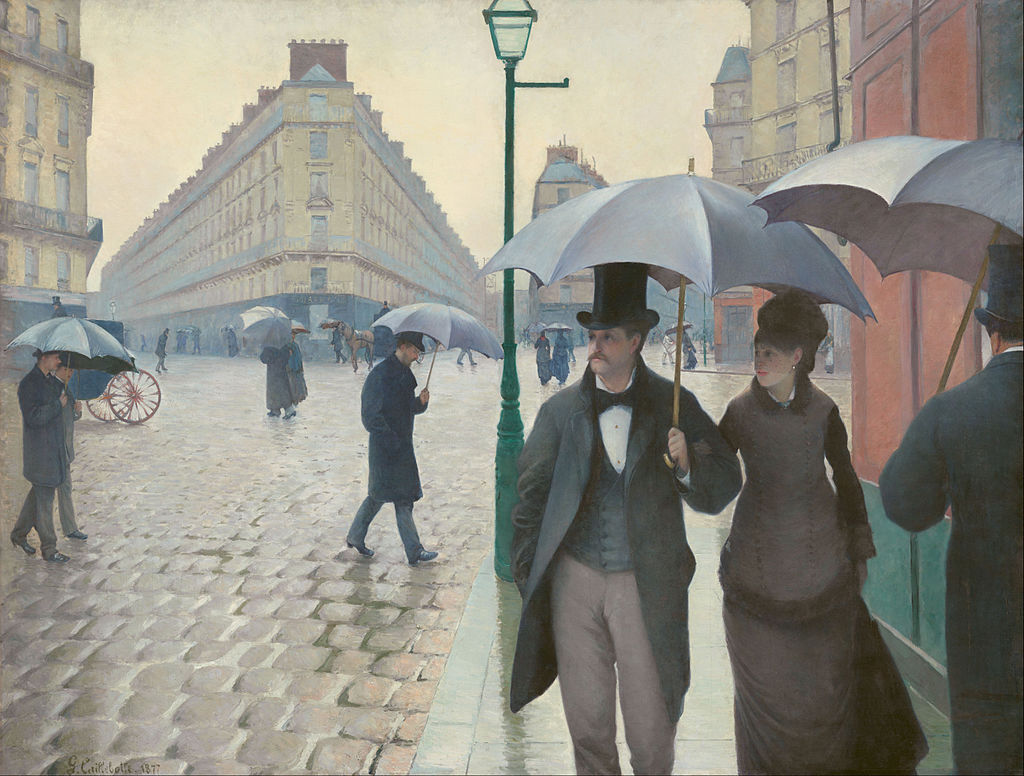
Look both ways crossing streets.
The perfectly trained UPS driver may not be having a perfect day.
Mind the gap lest you fall and ruin an otherwise perfect trip.
Note: FUBAR is an acronym for fucked up beyond all reason.
Viewpoint is another way of saying point of view (POV). In the general world, point of view relates to how someone views and interprets a situation. “In my opinion” can mean “from my viewpoint.” Numerous variables can go into analyzing each person’s view of any situation. To understand another’s point of view, we need to get inside their head to an impossible degree. We may think we know someone, especially in this day of social media glut, but do we?
For the novelist, POV is essential for writing the story. Fiction writers have the god-like ability to know exactly what is in the head of their characters. They create each character. This is true whether or not they share that information with a reader. Non-fiction writers are like the rest of us with human limitations knowing only what our senses (especially seeing and hearing) tell us. So, how do fiction authors tell us about characters? The questions for them, or us (depending on your point of view—sorry), are: how much do they tell us and how do they do it? The answer to one question limits the other. The same may apply to memoir.
To determine how the story gets told, the writer considers (and the reader notices) the following.
1. Who speaks? Here are six options:
An omniscient narrator has unlimited knowledge. They can enter the mind of any character in the story, and may pass judgment.
An omniscient narrator may be ‘limited.’ They are objective and have knowledge from one character.
An objective author can provide a camera-eye view. They may relate measured descriptions, actions and dialogue, and provide limited narrative summary. But this speaker provides no interior character views.
Third person limited speaks with knowledge of one person. This is a common viewpoint, and may be intimate or objective.
A second person speaker provides direct address, talks to self, and is the author addressing the reader.
The first person/narrator has two options and is considered less objective (and less reliable) than third person limited. Option one is a subjective narrator, intimately involved with the story. Option two is an observer narrator who tells someone else’s story.
2. To whom are they speaking? And, who is listening?
3. On what occasion? What event created the situation?
4. From what distance is the story or event being told? Is the telling near to foreground events or removed? This is important and beyond this blog’s scope. Here are two good blogs on distance.
Understanding POV is fundamental to fiction writers. But, even experienced, published authors talk about it, write about it, and teach it emphatically. A story cannot be told without a point of view, regardless of how you look at it.
 For the novelist, POV is essential for writing the story. Fiction writers have the god-like ability to know exactly what is in the head of their characters. They create each character. This is true whether or not they share that information with a reader. Non-fiction writers are like the rest of us with human limitations knowing only what our senses (especially seeing and hearing) tell us. So, how do fiction authors tell us about characters? The questions for them, or us (depending on your point of view—sorry), are: how much do they tell us and how do they do it? The answer to one question limits the other. The same may apply to memoir.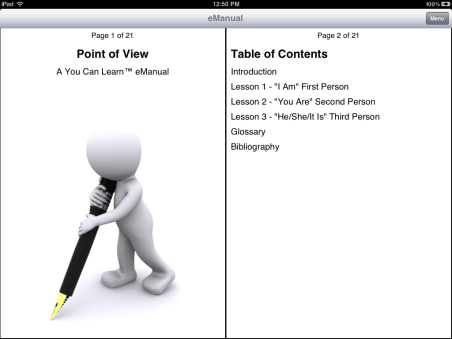
 This is important and beyond this blog’s scope. Here are two good blogs on distance.
 Our Literary Journey